English
 Español
 عربى
عربى
 Português

Short answer: A beach umbrella can technically be used as a patio umbrella — but with important limitations. Beach umbrellas are designed for sand anchoring and portability, not for mounting in a patio table or freestanding base. Used on a patio, they can provide shade in a pinch, but they lack the pole diameter, structural weight, and wind-resistance engineering that dedicated patio umbrellas offer. This guide explains exactly what works, what doesn't, and when the swap makes practical sense.
Content
- Beach Umbrella vs. Patio Umbrella: Core Design Differences
- When Using a Beach Umbrella as a Patio Umbrella Actually Works
- When a Beach Umbrella Should NOT Replace a Patio Umbrella
- How to Adapt a Beach Umbrella for Patio Use: Practical Solutions
- Shade Coverage Guide: Matching Umbrella Size to Patio Furniture
- UV Protection: Beach Umbrellas Often Have the Edge
- Wind Safety: The Most Important Consideration
- When to Stop Improvising and Buy a Proper Patio Umbrella
- Frequently Asked Questions
- Q: Can I put a beach umbrella in a patio table hole?
- Q: What is the difference between a beach umbrella and a patio umbrella in terms of UV protection?
- Q: Can a beach umbrella withstand patio wind conditions?
- Q: Can I use a patio umbrella at the beach?
- Q: How do I stabilize a beach umbrella on a concrete patio?
- Q: Is a beach umbrella good for a balcony or apartment patio?
- Q: How long will a beach umbrella last if used as a permanent patio umbrella?
- Bottom Line: Yes — But Know the Limits
Beach Umbrella vs. Patio Umbrella: Core Design Differences
Beach umbrellas and patio umbrellas are built around fundamentally different use cases, and those differences directly affect whether one can substitute for the other.
| Feature | Beach Umbrella | Patio Umbrella |
|---|---|---|
| Pole Diameter | ¾" – 1" (19–25mm) | 1.5" – 2" (38–51mm) |
| Canopy Size | 6 – 8 ft diameter | 7 – 13 ft diameter |
| Pole Length | 5 – 7 ft (above ground) | 7 – 11 ft (above ground) |
| Mounting Method | Spike driven into sand/soil | Table hole or weighted base |
| Weight | 2 – 5 lbs (very light) | 8 – 25 lbs |
| Wind Resistance | Low (designed for temporary use) | Moderate to high (up to 30–40 mph) |
| UV Protection | UPF 50+ common | UPF 30–50+ (varies widely) |
| Tilt Function | Manual tilt of whole pole | Crank tilt or push-button tilt |
| Typical Price | $20 – $80 | $60 – $500+ |
Table 1: Side-by-side comparison of beach umbrella vs. patio umbrella design specifications. Dimensions and prices are approximate industry averages.
The most critical difference is pole diameter. Standard patio table umbrella holes measure 1.5" to 2" in diameter. Most beach umbrella poles are ¾" to 1" — far too narrow to seat properly in a patio table without an adapter or filler sleeve. A loose pole in a table hole creates an unstable umbrella that can tip or fly in wind.
When Using a Beach Umbrella as a Patio Umbrella Actually Works
A beach umbrella can serve a functional patio shade role under specific conditions — primarily when you don't need it mounted in a table and can drive the spike into soil or secure it in a weighted stand.
Scenario 1: Patio With a Soil or Grass Border
If your patio is bordered by a lawn or garden bed, you can drive the beach umbrella's sand spike directly into the soil beside the patio surface — exactly as you would at the beach. Position it to angle shade over your seating area. This is the cleanest adaptation and requires no accessories. A 7-foot beach umbrella can cast a shade circle of approximately 35–40 square feet, enough to cover a small bistro table and two chairs.
Scenario 2: Using a Weighted Freestanding Base
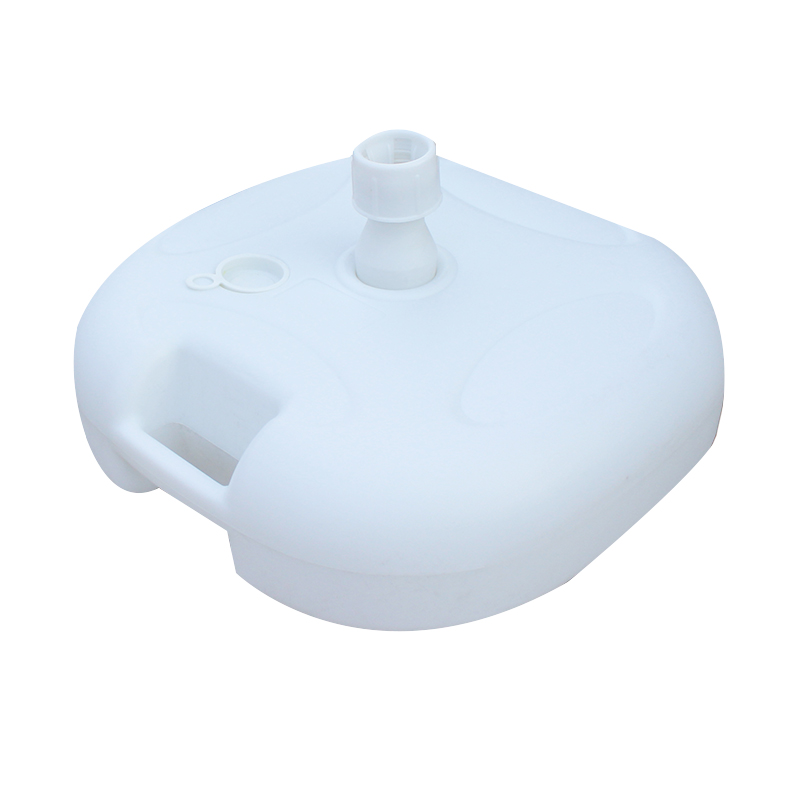
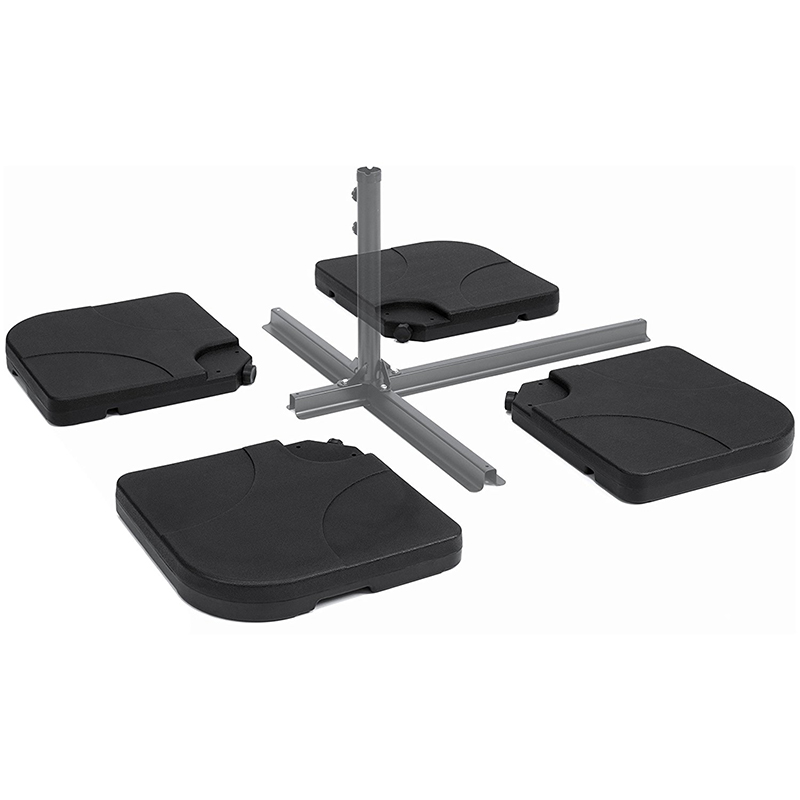
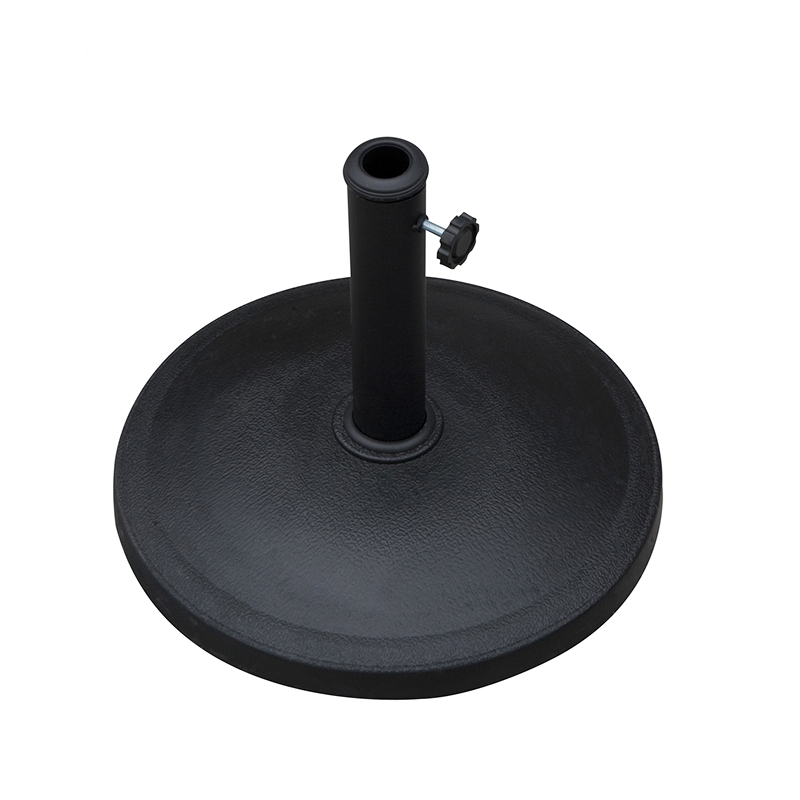
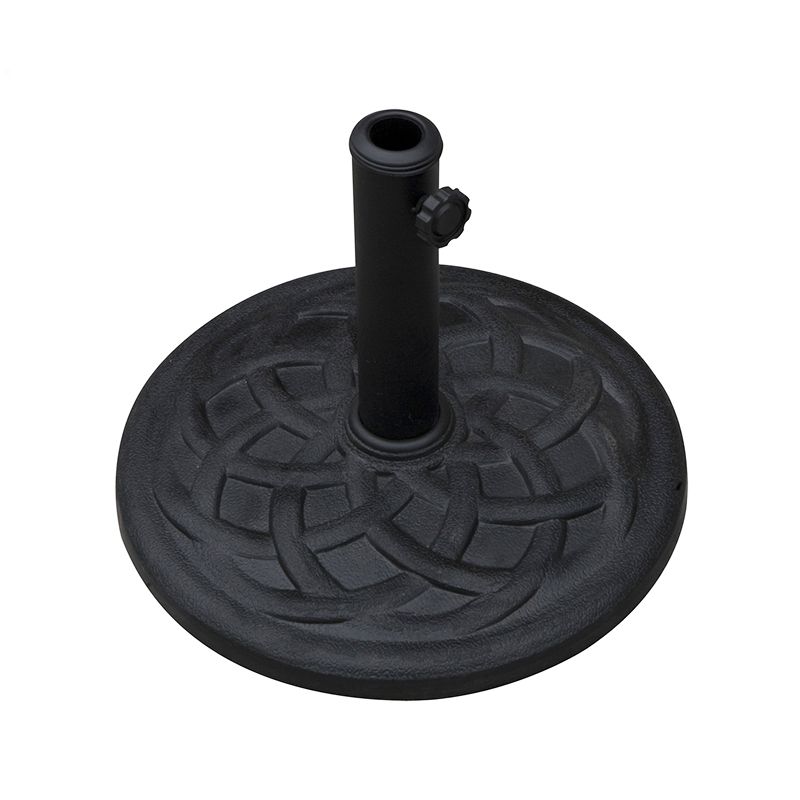
Universal umbrella bases with adjustable pole clamps can accommodate poles from ¾" to 2" diameter. A heavy cast-iron or water-fillable resin base (minimum 40–50 lbs recommended) can hold a beach umbrella stable on a hard patio surface in light to moderate winds (under 15 mph). This setup works well for casual use during calm weather but should be taken down when wind speeds increase or during storms.
Scenario 3: Temporary or Occasional Use
If you need shade for a single afternoon gathering, a camping trip on a hard surface, or a temporary setup while your patio umbrella is being repaired or replaced, a beach umbrella is a perfectly reasonable short-term solution. The key is recognizing it as a temporary measure rather than a permanent installation.
When a Beach Umbrella Should NOT Replace a Patio Umbrella
There are several situations where using a beach umbrella as a patio umbrella creates real safety or practical problems.
Mounting in a Standard Patio Table
Patio table umbrella holes are sized for 1.5"–2" poles. A beach umbrella's ¾"–1" pole will wobble dangerously in that hole. Even with foam gap-fillers, the fit is structurally unreliable. In any wind above 10 mph, a loosely seated umbrella can tip, pulling the table with it or becoming a projectile hazard. This combination should be avoided unless a properly rated pole adapter sleeve is used.
Windy Locations or Elevated Patios
Beach umbrellas are designed for temporary use in open beach environments where they're monitored continuously. On a rooftop terrace, elevated deck, or patio in a consistently breezy location, a beach umbrella's light aluminum frame and minimal anchoring will not provide safe, stable shade. A gust of 20 mph is enough to invert or launch a beach umbrella not properly secured — a 6-foot canopy catching wind acts like a sail generating significant force.
Permanent or Long-Term Patio Installations
Beach umbrella fabrics and frames are not built for continuous outdoor exposure over a full season. UV degradation, moisture retention in the canopy fabric, and corrosion of lightweight aluminum joints mean a beach umbrella left deployed daily on a patio will typically show significant wear within a single summer. Dedicated patio umbrellas use heavier-gauge aluminum or hardwood poles, solution-dyed Olefin or polyester canopy fabrics rated for 500+ hours of UV exposure, and stainless hardware — all designed for season-long deployment.
Covering Large Patio Dining Sets
A standard beach umbrella at 6–8 feet diameter cannot adequately shade a 6-person patio dining table, which typically requires a 9–11 foot diameter canopy. The shade coverage gap means guests on the outer seats receive no protection, defeating the purpose of outdoor shade furniture.
How to Adapt a Beach Umbrella for Patio Use: Practical Solutions
With the right accessories, a beach umbrella can be stabilized for patio use more reliably — the key is addressing the pole diameter mismatch and anchoring problem.
Solution 1: Pole Diameter Adapter Sleeve
Rubber or foam umbrella pole adapter sleeves fit inside a 1.5"–2" table hole to snugly hold a smaller pole. These typically cost $5–$15 and can make a beach umbrella pole fit securely enough for calm-weather use. They are not a substitute for proper anchoring in wind but solve the basic fit problem for casual use on still days.
Solution 2: Heavy Freestanding Umbrella Base
A freestanding base with a universal clamp collar can hold beach umbrella poles securely without a table. Look for bases weighing at least 40 lbs when filled (water-fillable resin bases are popular) with an adjustable clamp that tightens down to ¾" pole diameter. Position the base on flat, level patio surface and do not use in winds above 15 mph.
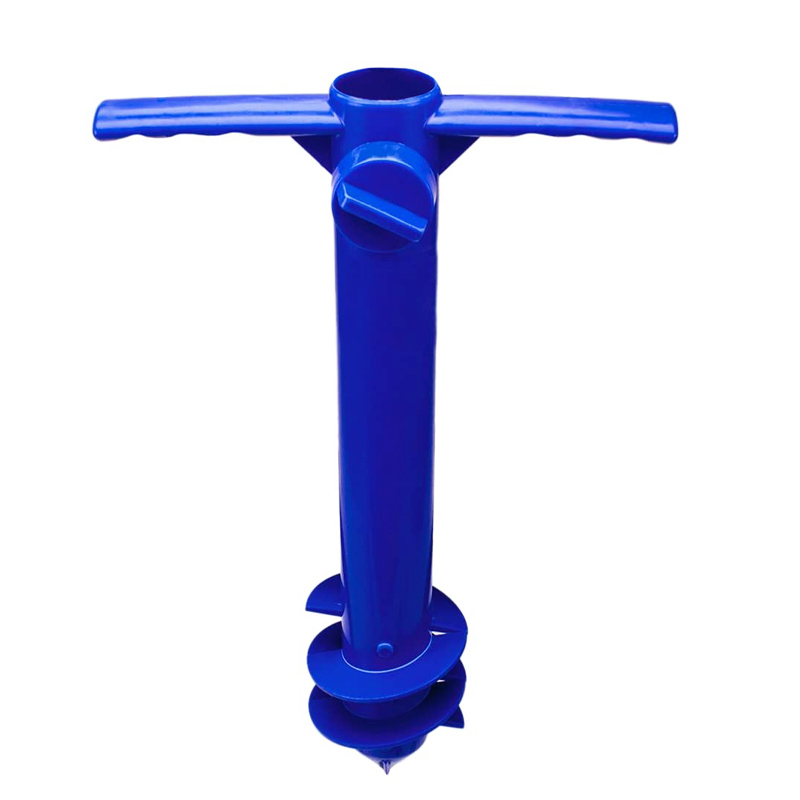
Solution 3: Sand Anchor Bag on Hard Surfaces
Beach umbrella sand anchor bags — essentially weighted fabric pockets that the spike slides through — can be filled with sand or gravel and placed on a hard patio surface. They provide more friction and stability than a bare spike on concrete, though they still offer less wind resistance than a purpose-built patio base. This is an inexpensive option ($10–$25) suitable for very light-wind conditions.
Solution 4: Drive Spike into Planter or Soil Adjacent to Patio
If you have a large planter, raised garden bed, or lawn area adjacent to your patio, driving the beach umbrella spike into the soil there provides the most secure anchoring comparable to beach use. The deeper the spike goes (8–12 inches minimum), the more stable the umbrella. Angle the umbrella toward the patio to maximize shade coverage over your seating area.
Shade Coverage Guide: Matching Umbrella Size to Patio Furniture
Choosing the right umbrella size for your patio is as important as material — an undersized canopy defeats the purpose of shade furniture entirely.
| Canopy Diameter | Approx. Shade Area | Best For | Umbrella Type |
|---|---|---|---|
| 6 ft | ~28 sq ft | 1–2 people, loungers | Beach umbrella |
| 7 – 7.5 ft | ~38–44 sq ft | Bistro table, 2 chairs | Beach or small patio |
| 9 ft | ~64 sq ft | 4-person dining table | Patio umbrella |
| 11 ft | ~95 sq ft | 6-person dining set | Large patio umbrella |
| 13 ft | ~133 sq ft | Large sectional / lounge area | Market / cantilever umbrella |
Table 2: Recommended umbrella canopy size by patio furniture configuration. For best coverage, the canopy diameter should extend 2–3 feet beyond the edge of the furniture on each side.
UV Protection: Beach Umbrellas Often Have the Edge
In terms of sun protection, beach umbrellas frequently outperform budget patio umbrellas — most beach umbrellas are rated UPF 50+, blocking over 98% of UV radiation, which is a genuine advantage when used on a patio.
This is because beach umbrella design is explicitly driven by sun protection as the primary function. Many use tightly woven polyester or nylon with UV-blocking coatings. By contrast, decorative patio umbrellas — especially lower-cost models — may prioritize aesthetics over UV performance and offer only UPF 15–30 ratings.
If UV protection is your top priority (for children, fair-skinned individuals, or medical reasons), a UPF 50+ beach umbrella used correctly on a patio may actually provide better sun blocking than many entry-level patio umbrellas, regardless of the mounting challenges.
Wind Safety: The Most Important Consideration
Unsecured or inadequately anchored beach umbrellas become dangerous projectiles in wind — this is the single most important safety concern when using a beach umbrella as a patio umbrella.
Research published by the U.S. Consumer Product Safety Commission (CPSC) has flagged beach umbrella injuries as a recurring issue, with umbrella launches causing lacerations and impact injuries on beaches every year. The same physics apply on a patio: a 7-foot canopy in a 20 mph gust generates several hundred pounds of force. A beach umbrella driven 6 inches into sand — or sitting in a lightweight base — cannot resist that force.
- Always close and secure the beach umbrella when you leave the patio unattended
- Close immediately if wind exceeds 15 mph — beach umbrellas are not rated for sustained wind like patio umbrellas
- Never leave a beach umbrella deployed overnight on a patio, even in a weighted base
- Keep away from children when wind is present — sudden inversion and launch can happen in seconds
When to Stop Improvising and Buy a Proper Patio Umbrella
A dedicated patio umbrella is the right investment when any of the following situations apply to your outdoor space.
- You use your patio regularly throughout summer and want shade without setup and takedown every time
- Your patio table has a center hole designed for a 1.5"–2" umbrella pole
- You live in an area with regular afternoon breezes above 10–15 mph
- You need to shade 4 or more people at a dining or conversation table
- You want a tilting canopy that tracks the sun throughout the day without repositioning the whole pole
- You want an umbrella that can stay deployed season-long without fabric degradation
- You need a cantilever (offset) design to shade a space without a table in the center
Entry-level market patio umbrellas with a 9-foot canopy and basic crank mechanism start at around $60–$100 — not a significant investment compared to the convenience and safety advantage over a repurposed beach umbrella. Mid-range options with tilting canopies and heavier poles run $150–$300 and are suitable for most residential patios.
Frequently Asked Questions
Q: Can I put a beach umbrella in a patio table hole?
Technically yes, but it will not fit snugly without an adapter. Most patio table holes are 1.5"–2" in diameter, while beach umbrella poles are typically ¾"–1". The resulting loose fit creates instability and wind risk. A rubber pole adapter sleeve ($5–$15) can fill the gap, but the setup should still only be used in calm conditions and never left unattended. For regular use, a proper patio umbrella with the matching pole diameter is strongly recommended.
Q: What is the difference between a beach umbrella and a patio umbrella in terms of UV protection?
Beach umbrellas are almost universally rated UPF 50+, blocking 98%+ of UV rays, because sun protection is their primary function. Patio umbrellas vary widely — premium models offer UPF 50+, but budget decorative patio umbrellas may only reach UPF 15–25. If your primary concern is UV blocking rather than structural stability, a quality beach umbrella may actually provide better protection than an inexpensive patio model.
Q: Can a beach umbrella withstand patio wind conditions?
Only in very light wind. Most beach umbrellas are not rated for sustained winds above 10–15 mph when properly anchored in sand — and they perform worse on hard patio surfaces with less secure anchoring. Quality patio umbrellas with vented canopies and weighted bases can handle 25–35 mph winds. For any patio that experiences regular afternoon breezes, a beach umbrella is not a safe or reliable shade solution.
Q: Can I use a patio umbrella at the beach?
The reverse swap is generally impractical. Patio umbrellas don't have sand spikes — they require a flat, stable surface and a weighted base or table mount. Their heavier poles and larger canopies make them cumbersome to transport, and they are not designed for frequent setup/breakdown. A cantilever patio umbrella on a wheeled base could theoretically work on a hard beach boardwalk surface, but a standard beach umbrella is far more practical and purpose-built for beach shade.
Q: How do I stabilize a beach umbrella on a concrete patio?
The three most effective options are: (1) a heavy freestanding umbrella base (40+ lbs) with an adjustable clamp collar, (2) a sand-filled anchor bag placed over the spike on the patio surface, or (3) anchoring the spike in a large planter or soil area adjacent to the patio. No method makes a beach umbrella fully wind-safe on hard surfaces — always close the umbrella when wind picks up or when you leave the area.
Q: Is a beach umbrella good for a balcony or apartment patio?
A beach umbrella on a balcony is particularly risky and generally not recommended. Balconies and elevated patios experience stronger, more variable wind than ground-level spaces. A beach umbrella that becomes airborne on a balcony is a serious hazard to people below. If you need shade on a small balcony, a wall-mounted retractable awning, a small cantilever umbrella with a heavy base, or a shade sail anchored to the railing posts are far safer solutions.
Q: How long will a beach umbrella last if used as a permanent patio umbrella?
Significantly less time than a dedicated patio umbrella. Beach umbrella fabrics and frames are designed for occasional use and transport, not continuous outdoor deployment. Left deployed daily through a summer, most beach umbrellas show noticeable fading, fabric weakening, and joint corrosion within 3–6 months. A quality patio umbrella with solution-dyed canopy fabric, by contrast, is designed for 1,000+ hours of UV exposure and several years of regular seasonal use.
Bottom Line: Yes — But Know the Limits
A beach umbrella can be used as a patio umbrella in the right circumstances, but it is a workaround, not an equivalent substitute. For occasional use, calm weather, and small seating areas — especially if you can anchor into adjacent soil — a beach umbrella provides genuine shade with excellent UV protection at low cost.
Where it falls short is in stability, size, and durability for permanent patio use. The pole diameter mismatch with standard patio tables, the lack of wind resistance, and the shorter fabric lifespan all make a beach umbrella a suboptimal long-term patio shade solution.
If your patio sees regular use and any meaningful wind, investing in a proper patio umbrella — even an entry-level 9-foot model for under $100 — delivers dramatically better performance, safety, and longevity than any improvised beach umbrella setup.