English
 Español
 عربى
عربى
 Português

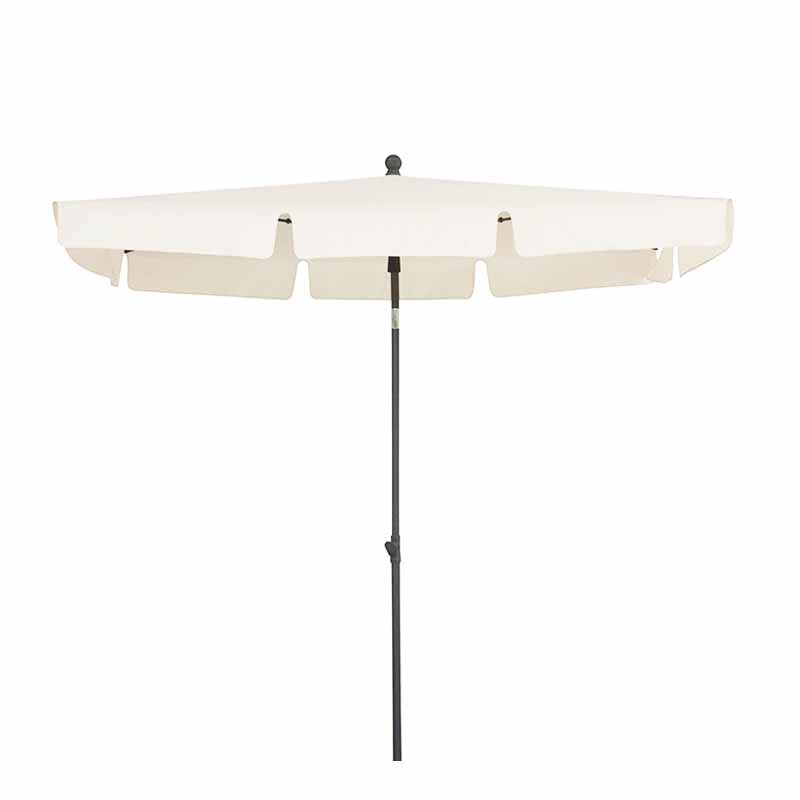
A white beach parasol is the best all-around choice for beachgoers who want maximum sun reflection, a timeless aesthetic, and versatile styling — white fabric reflects up to 85% of incoming solar radiation, keeping the shade underneath measurably cooler than darker-colored alternatives. Whether you are outfitting a private villa terrace, setting up for a family beach day, or selecting poolside furniture, a white beach parasol delivers both function and elegance that no other color can match.
Content
- Why White? The Science Behind Color and Sun Protection
- Types of White Beach Parasols: Which Style Fits Your Needs?
- White Beach Parasol vs. Other Colors: A Direct Performance Comparison
- Key Features to Look for When Buying a White Beach Parasol
- White Beach Parasol Size and Style Guide by Use Case
- How to Keep Your White Beach Parasol Clean and Bright
- White Beach Parasol Safety: Wind Ratings and Anchoring
- Frequently Asked Questions About White Beach Parasols
- Q: Does a white beach parasol provide enough UV protection?
- Q: Will a white beach parasol yellow over time?
- Q: How heavy should the base be for a white cantilever parasol?
- Q: What is the difference between a beach parasol and a beach umbrella?
- Q: Can I leave a white beach parasol outside overnight?
- Q: How much should I spend on a white beach parasol?
- Q: Is a fringed white beach parasol purely decorative?
- Conclusion: The White Beach Parasol as the Gold Standard of Outdoor Shade
Why White? The Science Behind Color and Sun Protection
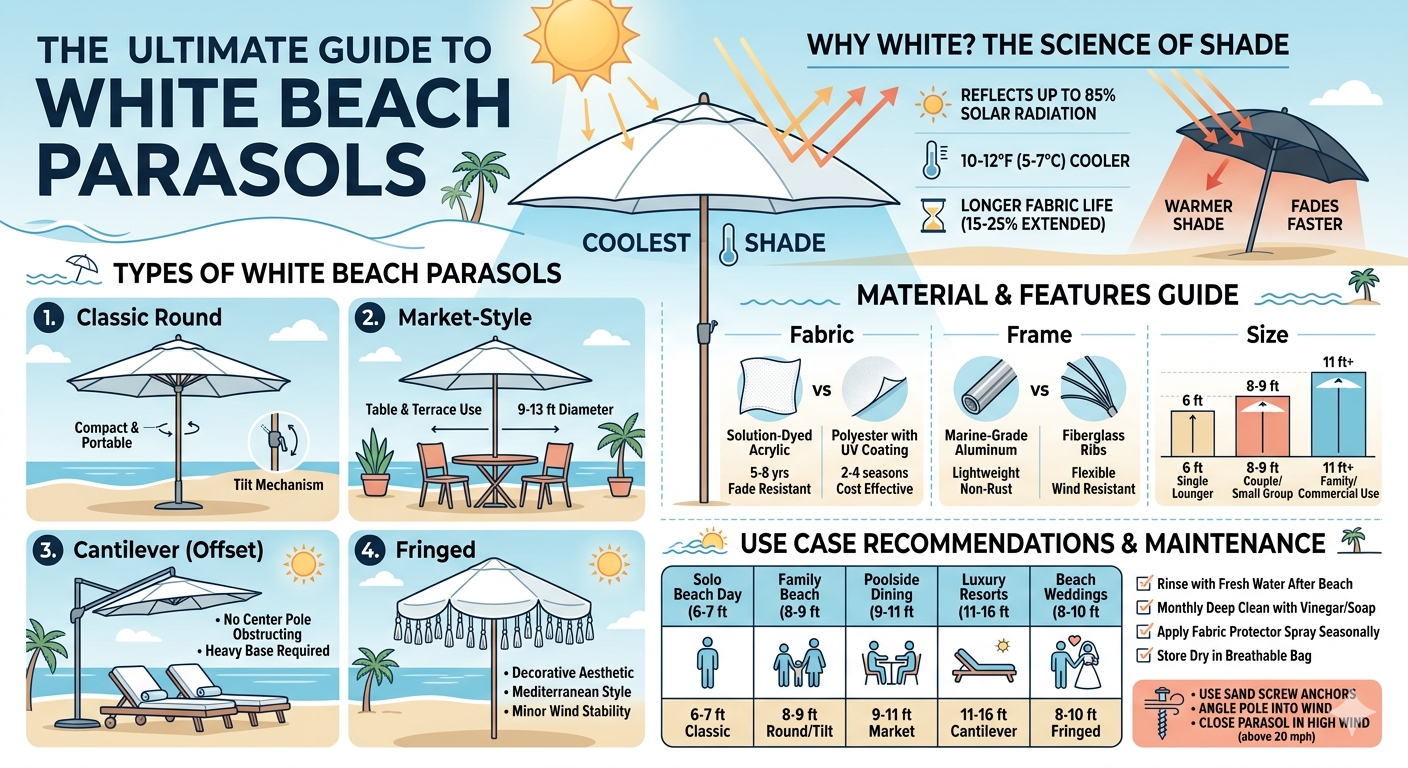
White is not merely a style choice — it is the most thermally efficient color for a beach parasol because light-colored surfaces reflect rather than absorb solar energy.
The solar reflectance index (SRI) measures how well a surface reflects sunlight and releases heat. White surfaces score between 80 and 100 on this scale, while black surfaces score near 0. In practical terms, this means:
- Temperature under the canopy: Studies from the University of Southern California measuring urban shade structures found that white fabric canopies kept shaded areas up to 10–12°F (5–7°C) cooler than equivalent dark canopies on identical sunny days.
- UV reflection vs. absorption: White fabric with a UPF 50+ rating blocks over 98% of UV-B rays. When combined with the reflective property, a white beach parasol reduces UV exposure from both direct sunlight above and reflected light from sand and water below.
- Fabric longevity: Darker dyes absorb more solar energy, accelerating the breakdown of polymer fiber bonds. White or undyed fabrics degrade more slowly under UV exposure, extending canopy life by an estimated 15–25% compared to heavily pigmented alternatives in equivalent outdoor use.
This is why professional beach resorts and luxury hotel pools worldwide — from the Maldives to the Amalfi Coast — overwhelmingly favor the white beach parasol as their default outdoor shade solution. It is a choice rooted in practical performance, not just aesthetics.
Types of White Beach Parasols: Which Style Fits Your Needs?
White beach parasols fall into four main structural categories, each designed for a different use case, wind exposure level, and aesthetic context.
1. Classic Round Beach Parasol
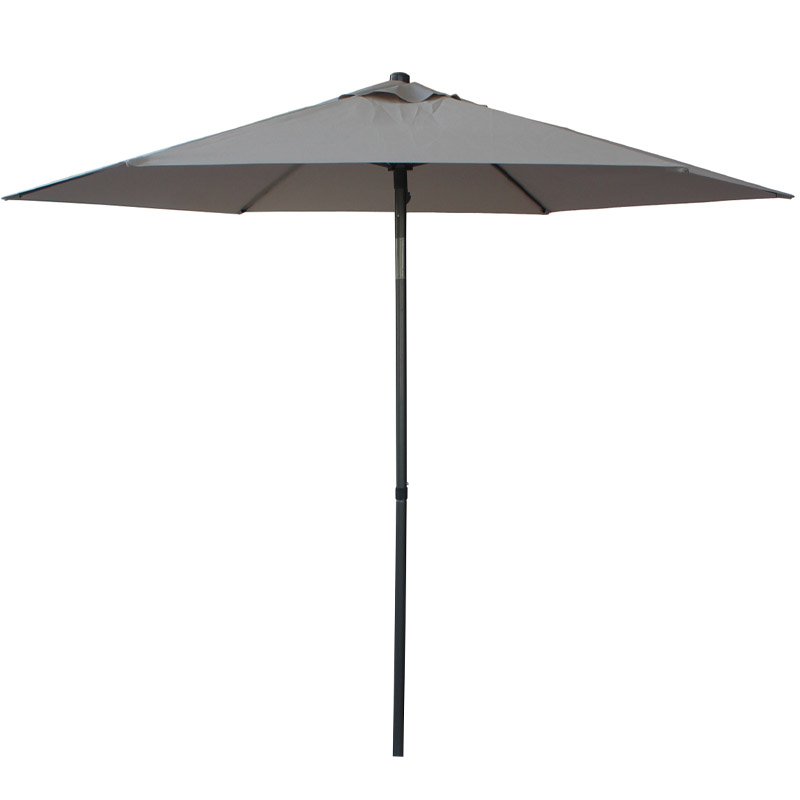
The traditional round white beach parasol — typically 6 to 8 feet (1.8–2.4 m) in diameter — is the most recognizable form. A central aluminum or fiberglass pole supports a canopy stretched over steel or fiberglass ribs. The tilting mechanism (usually a push-button or crank tilt) allows the canopy angle to be adjusted to block low-angle morning or afternoon sun. This style is ideal for individual or couple use at the beach or poolside. Its compact footprint makes it easy to carry and set up solo.
2. Market-Style Patio Umbrella (White)
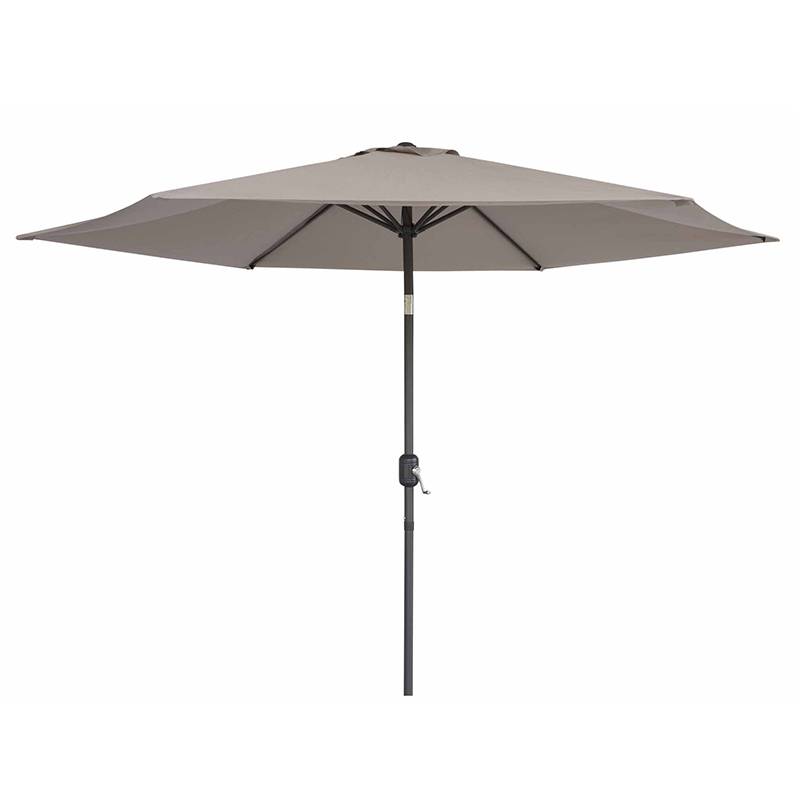
Larger than a classic beach parasol, market-style umbrellas range from 9 to 13 feet (2.7–4 m) in diameter and are designed for semi-permanent outdoor use at tables and terraces. A white market umbrella provides enough shade for 4–6 people seated around a dining set. The center pole design requires a weighted base or table-integrated mount. Premium versions use marine-grade fabrics such as solution-dyed acrylic, which maintains white color brilliance and resists mold for 5–7 years of outdoor exposure.
3. Cantilever (Offset) White Parasol
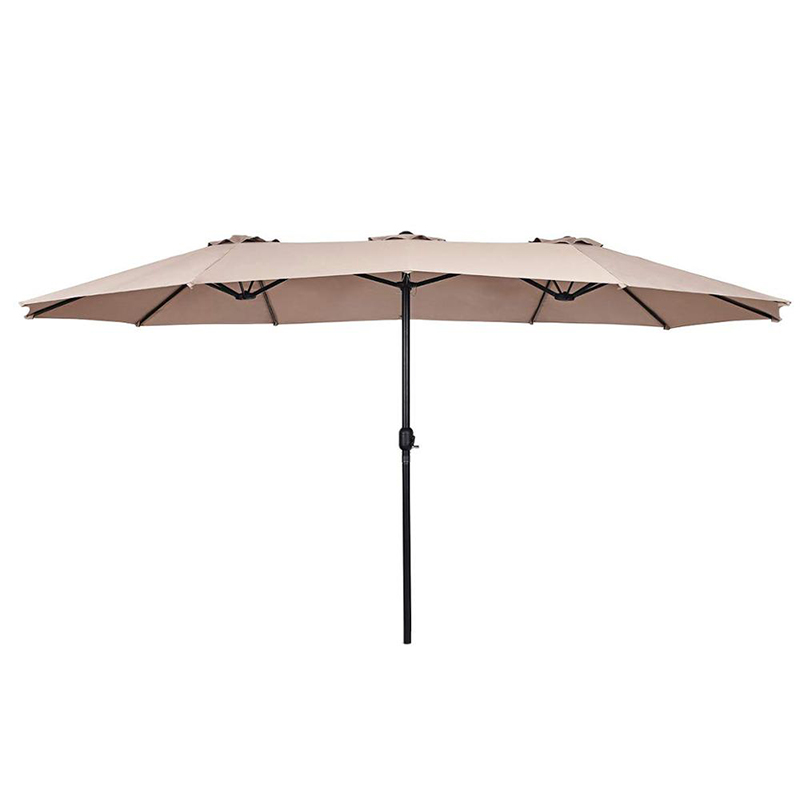
Cantilever parasols use a side-mounted pole that positions the canopy overhead without any center support — eliminating the pole from the shaded area entirely. White cantilever parasols, commonly 10–16 feet (3–5 m) in diameter, are the preferred choice for luxury sun lounger arrangements, outdoor sofas, and areas where a center pole would obstruct movement or sightlines. They require a heavy base (typically 100–200 lbs of ballast) and are best used in moderate wind conditions (below 25 mph / 40 km/h).
4. Fringed White Beach Parasol
The fringed white beach parasol adds a decorative tassel or fringe border to the canopy edge. Originally a Mediterranean design tradition dating back to early 20th-century European beach resorts, fringed parasols have experienced a major design resurgence. Beyond aesthetics, fringe serves a minor functional purpose: the dangling strips act as wind indicators, and the added edge weight slightly improves canopy stability in light breezes. Fringed white parasols are most popular in boutique hotel beach setups and destination wedding installations.
White Beach Parasol vs. Other Colors: A Direct Performance Comparison
When comparing white beach parasols against other popular color options, white consistently leads in thermal performance while remaining competitive in UV protection and durability.
| Color | Solar Reflectance | Shade Temperature* | UV Protection (UPF) | Fade Resistance |
|---|---|---|---|---|
| White | 80–85% | Coolest | UPF 40–50+ | Excellent |
| Navy Blue | 10–18% | Warm | UPF 30–50+ | Moderate |
| Beige / Ecru | 55–65% | Cool | UPF 35–50+ | Good |
| Red / Orange | 20–35% | Warmer | UPF 25–40 | Poor–Moderate |
| Black | 3–5% | Hottest | UPF 50+ (dense weave) | Good (fades to grey) |
| Striped (White/Blue) | 40–55% | Moderate | UPF 30–50 | Moderate |
Table 1: Comparison of beach parasol colors across solar reflectance, shade temperature, UV protection, fade resistance, and design versatility. *Shade temperature rating is relative under identical direct sun conditions.
Key Features to Look for When Buying a White Beach Parasol
The best white beach parasol combines a high-performance fabric, a corrosion-resistant frame, adequate canopy size, and a secure anchoring system matched to your typical wind conditions.
Fabric: The Most Important Decision
Fabric accounts for roughly 60% of a parasol's total performance. For a white beach parasol, look for:
- Solution-dyed acrylic: The gold standard for outdoor fabric. Color pigments are added to the fiber during manufacturing rather than applied on top, so the color cannot fade from the surface because it permeates the fiber entirely. Maintains white brightness for 5–8 years outdoors.
- Polyester with UV coating: A cost-effective alternative. A 600-denier polyester canvas with UV-resistant coating and a UPF 50+ rating performs well for 2–4 seasons of regular use. Inspect the coating for cracking annually.
- Olefin (polypropylene) fabric: Naturally resistant to moisture, mold, and chlorine — ideal for pool environments. It does not absorb water, drying rapidly after rain.
- Canvas (cotton): Traditional and breathable but requires more maintenance. Must be fully dry before storage to prevent mildew, and needs re-treatment with a water repellent spray every 1–2 seasons.
Frame and Pole Materials
Salt air and sand are highly corrosive to metal frames. The white beach parasol frame material matters enormously for longevity in coastal environments:
- Marine-grade aluminum (6061 alloy): Lightweight (a 9-ft umbrella pole weighs approximately 3.5–5 lbs), naturally corrosion-resistant, and will not rust. The best choice for beach environments.
- Powder-coated steel: Heavier and stronger than aluminum, but requires intact coating to resist corrosion. Inspect annually for chips or scratches that expose bare metal to salt air.
- Fiberglass ribs: Fiberglass umbrella ribs flex rather than snap in wind gusts — far superior to steel ribs in coastal conditions. Premium parasols combine aluminum poles with fiberglass ribs for the best of both materials.
- Teak or hardwood poles: Used in luxury resort installations. Naturally resistant to moisture and decay, aesthetically striking alongside white fabric. Requires annual oiling to maintain appearance.
Canopy Size: How Much Shade Do You Need?
Canopy diameter directly determines the usable shaded area. The shaded footprint is always smaller than the canopy diameter — a 9-ft (2.7 m) canopy provides roughly 45–50 sq ft of effective midday shade. As a practical guide:
- 6 ft (1.8 m): One person, single beach chair or lounger.
- 7–8 ft (2.1–2.4 m): Two people, a couple on beach towels or two loungers side by side.
- 9–11 ft (2.7–3.4 m): A family of 3–4 or a dining table setup for 4 people.
- 12–16 ft (3.7–5 m): Commercial or resort use, covering a large lounger arrangement or outdoor social area.
White Beach Parasol Size and Style Guide by Use Case
Matching the parasol type and size to your specific setting determines both practical performance and visual harmony.
| Use Case | Recommended Type | Ideal Canopy Size | Key Feature Priority |
|---|---|---|---|
| Solo beach day | Classic round, portable | 6–7 ft | Lightweight, sand anchor |
| Family beach outing | Round with tilt, sturdy pole | 8–9 ft | Wind vents, push-tilt |
| Poolside dining | Market umbrella with base | 9–11 ft | Solution-dyed acrylic, crank open |
| Luxury sun loungers | Cantilever / offset | 11–13 ft | 360° rotation, heavy base |
| Beach wedding / event | Fringed round or canopy | 8–10 ft | Aesthetics, fringe detail |
| Hotel / resort commercial | Cantilever or large market | 13–16 ft | Commercial-grade, wind-rated |
Table 2: White beach parasol type and size recommendations matched to specific use cases, with key feature priorities for each setting.
How to Keep Your White Beach Parasol Clean and Bright
Maintaining the brilliant white appearance of a beach parasol requires a seasonal cleaning routine and proper storage habits — neglect for even one off-season can lead to permanent yellowing or mildew staining.
- Regular rinsing: After each beach session, rinse the canopy with fresh water to remove salt crystals and fine sand. Salt left on fabric accelerates degradation of both the fiber and any UV-protective coating. This single step extends fabric life significantly.
- Monthly deep clean: Mix 1/4 cup of mild dish soap and 1/4 cup of white vinegar in a bucket of warm water. Apply with a soft-bristle brush using circular motions. Rinse thoroughly and allow to air-dry completely — never store a damp parasol as this guarantees mildew growth within 48 hours.
- Mildew treatment: For existing mildew spots on white fabric, a diluted solution of 1 part bleach to 10 parts water (for synthetic fabrics only — never use bleach on cotton canvas) applied carefully to the affected area, left for 5 minutes, then rinsed thoroughly will restore whiteness. Always test on a hidden area first.
- Sunscreen and oil stains: Common on beach parasols. Treat immediately with a small amount of cornstarch to absorb the oil, then apply a gentle degreasing dish soap directly to the stain before washing. Avoid harsh chemical solvents, which strip UV coatings.
- End-of-season storage: Store the canopy in a breathable fabric storage bag — not a plastic bag, which traps moisture. Keep in a cool, dry location away from direct sunlight. For fiberglass ribs, apply a thin coat of silicone lubricant to the joints before storage to prevent sticking.
- Re-treatment: Every 1–2 seasons, apply a fabric protector spray (water and UV repellent) to the outer canopy surface. This restores the hydrophobic coating that prevents water and salt absorption.
White Beach Parasol Safety: Wind Ratings and Anchoring
Improperly anchored beach parasols are responsible for hundreds of beach injuries annually — in the United States alone, the Consumer Product Safety Commission records approximately 2,800 beach umbrella-related injuries per year, many caused by parasols becoming airborne in wind.
Match your anchoring method to the parasol size and expected wind conditions:
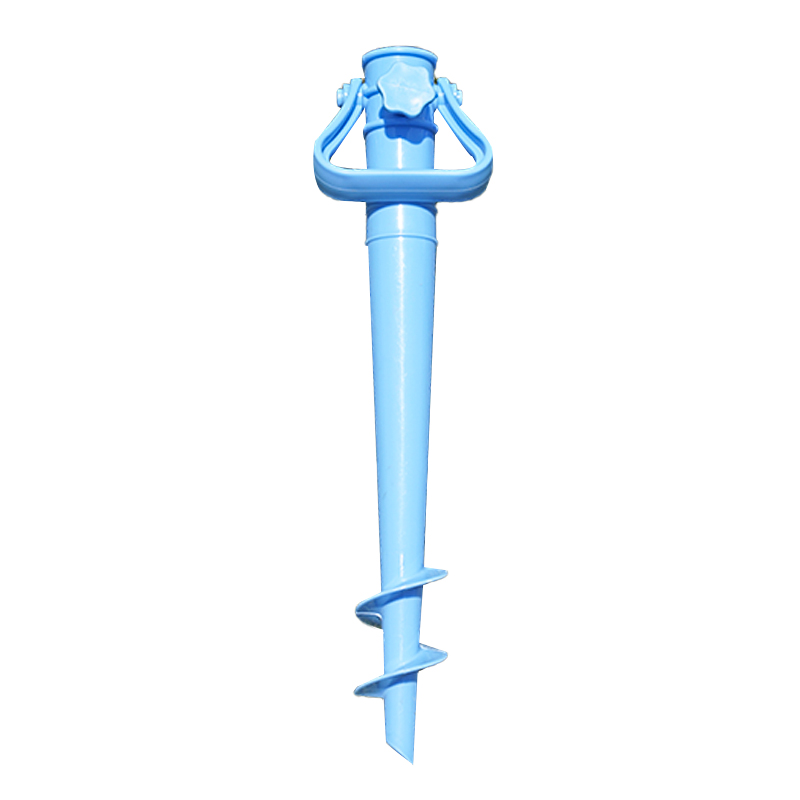
- Sand screw anchor: The most effective system for sandy beaches. A helical metal screw driven 18–24 inches into damp sand provides approximately 4× more holding force than simply pushing the pole into the sand. Always use damp, compacted sand — dry surface sand provides almost no resistance.
- Angle the pole into the wind: Tilt the parasol 20–30 degrees into the prevailing wind direction rather than straight up. This creates a natural airfoil effect that reduces wind uplift forces by up to 40%.
- Vented canopy design: Look for white beach parasols with one or two vent openings at the crown of the canopy. Vented designs reduce wind resistance by 25–35% compared to solid canopy designs, dramatically reducing the risk of the parasol becoming airborne in gusts.
- Wind speed limits: As a general guideline, beach parasols should be closed and secured when sustained winds exceed 20 mph (32 km/h). In gusts above 30 mph (48 km/h), no anchoring system reliably holds a standard beach parasol — remove it from the beach.
Frequently Asked Questions About White Beach Parasols
Q: Does a white beach parasol provide enough UV protection?
Yes — provided the fabric has a UPF 40 or UPF 50+ rating. A high-quality white beach parasol blocks over 97.5% of UV-B rays in direct overhead shade. However, UV exposure from light reflected off sand (which reflects up to 25% of UV radiation) and water (up to 10%) still reaches you from below the parasol, so applying SPF 30+ sunscreen remains important even when sitting under shade.
Q: Will a white beach parasol yellow over time?
All white fabrics are susceptible to some degree of yellowing from UV exposure, pollution, and organic residues like sunscreen and salt. Solution-dyed acrylic resists yellowing best. Regular rinsing, proper storage away from sunlight, and annual fabric treatment significantly slow this process. For polyester canopies, occasional use of an oxygen-based fabric brightener (such as OxiClean) is safe and effective at restoring whiteness without damaging UV-protective coatings.
Q: How heavy should the base be for a white cantilever parasol?
For a standard 10–13 ft cantilever parasol, the base weight should be a minimum of 100 lbs (45 kg) for light wind conditions. In areas with regular afternoon sea breezes (15–25 mph), a 150–200 lb base is recommended. Many cantilever parasols are sold with base frames that accept standard concrete pavers — filling a base with four 50-lb concrete blocks is a practical and cost-effective solution for permanent poolside installations.
Q: What is the difference between a beach parasol and a beach umbrella?
The terms are widely used interchangeably, but technically a parasol (from the French "para" — protect, and "sol" — sun) refers specifically to a sun-protection shade structure. A "beach umbrella" in the US context typically refers to a lightweight, portable, spike-base design used directly on the sand, while "parasol" more often describes a larger, more decorative structure suitable for terraces, pools, and permanent outdoor settings. In European usage, both terms describe the same object.
Q: Can I leave a white beach parasol outside overnight?
It depends on conditions. On calm, dry nights, leaving a closed and secured parasol outside does no significant harm. However, leaving it open overnight exposes it to dew and condensation, which promotes mildew on the fabric, and to unexpected wind gusts that can cause structural damage. Best practice is to close the canopy every evening and open it each morning, allowing fresh air to circulate. For extended periods away, store the parasol in its cover bag.
Q: How much should I spend on a white beach parasol?
Price correlates strongly with fabric quality and frame durability. Budget parasols ($30–$80) use coated polyester and steel frames — suitable for occasional weekend use but expect a 1–2 season lifespan with regular beach exposure. Mid-range options ($100–$250) offer fiberglass ribs, aluminum poles, and better fabric — a practical choice for regular family use lasting 3–5 seasons. Premium parasols ($300–$800+) use solution-dyed acrylic, marine aluminum or teak, and commercial-grade hardware — the cost per season over a 7–10 year lifespan is often lower than replacing budget models repeatedly.
Q: Is a fringed white beach parasol purely decorative?
The fringe serves minor functional purposes beyond aesthetics. The dangling edge strips act as wind direction indicators (helping you adjust the tilt angle correctly), and the added edge weight marginally increases canopy stability in light breezes by raising the center of gravity of the canopy edge. However, fringe can accumulate sand and salt more quickly than a plain edge, requiring more frequent cleaning. If aesthetics are the primary driver, the fringed white beach parasol is an excellent choice; if you prioritize low maintenance, a plain-edge design is easier to care for.
Conclusion: The White Beach Parasol as the Gold Standard of Outdoor Shade
A white beach parasol earns its iconic status on beaches and resort pools worldwide through a combination of superior thermal performance, timeless visual elegance, and genuine versatility. No other parasol color reflects more sunlight, keeps the shaded area cooler, pairs with more design contexts, or maintains its appearance as durably over years of sun and salt exposure.
Choosing the right white beach parasol means matching canopy size to your group, selecting a fabric appropriate to your use frequency and environment, ensuring your frame material resists coastal corrosion, and anchoring properly for your local wind conditions. Invest in solution-dyed acrylic fabric and aluminum or fiberglass construction if you intend to use your parasol regularly — the upfront cost is recouped within two seasons compared to replacing cheaper alternatives.
With proper cleaning and storage, a quality white beach parasol delivers a decade or more of reliable, beautiful sun protection — making it one of the most cost-effective investments in outdoor comfort you can make.