English
 Español
 عربى
 Português

A cafe terrace with fixed tables and a noon sun line that moves across the patio is where auto tilt earns its keep. An auto tilt patio umbrella lets one person change the canopy angle without moving the base or resetting the table layout. The short answer is this: specify auto tilt when shade must move across a fixed seating area, but only when the tilt joint, pole wall thickness, rib geometry, and base weight are matched as a system.
“Auto tilt” here means the angle changes through a crank, trigger, or push-button control, not that the umbrella opens by itself. The buyer’s test is simple: can a typical staff member change the angle from under the canopy, with one hand, and will the canopy hold that position after three or four cycles?
Content
- What Is an Auto Tilt Patio Umbrella?
- Why Auto Tilt Matters in Real Use
- Auto Tilt vs Manual Tilt vs Cantilever
- What to Check Before Buying or Sourcing
- Common Procurement Risks
- Matching the Umbrella to the Space
- Maintenance and Lifetime Checks
- Customization and Manufacturing Notes
- FAQ: Auto Tilt Patio Umbrella
What Is an Auto Tilt Patio Umbrella?
An auto tilt patio umbrella is a patio umbrella with a geared or spring-assisted joint that changes the canopy angle while the pole stays upright. The control is usually integrated into the crank housing or mounted on the pole below the ribs.
The mechanism matters because tilt is a load path, not a hinge alone. When the canopy tilts, wind load shifts from the ribs to the joint, pole, and base. A smooth demo umbrella can still fail in service if the pole is too thin or the base is too light.
- Crank tilt: a secondary crank or collar releases the joint; common on center-pole market umbrellas.
- Trigger tilt: a push-button or lever near the pole; faster to adjust but more sensitive to joint quality.
- Push-up tilt: the user lifts a collar and locks the canopy at a preset angle; simpler and lower cost.
For sourcing, ask for the tilt range in degrees, the number of lock positions, and the expected cycle life. A useful working range is often 20 to 45 degrees from vertical, but the right range depends on table height and sun angle. If the umbrella will serve a fixed restaurant table, test the tilt at seat height, not from a showroom floor.
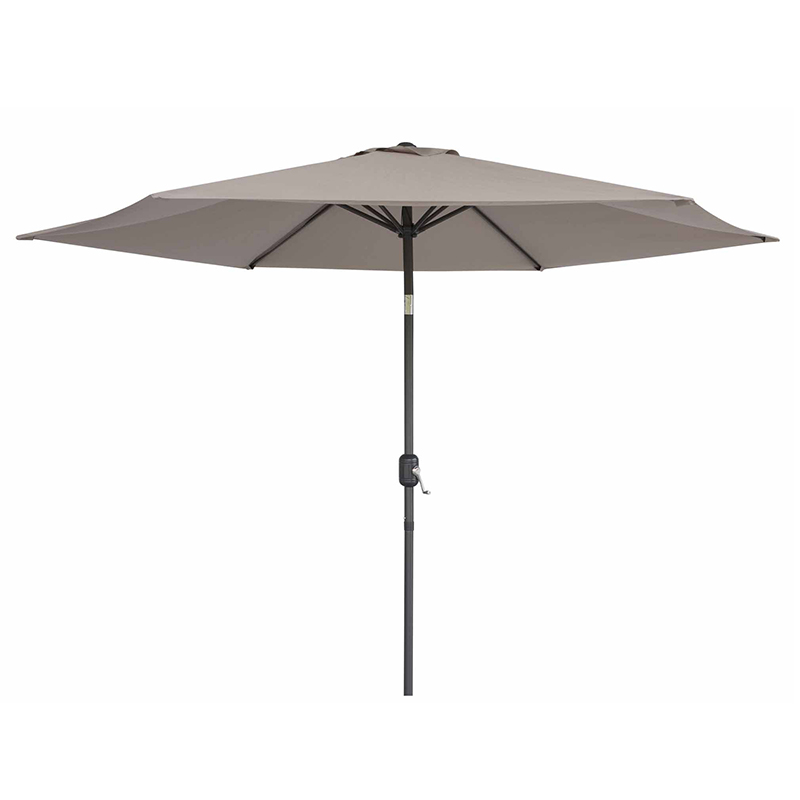
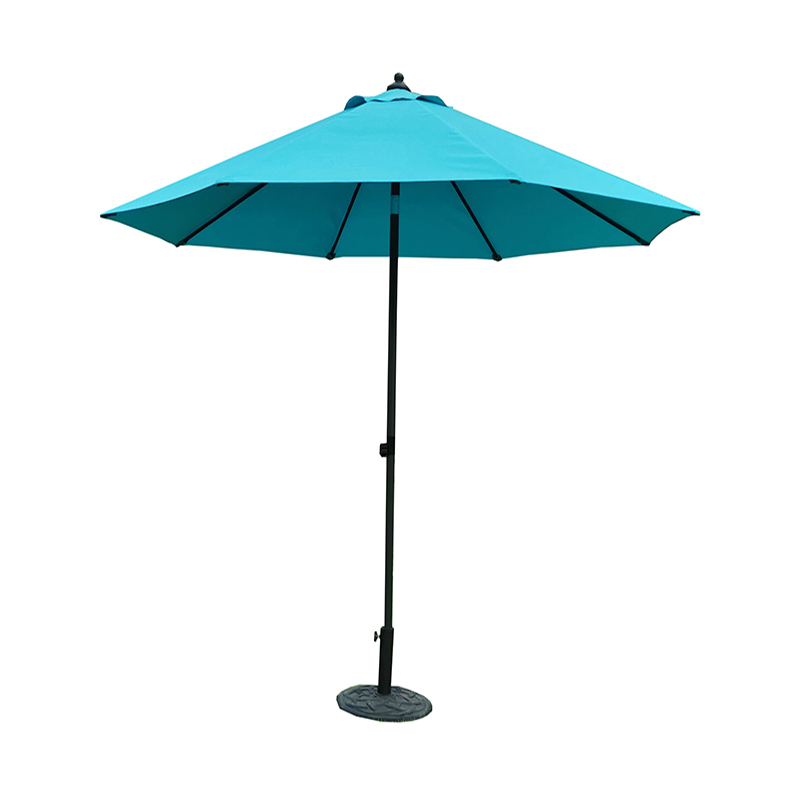
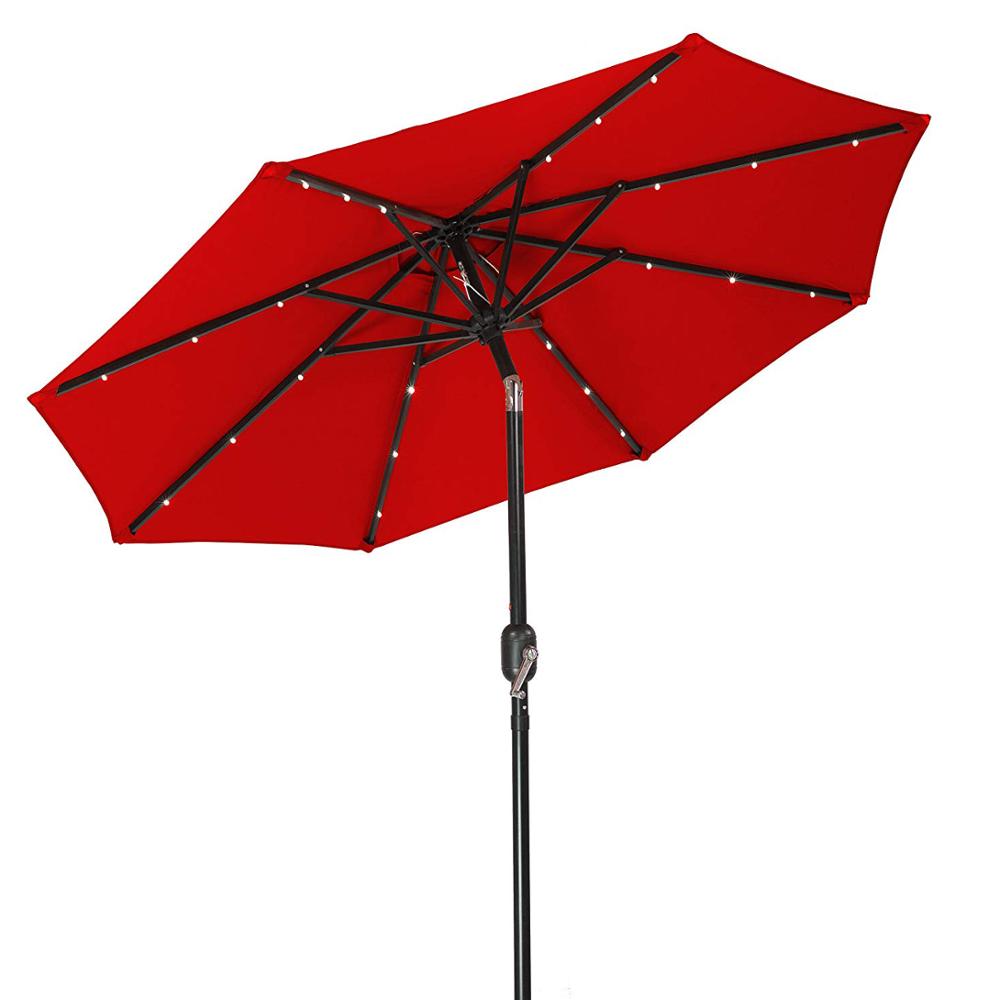
 GP1913-3 Crank-Open Tilt Garden UmbrellaA 2.7 m steel garden umbrella with crank opening and zinc tilt, useful where fixed tables or poolside settings make repositioning impractical.View Product →
Why Auto Tilt Matters in Real Use
Auto tilt reduces repositioning, not just effort. A fixed table, planter, or swimming pool edge often makes it impractical to move the base; changing the canopy angle is the only practical way to follow the sun.
In a hospitality setting, the benefit is measurable: staff can adjust shade between lunch and late afternoon without dragging furniture, and guests stay in the same seat. On a residential balcony, auto tilt helps clear a view or shift shade away from a glass door without moving a heavy base.
The trade-off is mechanical complexity. More joints mean more points to inspect for wear, corrosion, and creep. That is why auto tilt should be paired with a base that can handle the changed center of gravity.
Auto Tilt vs Manual Tilt vs Cantilever
Auto tilt is the best fit for fixed tables that need frequent angle changes; cantilever is better when the pole must stay out of the table area. Manual tilt is the low-cost choice when the angle is set once or twice a day.
| System | Best use | Strength | Watch point |
|---|---|---|---|
| Auto tilt center-pole | Cafes, restaurants, fixed patio tables | Fast angle changes from under the canopy | Joint wear and base stability |
| Manual tilt center-pole | Home patios with occasional adjustment | Lower cost and fewer parts | User must reach the pin or collar |
| Cantilever | Dining sets, loungers, clear table space | Pole stays outside the seating area | Heavy base and arm deflection |
What to Check Before Buying or Sourcing
Check the tilt system as a load-bearing assembly, not as a feature list. The first questions should be pole diameter and wall thickness, rib material, fabric weight, base compatibility, and wind rating.
Use these checks as a practical buying list:
- Pole and joint alignment: Ask for pole diameter, wall thickness, and tilt-joint material. A loose joint on a thin pole will wobble before the fabric fails.
- Tilt range and lock positions: Confirm degrees of tilt and whether the canopy locks at each position. A friction-only joint may creep in wind.
- Rib and hub quality: Check rib material, rib count, and hub rivets. Fiberglass ribs flex; steel ribs need coating protection.
- Fabric and UV performance: Ask for fabric composition, weight, and UV treatment. Dark colors provide more shade but absorb heat.
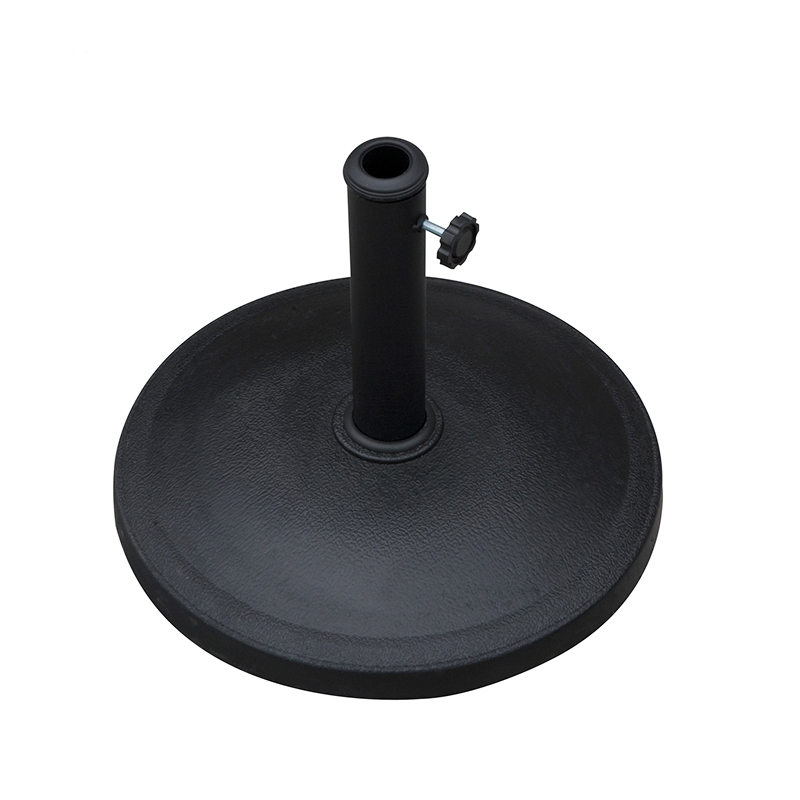
- Base match: A tilted canopy shifts load. Use a base rated for the umbrella size and expected wind exposure; do not rely on a light plastic base.
- Cycle test and spare parts: Request tilt-cycle test data and confirm availability of replacement cranks, joints, or ribs.
For buyers comparing styles, the patio umbrella range is a useful starting point, but the specification should be written around the site conditions, not the catalog photo.
Common Procurement Risks
The biggest procurement risk is buying a smooth demo umbrella that has not been tested under load. Tilt joints often fail at the connection between the crank housing and the pole, especially when the base is undersized.
- Joint creep: the canopy slowly drops from the set angle in breeze.
- Corrosion: plated joints and fasteners rust at coastal sites; specify coating or stainless hardware where needed.
- Base mismatch: a heavier canopy or longer tilt arm increases overturning moment.
- Operator error: staff force the crank past the stop because the lock is not clearly marked.
- Spare-parts gaps: a custom color or rib size can become unrecoverable after one season.
Ask for a pre-shipment tilt test on production samples, not only golden samples. A 20-cycle check at the set angle, followed by a visual inspection of the joint and pole, catches many assembly problems before shipment.
Matching the Umbrella to the Space
Match the umbrella size and tilt type to the table and sun path first; then choose fabric and frame finish. An 8 ft canopy over a 48 in table is a common starting point, but tilt clearance matters as much as diameter.
| Use case | Typical canopy | Tilt priority | Practical note |
|---|---|---|---|
| Cafe table for four | 7.5 to 9 ft | High | Check clearance for seated guests when tilted |
| Restaurant terrace | 9 to 11 ft | High | Use a matched base and wind plan |
| Home balcony | 6.5 to 8 ft | Medium | Measure door swing and railing clearance |
| Poolside loungers | 8 to 10 ft | Medium | Cantilever may free up walking space |
At coastal sites, salt and UV exposure shorten the life of both fabric and hinges. Specify coated components and rinse the tilt joint as part of the cleaning routine. In windy corridors, auto tilt should not be used as a substitute for a wind-rated frame and base; it is an adjustment feature, not a storm strategy.
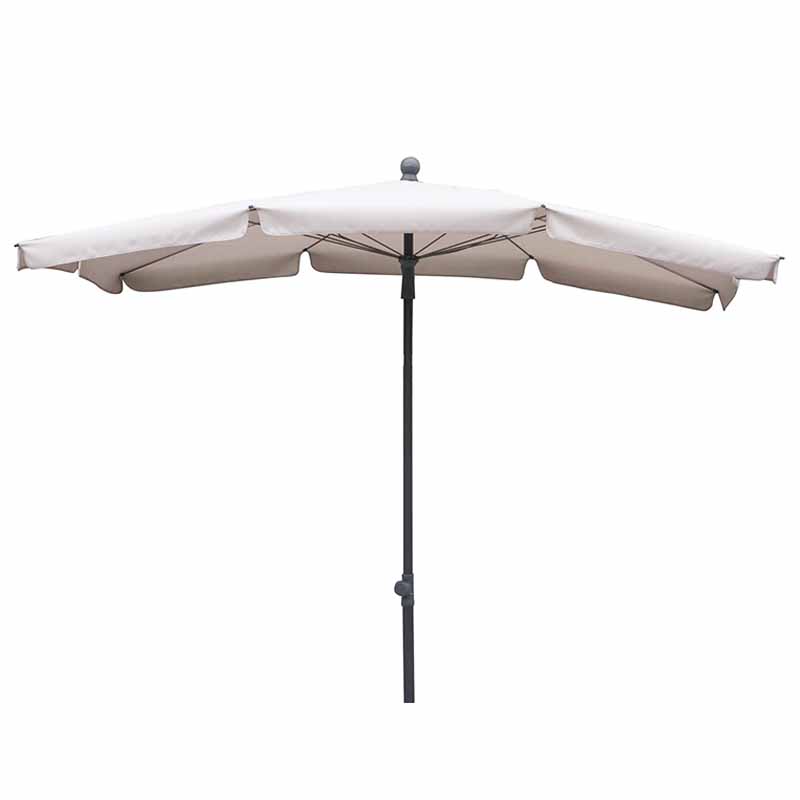 GP1901 Rectangular Steel Patio Umbrella with TiltA 2.0 × 1.3 m rectangular umbrella with steel ribs and built-in tilt, suited to patios, cafés and outdoor dining where shade angle needs adjustment.View Product →
Maintenance and Lifetime Checks
Auto tilt mechanisms last longer when the joint is kept clean and the umbrella is stored closed and dry. The most common avoidable failure is grit in the tilt collar, followed by fabric mildew from storing a damp canopy.
- Rinse the tilt joint monthly in coastal or dusty sites; dry before closing.
- Inspect the crank housing, rivets, and pole clamp each season.
- Do not force the tilt control past its stop; mark the range for staff if needed.
- Store the canopy dry and loosely folded, not compressed against the ribs.
- Replace worn joint parts before they score the pole or tear the fabric.
For commercial use, a simple log of tilt cycles and repairs is more useful than a visual check alone. It shows whether the mechanism is wearing faster than the fabric or the frame.
Customization and Manufacturing Notes
Customization should begin with the tilt mechanism, not the color. Pole diameter, joint type, rib layout, and base interface determine whether a custom canopy will operate smoothly after production.
In our factory, tube making and coating are handled in-house, which helps keep pole diameter, wall thickness, and coating adhesion aligned with the tilt joint. We also run QC at each process and hold ISO 9001, ISO 14001, ISO 45001, and ISO 50001 certifications. For buyers who need a specific canopy shape or branding, the custom manufacturing program can be scoped around the tilt range, fabric, and base system rather than a stock model.
Before tooling or sampling, confirm the tilt range, lock positions, fabric weight, wind exposure, and replacement-part plan. A clear specification at that stage is cheaper than correcting a joint after the first container.
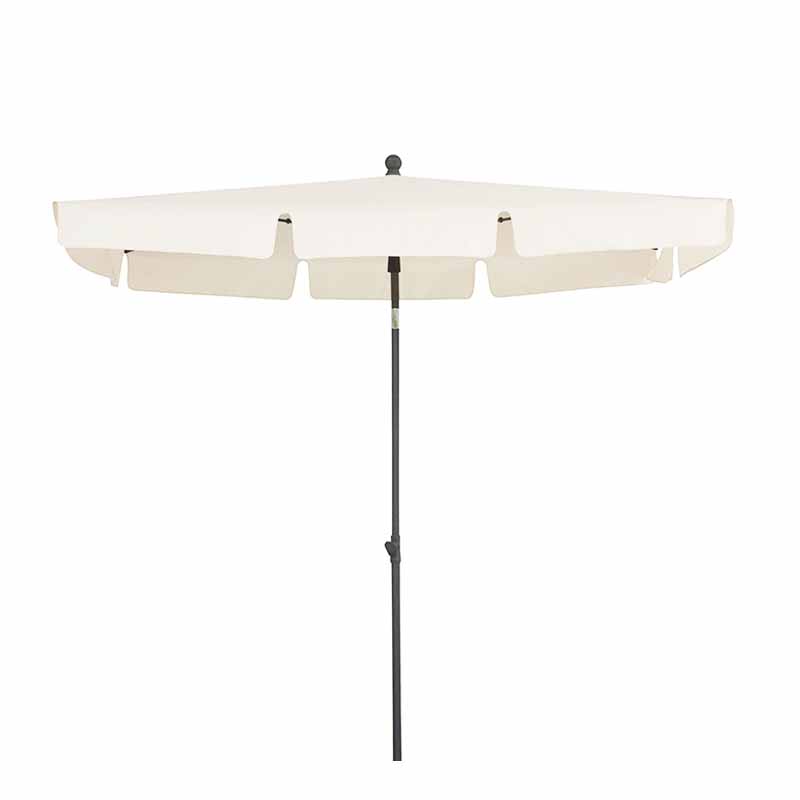 Steel rectangle umbrella with tilt GP1902The Steel rectangle umbrella with tilt GP1902 is a high-quality product designed for an outdoor sunshade. Its unique rectangular design and tilting function not only p...View Product →
FAQ: Auto Tilt Patio Umbrella
Is auto tilt the same as auto open?
No. Auto tilt changes the canopy angle; auto open opens the frame. Some umbrellas combine both, but the two mechanisms should be specified and tested separately.
Can an auto tilt umbrella stay tilted in wind?
It can hold a set angle only if the joint locks and the base is adequate. In strong or gusty wind, close the canopy; tilt is not a wind-resistance feature.
What tilt range is most useful?
A range of about 20 to 45 degrees from vertical covers most fixed-table use. The right range depends on table height, seat position, and the sun path at the site.
Does auto tilt cost more than manual tilt?
Usually yes, because the joint and control add parts and assembly time. The payback comes from faster adjustment and less furniture moving in commercial settings, not from a lower unit price.
How do I check quality before ordering?
Ask for tilt-cycle test data, a production-sample check, and spare-part availability. Inspect the joint under load at the full tilt angle, not only in the closed position.
An auto tilt patio umbrella is a practical shade tool when the seating layout is fixed and the sun moves. The specification should start with the tilt joint and base, then move to fabric and finish. That order keeps the umbrella usable after the showroom shine is gone.