2026-11-09
Short answer: an offset (cantilever) patio umbrella needs a base that works as a counterweight, because no centre pole runs down through the table to carry the load. For a residential model with a 2.5–3 m canopy, plan on roughly 60–120 kg of ballast over a footprint of about 1 m × 1 m, with a mounting tube that matches the pole diameter exactly. The four-plate cross base that ships with a straight umbrella, usually 20–40 kg, is not a substitute.
This is the part of the purchase that fails first, and it rarely fails gently. The mast leans a few degrees in a gust, one side of the plates lifts, and the whole assembly goes over onto paving, planting or people. Getting the base right costs far less than replacing a canopy, a table or a window.
Content
The short version: an offset umbrella pushes its base sideways as well as down, so mass spread over a wide footprint matters more than mass alone.
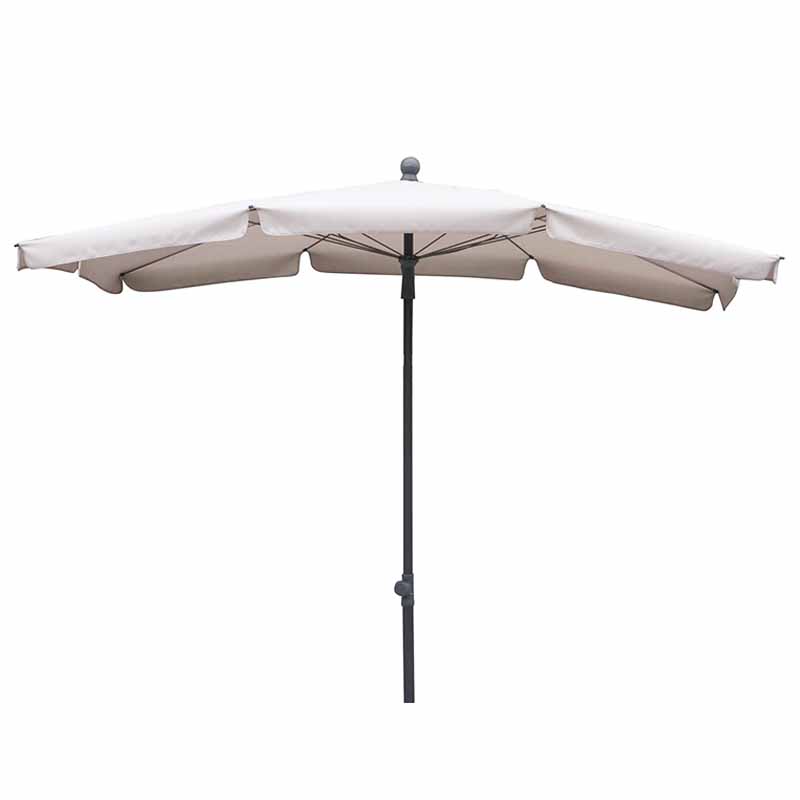
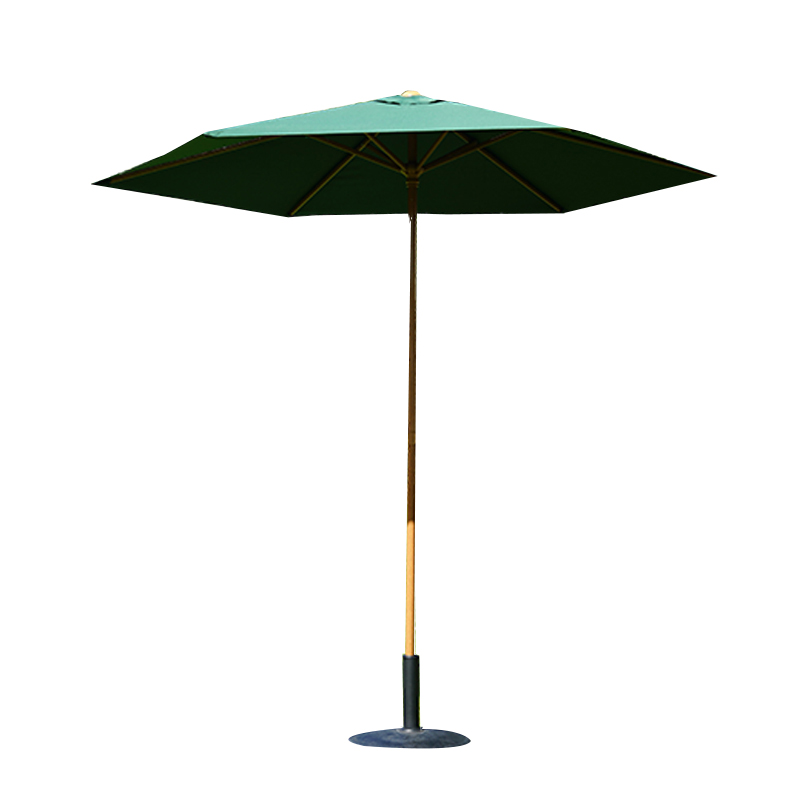
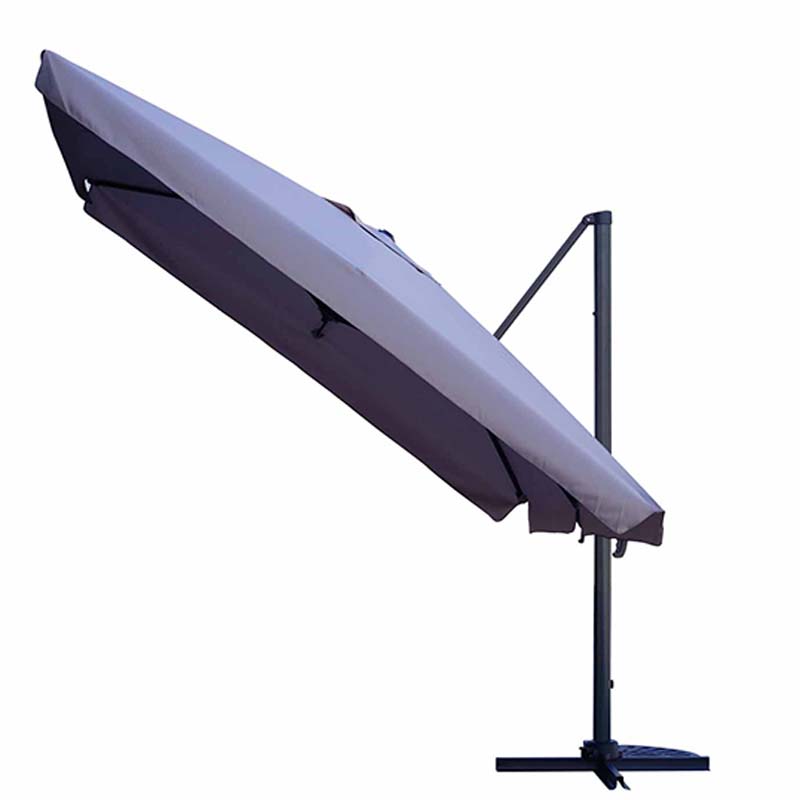
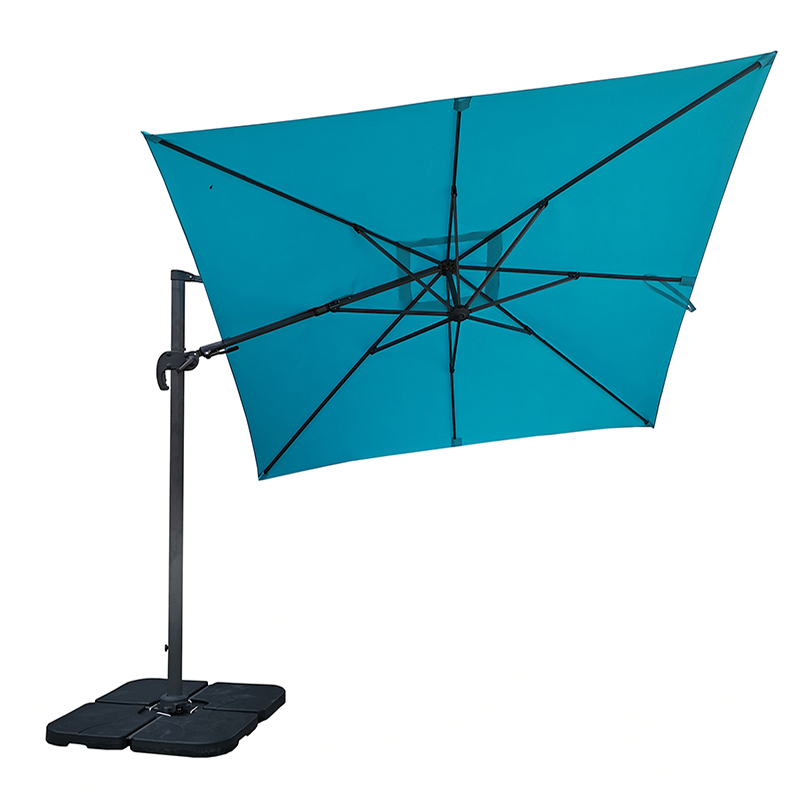
On a straight umbrella the pole sits over the middle of the base and the canopy load travels almost straight down, which is why four 5 kg pavers can hold a 2.2 m garden model in a sheltered courtyard. On a cantilever or Roma frame the mast stands at one edge and the canopy reaches 1–1.5 m beyond it. Wind pressure on 5–7 m² of fabric becomes a lever, and the base resists that lever with its own weight multiplied by how far that weight sits from the tipping line.
Three things change the number you need:
Offset bases also do mechanical work. Many carry a rotation hub or foot pedal so the canopy can swing through 360 degrees, and the base has to hold the mast rigid while that happens. A base that flexes makes the whole umbrella feel loose even when every bolt is tight.
Start with the frame, then choose the base: the shape of the mast foot decides which base families will even bolt up.
| Base style | How it resists tipping | Typical filled weight | Where it works |
|---|---|---|---|
| Fillable HDPE plate base (4 slabs) | Interlocking slabs bolted around a central tube | 60–120 kg with sand | Home patios; easy to ship, store and drain |
| Steel plate base | Low-profile plates bolted directly to the mast foot | 50–100 kg | Windy decks where a low profile matters |
| Concrete or stone plates | Highest density per slab, minimal flex | 80–150 kg | Permanent commercial terraces, coastal sites |
| Roma / side-post base | Four shaped plates around a rotating collar | 50–90 kg | Roma umbrellas that rotate at the collar |
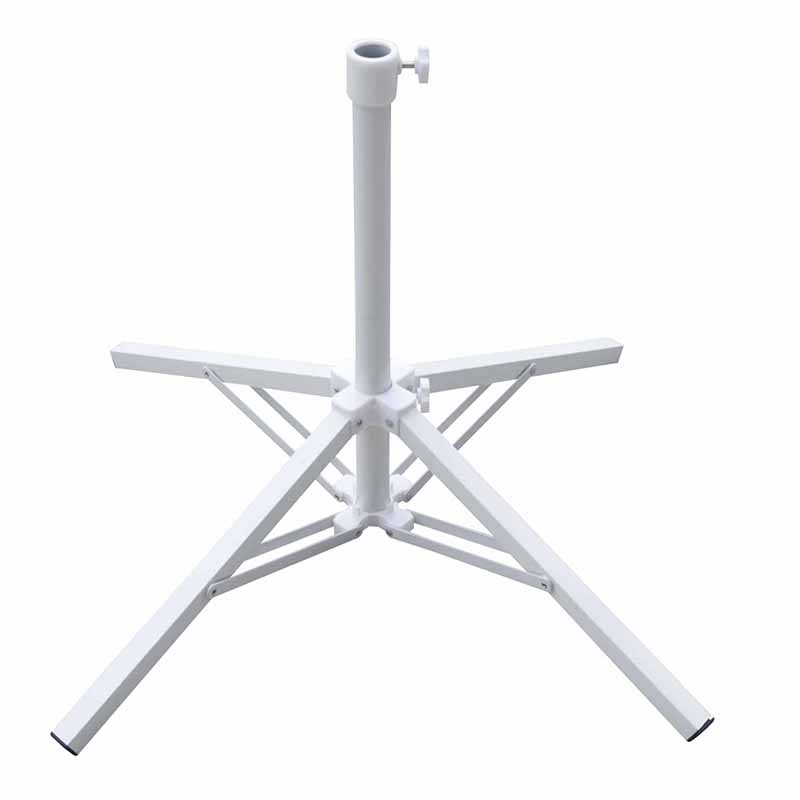
| Cross base with pavers | Weight at the ends of four arms under a centre pole | 20–40 kg | Straight umbrellas only |
Two practical notes. Fillable plates are usually rated twice, empty and filled, and the filled figure assumes dry sand. And a base is rarely interchangeable between models because tube diameter and bolt spacing differ, which is why our accessory range lists cantilever, Roma and cross-plate bases as separate families rather than one generic block.
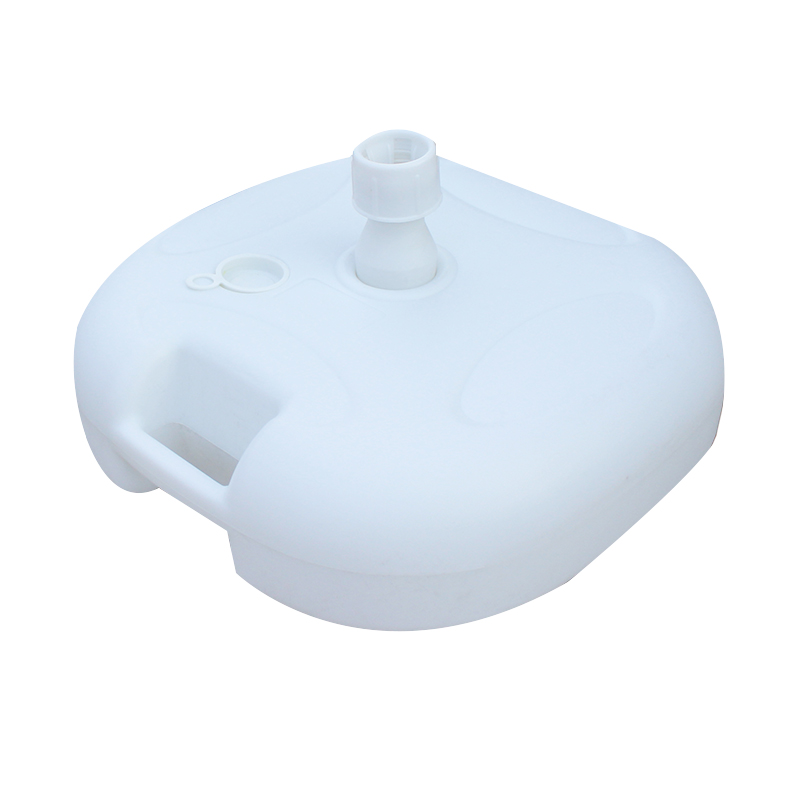
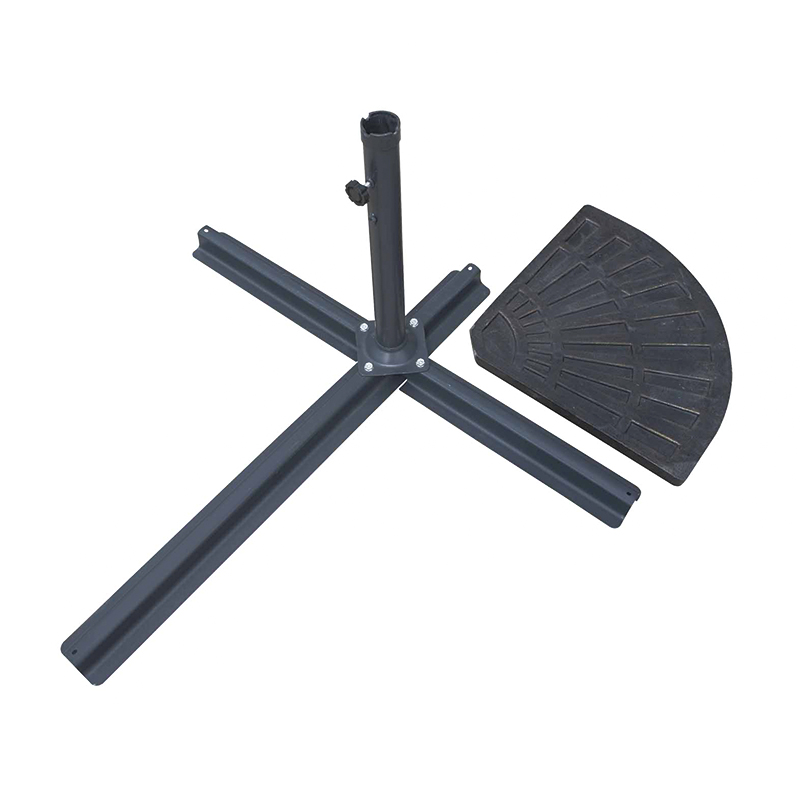 Resin Fan-Shaped Cantilever Umbrella Base UA1917A 12 kg resin base for cantilever umbrellas, with a fan-shaped footprint and metal pole interface for courtyards, terraces, gardens and commercial settings.View Product →
Buy toward the top of the range for your exposure, not the bottom: the price difference is small next to the cost of a tip-over.
Fill medium matters more than most buyers expect. Dry sand sits at roughly 1.6 t/m³ and water at 1.0 t/m³, so a base filled with water weighs about 60% of the figure quoted for sand. Some plates accept both; if yours does, decide once which medium you will actually use and treat the lower number as the real weight.
Wind is the other half of the calculation. No residential base keeps a 3 m canopy safe in a 70 km/h gust, and no sensible supplier claims it will. Closing the umbrella is part of the system, which is why our guide on how to choose the right base for a patio umbrella puts the wind routine ahead of plate weight.
The base has to match the pole, not just the canopy: most problems in this category are diameter and hub-height problems rather than weight problems.
Roma frames show why geometry matters: their four-piece HDPE base is shaped around the collar and does not share the plate layout of a cantilever base.
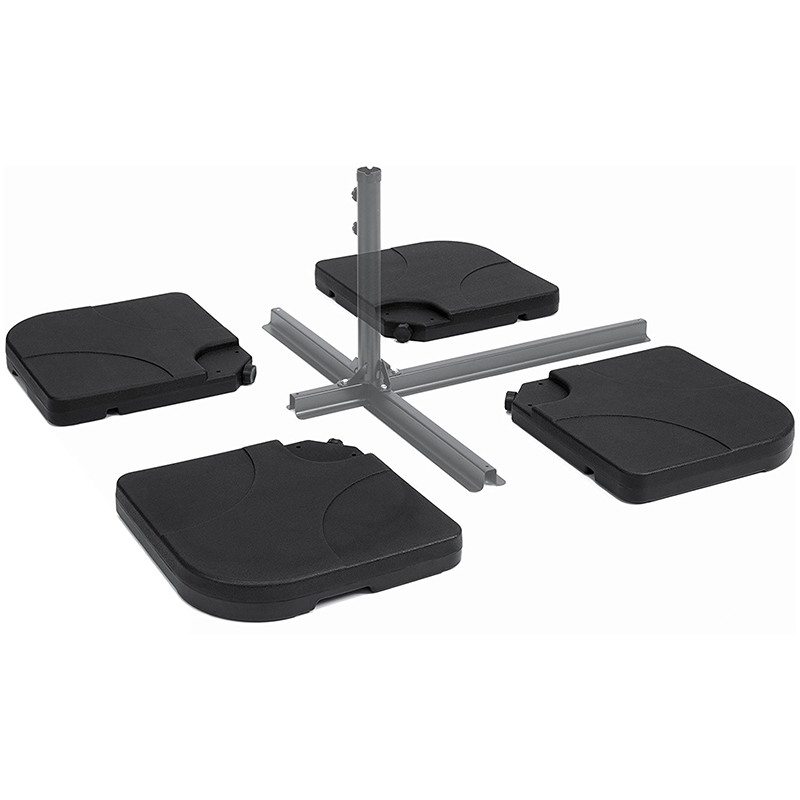 Base for Roma umbrella1/4 HDPE UA1914Size 50cm(L)x 50cm(W)x 7.5(H)cmView Product →
The base also has to suit the ground it stands on — the same 100 kg is fine on paving and questionable on a raised timber deck.
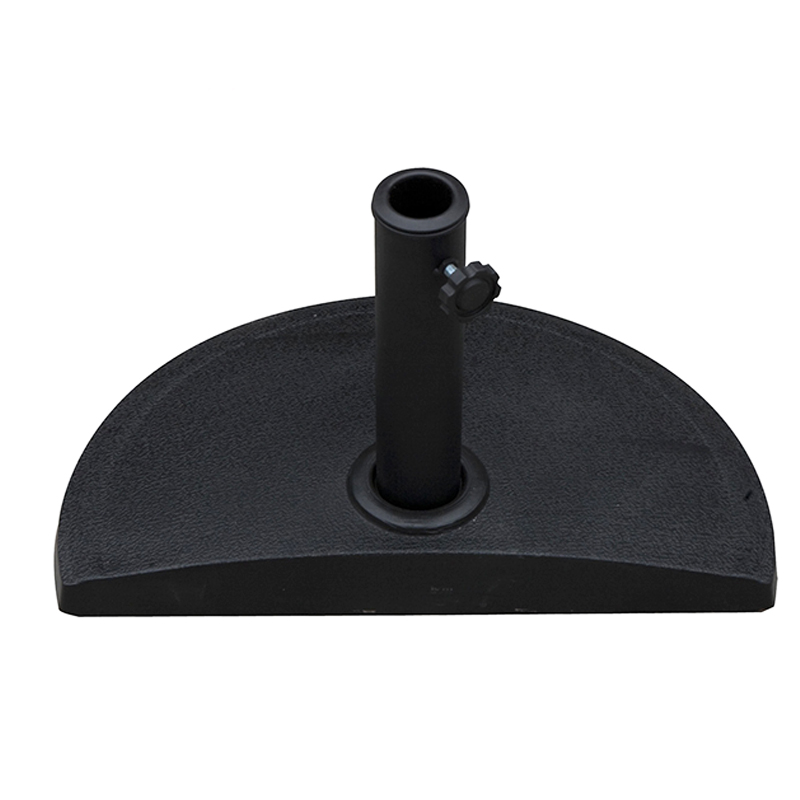 UA1922 Semi-Circular Resin Balcony Umbrella BaseA 9 kg weather-resistant resin base for balcony umbrellas, semi-circular and sized Φ50 cm x H33 cm to save outdoor space.View Product →
In a bulk order the base specification, not the canopy, is where most disputes start, so fix the numbers in writing before sampling.
We draw our own tubes and run the coating line in-house, and each base passes inspection at every process step, which is how a quoted filled weight stays consistent across repeat orders.
No. Cross bases are built for straight umbrellas, where the pole passes over the centre of the plates. An offset mast puts the load at the edge, so the plates will lift or slide.
Usually yes, if the plates are designed for both. Expect about 60% of the sand weight, and drain the plates before freezing weather arrives.
Around 90–120 kg filled for a typical residential model in an open garden, and close to the top of that range on rooftops, coastal sites or windy corners.
Not reliably. Pole diameter, collar length and bolt spacing vary between models, so check all three against the base specification before ordering.
Filled HDPE plates can stay outside if drained, and steel plates are fine while the coating is intact. In frost-prone areas, empty and stack the plates instead.
Sizing a base comes down to four numbers: filled weight, footprint, pole diameter and the wind your site actually sees. Fix those before you compare styles or prices, and an offset umbrella becomes a stable, long-lived piece of outdoor furniture rather than a seasonal risk.
related products
Be the First to Know
+86 13357500282
Songxia Town, Shangyu District, Shaoxing City, Zhejiang Province, China
China Parasols Factory And Wholesale Garden Umbrellas Manufacturers


 English
 Español
 عربى
 Português