English
 Español
 عربى
عربى
 Português

A coral patio umbrella is a standard patio umbrella with a canopy in the coral color family — a warm mix of pink, orange, and peach — designed to provide shade, UV protection, and a coastal accent on decks, patios, and terraces. The most important buying conclusion is simple: the aesthetic of coral should never override the engineering of the umbrella. Choose the fabric first for fade and water resistance, the frame for wind stability, and the size for the space you need to cover; the color will take care of the rest.
Coral also works on a design level: it reads as a warm accent, yet it pairs with white, grey, teak, and coastal blues — which is why hotels and seaside restaurants keep returning to it.
Content
What Is a Coral Patio Umbrella?
A coral patio umbrella is a freestanding or cantilever-mounted shading umbrella whose canopy is dyed in a coral tone, ranging from pale salmon and blush to deeper terracotta and burnt orange. It is not a different category of product from a standard patio umbrella; the construction is identical — a central or offset pole, a rib structure, and a fabric canopy, usually with a tilt mechanism, a crank opening system, or a wind vent.
Coral patio umbrellas commonly span 1.8 m (6 ft) to 3.5 m (11.5 ft) in diameter, and a genuine outdoor model should state a UPF rating of 40 or higher. In short, a coral patio umbrella is a sun-protection product first and a decorative piece second.
Why Choose a Coral Patio Umbrella?
Coral works better than most saturated colors in outdoor spaces because it adds warmth without clashing against the green of a garden or the blue of a pool. It also gives you a noticeable but controllable focal point.
- Against white or grey decking, coral adds a focal point without overwhelming the space.
- With teak or rattan furniture, it echoes warm earth tones; with navy or teal cushions, it creates a classic coastal palette.
- In restaurant terraces, it keeps the space lively and visually appetizing.
- Compared with white canopies, coral hides dust and water spotting far better.
Practically, coral is a forgiving color outdoors: scuffs, water marks, and light staining are far less visible than on white or pastel canopies.
Key Features to Compare Before Buying
Evaluate a coral patio umbrella in a fixed order: fabric first, frame second, mechanism third. Fabric controls fade resistance and UV protection, the frame controls wind behavior, and the mechanism controls daily convenience. Color matters only after those three perform well.
| Fabric | UV protection | Fade resistance | Water behavior | Typical lifespan |
|---|---|---|---|---|
| Polyester (piece-dyed) | UPF 30–50 depending on coating | Moderate; tends to fade in intense sun | Water-repellent coating wears off | 1–3 seasons |
| Solution-dyed acrylic | UPF 50+ | High; color is set before weaving | Sheds water well and dries quickly | 5–8 seasons |
| Olefin (polypropylene) | UPF 40–50 | Good, but degrades under prolonged UV | Dries fast; can absorb oily stains | 3–5 seasons |
| PVC or PE coated | Blocks most light | Low; coating can peel | Fully waterproof but not breathable | 2–4 seasons |
For a coral canopy, solution-dyed acrylic is the recommended choice because the color sits inside the fiber rather than on the surface. On a tight budget, a 220 g or 240 g polyester with a UV- and water-resistant coating is acceptable, but expect the coral tone to soften after two or three sunny seasons.
| Frame material | Strength | Rust resistance | Weight | Best use |
|---|---|---|---|---|
| Galvanized steel | Very strong | Good with powder coating | Heavy; stable in wind | Residential and commercial standards |
| Aluminum | Adequate for residential use | Excellent; does not rust | Light; needs a solid base | Resorts, balconies, frequent moving |
| Fiberglass ribs + aluminum pole | Flexible; resists inversion | Excellent | Medium | Windy coastal areas |
Rib count also matters: a 16-rib canopy stays drum-tight longer than an 8-rib one, and double-stitched seams resist tearing at the rib tips. For a coral umbrella left in the sun, confirm that the ribs and hub are UV-stabilized.
- Tilt: two-position or 360-degree shade adjustment; essential for all-day use.
- Crank: gear-driven opening, best for 2.4 m and larger canopies.
- Push-up: simple and light, but hard to raise on oversized models.
- Auto-open: convenient, but the spring must be commercial-grade to last.
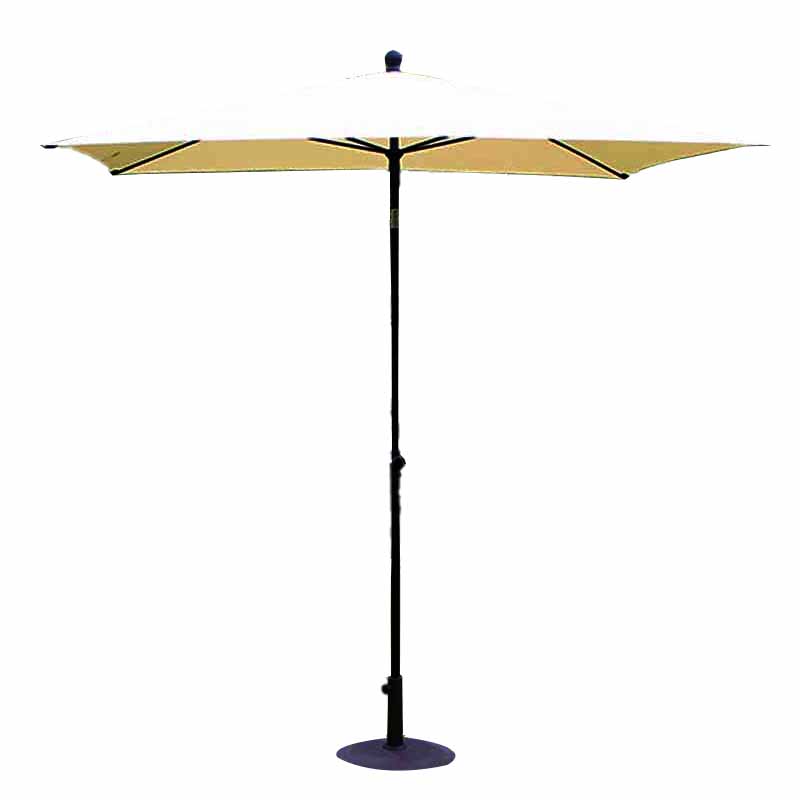
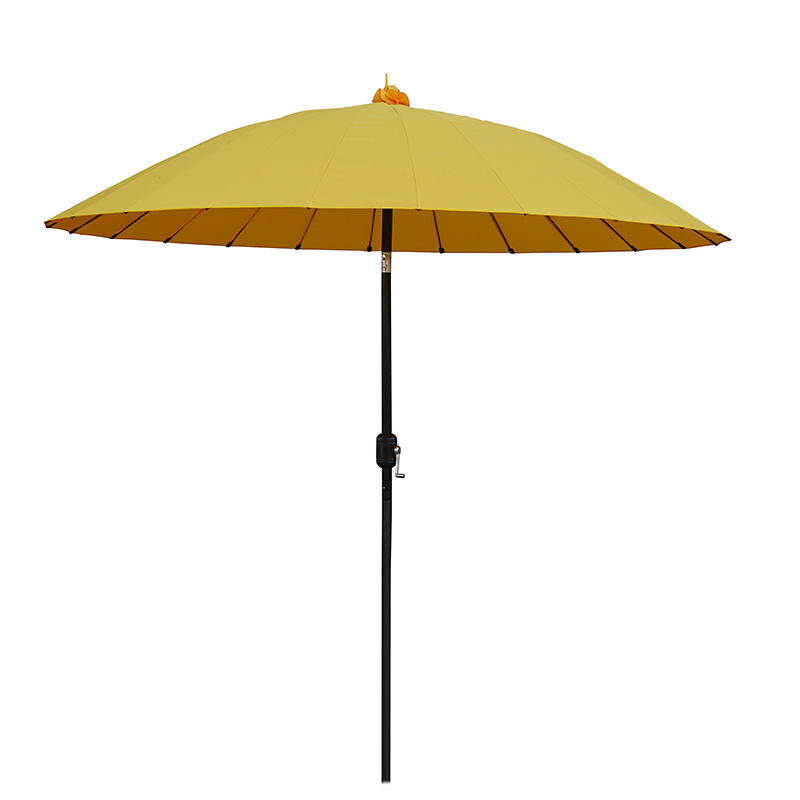 24k Crank Open Garden Umbrella with 2.7m or 3.0m Polyester CanopyThis crank-operated garden umbrella offers a robust steel pole and 24 steel ribs for stability. Its bright yellow polyester fabric resists water and UV, making it a durable choice for shading a dining table.View Product →
How to Choose the Right Size
Base the size on the footprint to be shaded: the canopy should overhang the table by 45–60 cm (1.5–2 ft) on each side and stay clear of guests' shoulders.
| Table or area width | Recommended umbrella diameter |
|---|---|
| 60–70 cm (24–28 in) bistro table | 1.8 m (6 ft) |
| 90–120 cm (36–48 in) round table | 2.2 m (7–7.5 ft) |
| 120–150 cm (48–60 in) rectangular table | 2.4–2.7 m (8–9 ft) |
| Lounge grouping with two sofas | 2.7–3.5 m (9–11.5 ft) or a cantilever model |
For a four-seat dining set, a 2.4 m (8 ft) umbrella is the starting point; for six seats, use 2.7 m (9 ft) or a 3 m × 2 m rectangle. For corner lounges, a cantilever version avoids the central pole. Work through the full sizing guide for patio umbrellas before ordering.
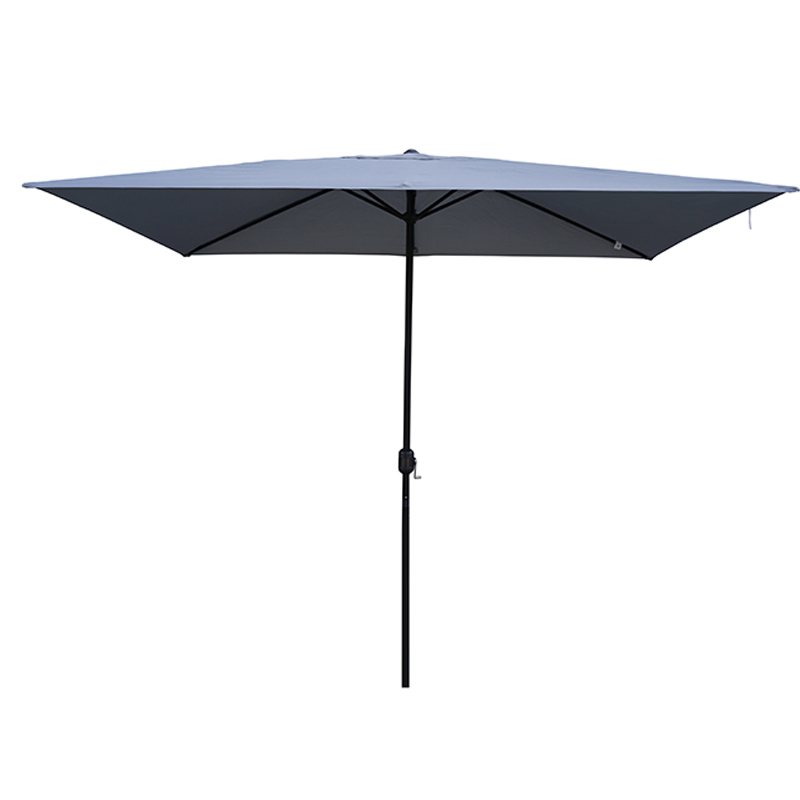
 Cantilever Garden Umbrella with Steel Pole and Polyester FabricA side-pole umbrella designed for flexible shading over lounges or seating areas. Available in 2.7m and 3.0m sizes, it combines sturdy steel construction with UV-resistant fabric for reliable outdoor use.View Product →
Coral Color and Fade Resistance
Coral is a medium-strength dye color, and without the right fabric technology it visibly loses saturation within a few seasons. The two control factors are the dyeing method and the UV stabilizers in the yarn.
Solution-dyed acrylic has pigment added before the fiber is extruded, so the coral color runs through the entire thread and survives sunlight far longer. Piece-dyed polyester is colored after weaving, which is why its surface coating degrades first. The difference shows within a single season in high-sun climates such as the Mediterranean, the Gulf, or Florida.
- Choose solution-dyed acrylic for high-fade regions.
- Look for a UPF 50+ rating, not a vague "UV protection" claim.
- Prefer a water-repellent, breathable finish over a fully waterproof coating, which dries slowly.
Wind Stability and Base Selection
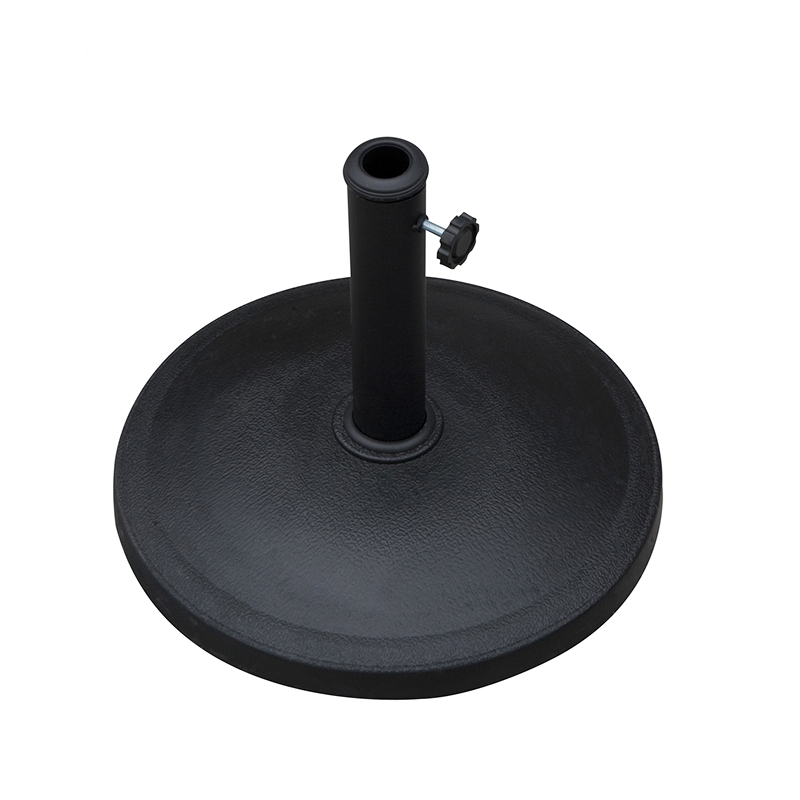
Most umbrella accidents are base failures: the umbrella tips because the base is too light for the canopy. A 2.4 m canopy is roughly 4.5 m² of sail, and a 40 km/h gust can create 25–30 kg of lift.
- 1.8 m umbrella: use a 15–20 kg base.
- 2.2–2.4 m umbrella: use a 25–35 kg base.
- 2.7 m or larger: use a 40 kg or heavier base.
- Cantilever models: use a dedicated offset base of 40–70 kg, never a standard cross base.
Structural resistance also helps: a wind vent in the canopy crown reduces inversion stress, flexible fiberglass ribs bend without breaking, and any umbrella used in a windy zone should be rated to at least 30–40 km/h.
Cleaning and Off-Season Storage
A coral umbrella stays bright far longer if it is cleaned gently and stored dry. Moisture, mildew, and concrete dust cause most discoloration, not water itself.
- Brush off leaves and dust, then rinse with a garden hose.
- Clean with mild soap and lukewarm water — no bleach or abrasive pads.
- Open the umbrella fully and scrub panels with a soft brush.
- Rinse well and let the canopy dry completely before closing.
- Store the closed umbrella under a cover or indoors for the off-season.
Commercial Use and Wholesale Considerations
For resorts, restaurants, and retail programs, a cheap coral patio umbrella is a false economy: a faded, wobbly umbrella reads as a negative guest experience. Source from a manufacturer that can match the coral tone consistently across batches and apply custom branding.
- Custom color matching: reproduce your exact coral or terracotta reference on every unit.
- Consistent batch shading: critical when you reorder hundreds of pieces twice a year.
- Durable components: powder-coated steel, double stitching, reinforced rib caps.
- Certified production: ISO 9001 and ISO 14001 systems and social audits indicate a stable export supplier.
Factories with their own tube-forming and powder-coating lines control both cost and quality, which makes them better partners for a custom patio umbrella solution with your logo, size range, and fabric program.
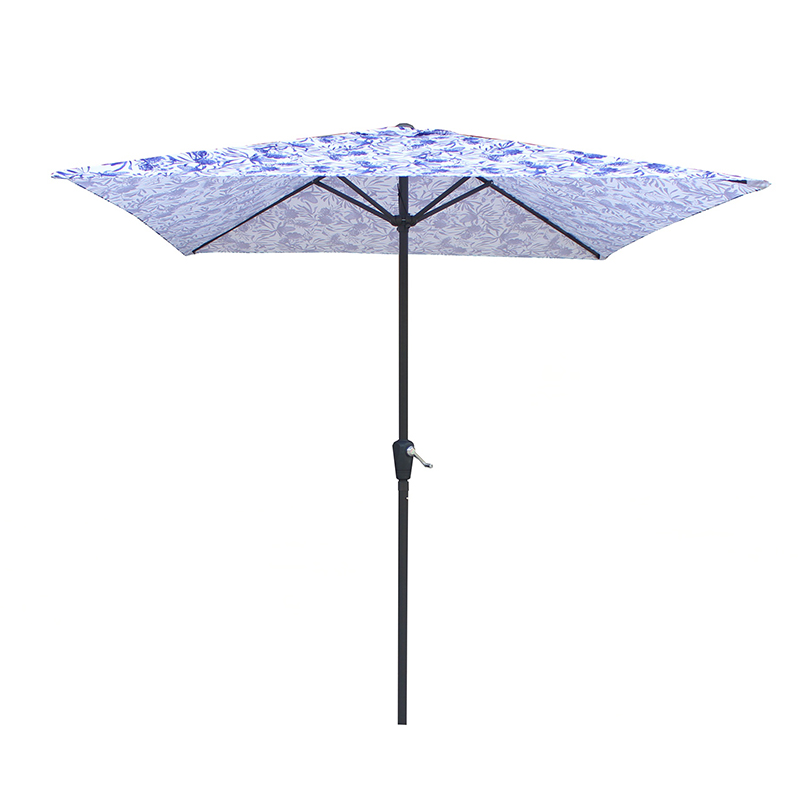
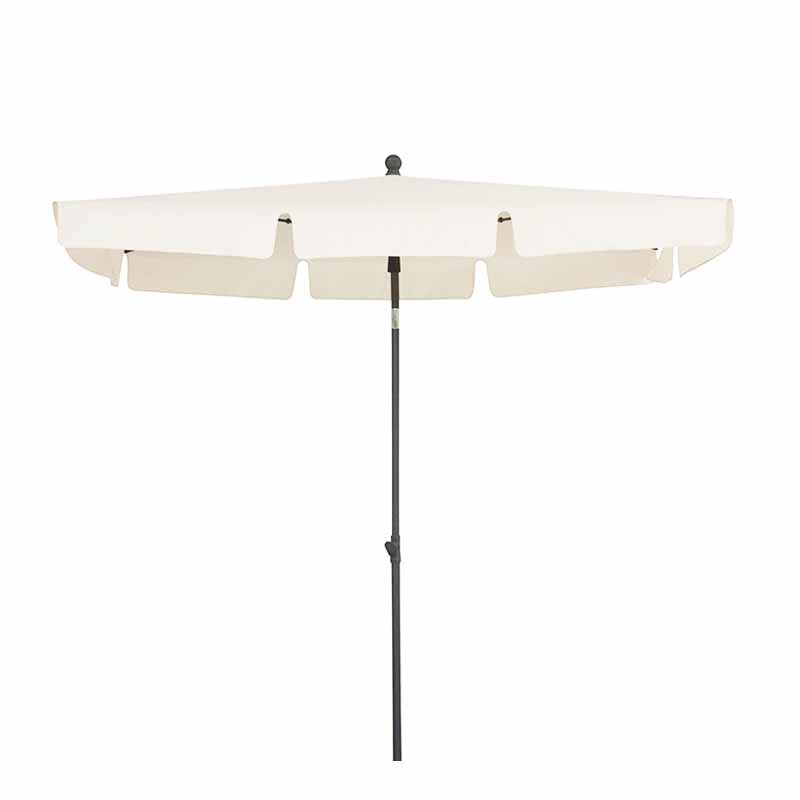 Steel Rectangular Tilt Umbrella with 2.0m by 1.25m CanopyThis rectangular umbrella includes a tilting mechanism for adjustable shade coverage. Made with a steel frame and waterproof polyester fabric, it suits patios and terraces where precise sun positioning matters.View Product →
Frequently Asked Questions
Are coral patio umbrellas UV resistant?
Only if the fabric is rated for it. Look for UPF 50+; solution-dyed acrylic protects for the life of the canopy, while coated polyester protects until the coating wears.
Will the coral color fade quickly?
Budget piece-dyed polyester can lose its coral tone in one to two seasons; solution-dyed acrylic typically holds color for five to eight seasons. Deep coral and terracotta fade slower than pale blush.
What size coral patio umbrella do I need for a 60-inch table?
A 60-inch (150 cm) table needs a 2.4–2.7 m (8–9 ft) umbrella so the canopy overhangs by roughly 45–60 cm and clears your guests' shoulders.
Can a coral patio umbrella handle strong wind?
A vented canopy, fiberglass ribs, and a weighted base handle ordinary sea breezes. For exposed sites use a cantilever model with a heavy offset base, and close the umbrella above roughly 40 km/h.
Is a coral patio umbrella suitable for commercial outdoor dining?
Yes. Hotels and restaurants use coral canopies in beachfront and garden dining. Choose 240 g or heavier commercial fabric, a steel or aluminum frame, and a color-matched finish for brand consistency.
A coral patio umbrella delivers practical shade and a warm visual identity at the same time. Buyers who start with fabric and frame, confirm the size against the table, match the base to the wind load, and clean the canopy twice a year will keep the coral tone presentable for years. The same logic applies whether you need one umbrella for a courtyard or a full order for a resort — and that logic is what separates a durable, beautiful umbrella from one that is merely on-trend.