English
 Español
 عربى
عربى
 Português

A dinner on the patio can end with everyone carrying their plates indoors because of one mosquito. The usual fix is not a gazebo or a screened porch; it is a mesh net that clips to the edge of an umbrella you already own and drops to the ground, turning shade into a sealed dining space.
Here is the short answer. A patio umbrella with netting is almost always two products rather than one: a standard center-pole or cantilever umbrella plus a drop-down mosquito net, usually sold as an aftermarket kit. That single fact changes how you should buy. The mesh itself is cheap and forgiving; the umbrella underneath it is not. Canopy size, rib count, hub design and pole finish decide whether a net hangs straight and closes at the floor, or sags, gaps, and lets insects walk in.
Content
What a Patio Umbrella With Netting Really Is
Netting for a patio umbrella is built in one of two ways, and picking the wrong one is the most common and most expensive mistake in this category.
| Build | What is included | Best for | Watch out for |
|---|---|---|---|
| Clip-on drop-down mesh skirt | A separate net panel with an elastic or clip ring at the top, a zippered door panel and a weighted hem, with a 2.2–2.6 m drop | Existing 2.7–3 m center-pole dining umbrellas | Needs a flat canopy hem; a 6-rib canopy sags once the mesh is clipped on |
| Frame-mounted net enclosure | Net sewn to a second hoop fixed to the umbrella ribs or pole, with a full zipper door and a floor skirt | Loungers, low seating and exposed, breezy sites | Heavier, needs 8 ribs and a reinforced hub; higher cost and longer setup |
Compared with the alternatives, the umbrella-plus-net route is the cheapest way to get a sealed eating area over a table that is already on the patio. A gazebo with net walls gives more floor space but needs four anchor points, a permanent footprint and a larger budget. A pop-up screen tent is faster to pitch but rarely fits over a full dining table. A pergola with fixed screens costs several times more.
Sizing: Match the Net Drop to the Canopy, Not the Other Way Around
Order the net 20–30 cm longer than you think you need. The hem must reach the floor, or be tucked under the table skirt, because any gap wider than about 10 cm at ground level will be found by insects within a week.
| Canopy diameter | Net drop that reaches the floor | Comfortable seating | Typical setting |
|---|---|---|---|
| 2.5 m (8 ft) | 2.0–2.2 m | 2 | Bistro table, balcony |
| 2.7 m (9 ft) | 2.2–2.4 m | 4 | Four-seat dining set |
| 3.0 m (10 ft) | 2.4–2.6 m | 4–6 | Main patio table |
| 3.5 m (11.5 ft) | 2.6–2.8 m | 6–8 | Large or commercial tables |
Three measurements decide the fit:
- Canopy diameter across the widest point of the open canopy, measured with the umbrella fully tensioned.
- Clearance from the canopy edge to the floor at the lowest point, taken on the side where the ground slopes.
- Table height and overhang, because a 75 cm table overhang pushes chairs outward and pulls the net tight against them.
A 2.7 m canopy over a four-seat table is the sweet spot: the net clears chairs as people move in and out, yet the fabric does not billow far enough to brush a grill or a fire pit nearby.
Which Umbrellas Hold Netting Well
Buy an 8-rib canopy with a flat 4–6 cm hem, a single-piece hub, and a 38 mm or 48 mm powder-coated pole. Six-rib canopies sag visibly once 1–2 kg of mesh is clipped to the hem, and thin 25 mm poles flex in gusts, which opens seams at the hub.
Center-pole crank umbrellas with tilt
This is the most netting-friendly layout, because the canopy edge sits at a consistent height all the way round, so the mesh hangs evenly and the zipper door stays aligned. A tilt joint also lets you move the shade as the sun travels without re-hanging the net. In our own patio umbrella range, the crank-open garden umbrella with tilt uses a single-piece hub and a 48 mm pole, the type of frame that carries mesh without sagging.
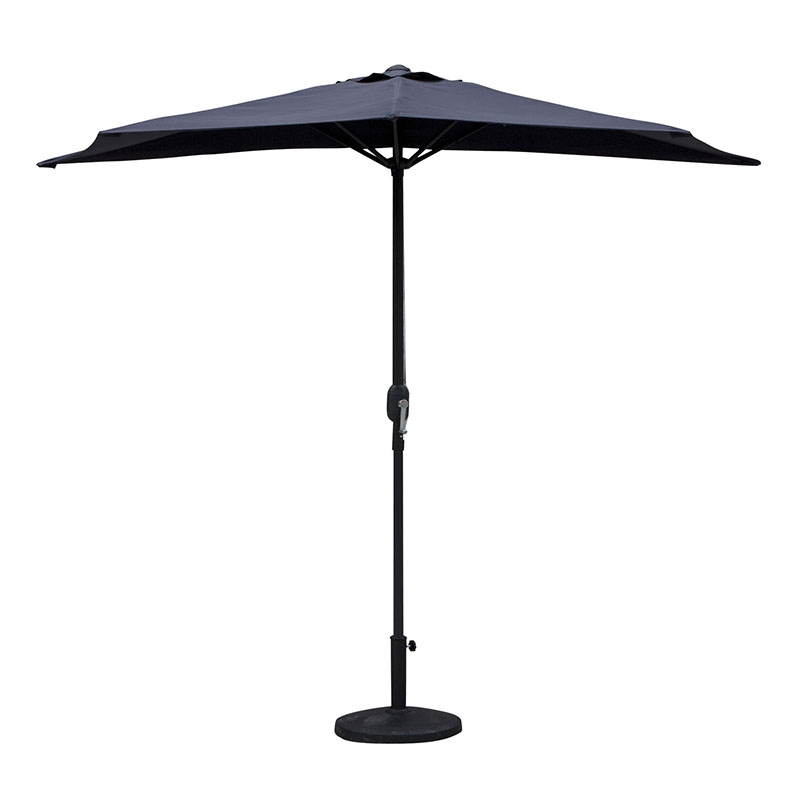
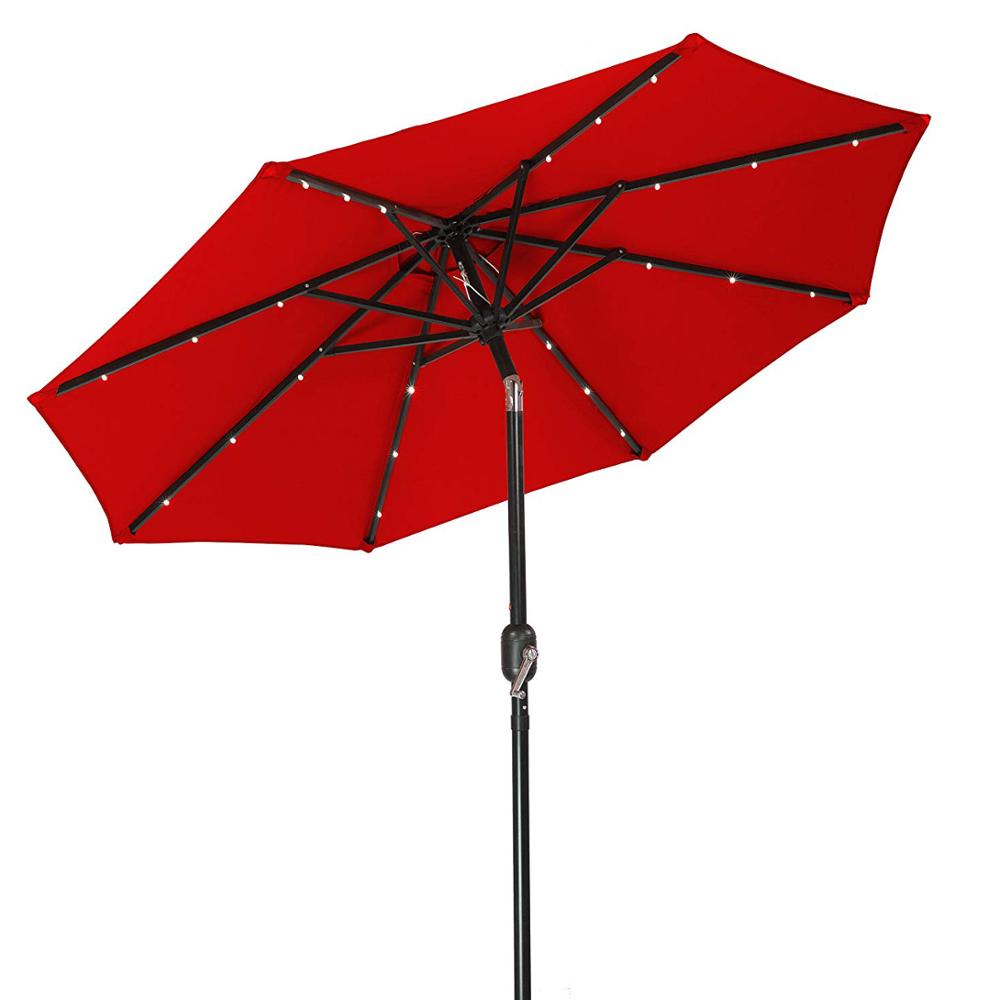
 Crank Open Tilt Garden Umbrella GP1913-3Steel-framed patio umbrella with crank opening, tilt adjustment, and 2.7m polyester canopy; relevant to discussions of even mesh hanging and shade movement.View Product →
Cantilever and Roma umbrellas
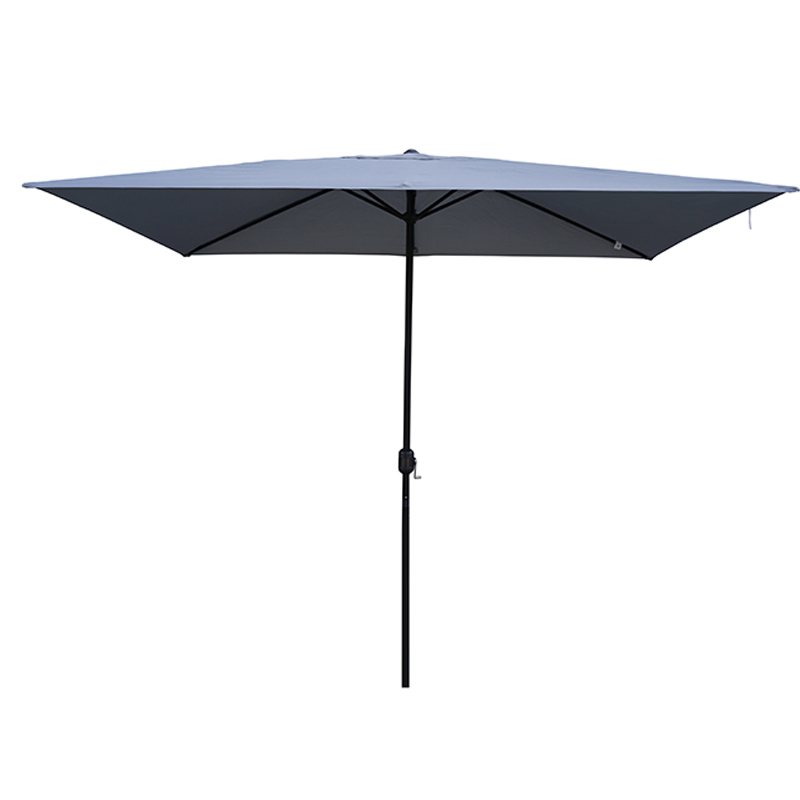
Cantilever umbrellas clear the space under the canopy, which is a genuine advantage for loungers and low seating. The trade-off is the offset arm: the top ring of the net has to be fitted around the canopy rather than around the pole, and the canopy must stay balanced so the extra weight does not pull the arm out of level. Heavy cantilever bases, 60 kg and above when filled, are not optional here. A cantilever garden umbrella with a square canopy and a bolted rotation collar handles netting well; a lightweight promotional model with a 32 mm arm does not.
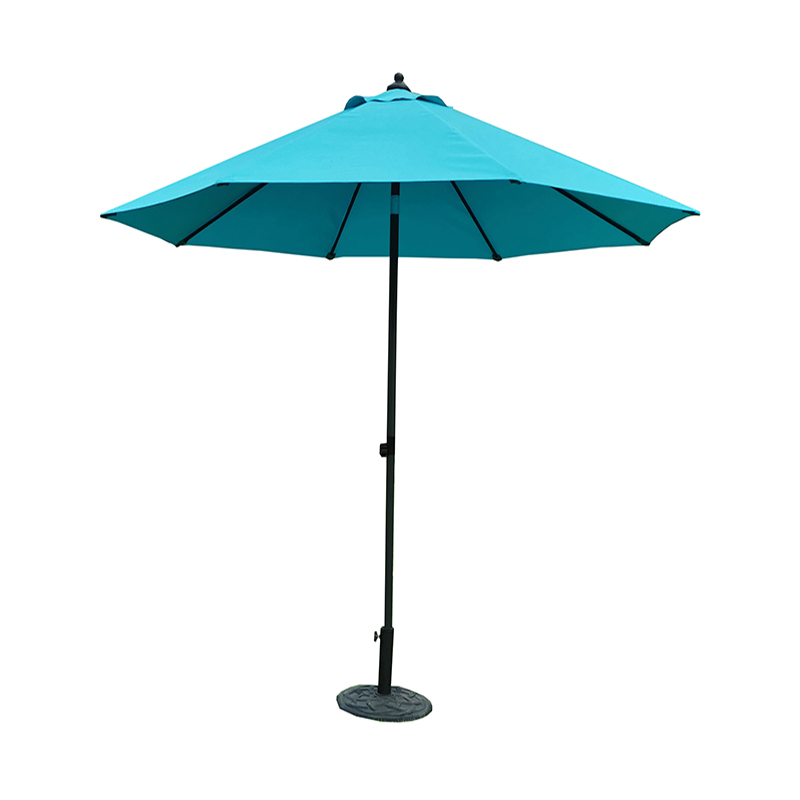
 Cantilever Garden Umbrella GP1925 with Offset PoleOffset-pole parasol with steel ribs, 42/48mm pole, and 2.7m or 3.0m polyester canopy; useful when weighing netting and wind stability.View Product →
Wind Load, Bases and Everyday Safety
Adding netting roughly doubles the sail area of an umbrella. A 3 m canopy that stays upright in a 20 km/h breeze on its own will start to lean once a closed net is attached, because the mesh stops air moving through the way an open-sided canopy does.
- Base weight: 25 kg minimum for a 2.5 m canopy with netting, and 35–40 kg for a 3 m canopy.
- Cross bases filled with water or sand, or a bolted ground plate, outperform a thin steel plate on every surface.
- Weighted hem: sand bags or a water tube every 60–80 cm keep the skirt flat against the floor.
- Gusts above roughly 40 km/h: take the net down first, then close or remove the canopy.
If you would rather not rely on weight alone, the practical steps in this guide on securing a patio umbrella in windy weather apply directly to netted setups, because the net changes the load path but not the physics. A weighted, cross-style base with a locking bolt is the simplest upgrade for a straight-pole frame.
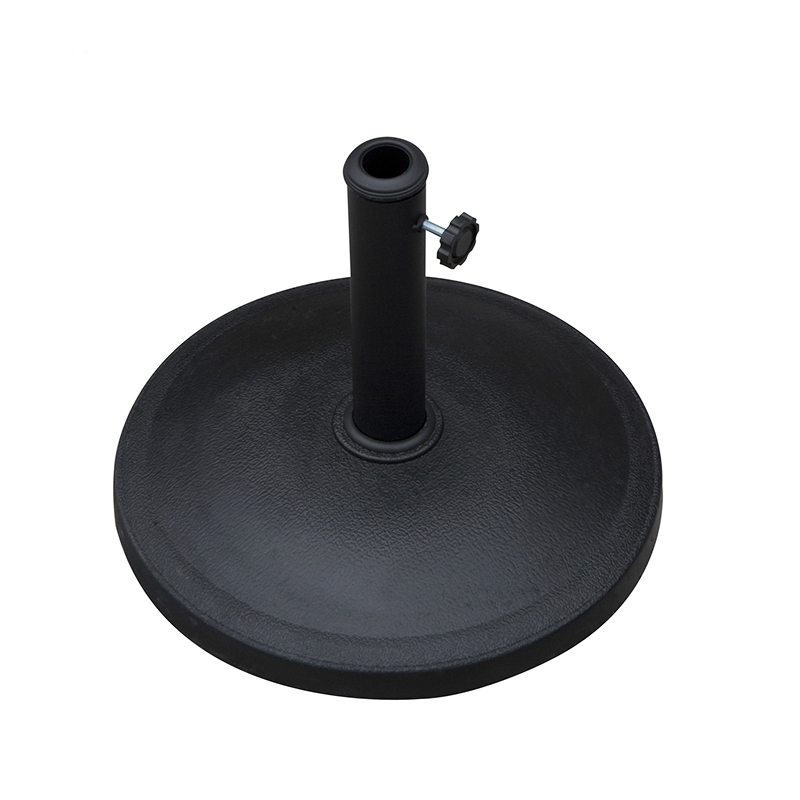
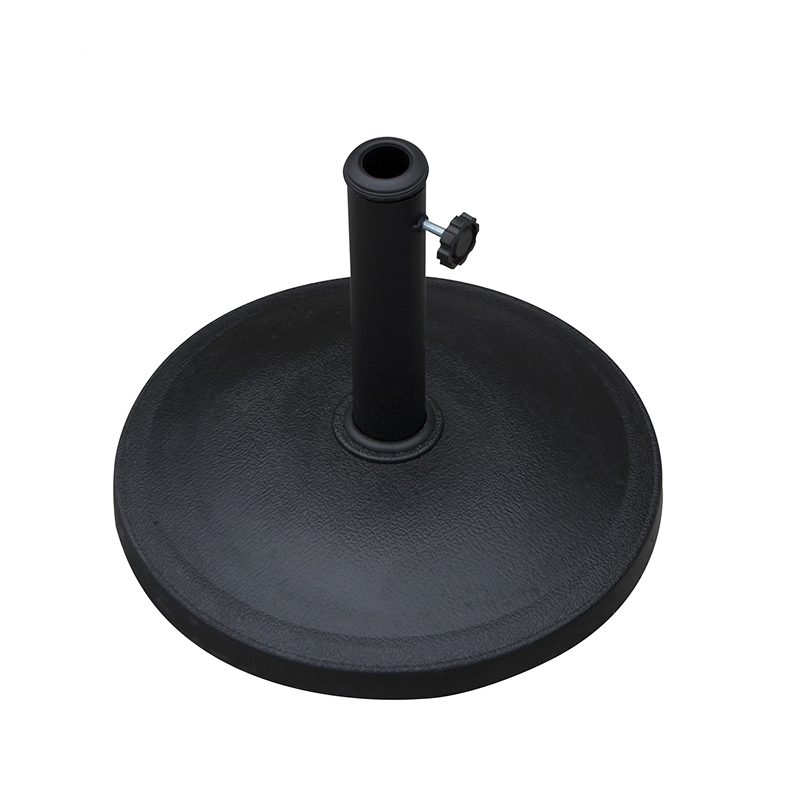 Resin Umbrella Base UA1919 for Straight UmbrellasAdjustable-height resin base, 10 kg, with anti-slip pad and center hole for straight poles; relevant when wind securing and hardware specifications are discussed.View Product →
Specifications Worth Writing Into a Purchase Order
For importers and brand owners, the mesh is rarely the item that fails a container inspection; hardware and canopy coating usually are. The specifications below are worth fixing in writing before production starts.
| Component | Typical good spec | What to verify |
|---|---|---|
| Canopy fabric | 180–220 g/m² polyester, PA or PU coated, UPF 50+ | Colour fastness to light and water repellency after 500 hours |
| Mesh | Polyester, 40–60 g/m², 1.5–2 mm aperture | Use 1.2 mm or finer where midges, not mosquitoes, are the problem |
| Ribs | 8 ribs, fibreglass or steel | Six-rib frames sag once a net is clipped on |
| Pole | 38 mm or 48 mm powder-coated aluminium or steel | Rust at joints, welds and the crank housing |
| Base | 25–40 kg for a 3 m canopy with netting | Cross base plus water or sand fill, or a bolted plate |
Two details deserve a call-out. First, mesh aperture: 1.5–2 mm stops mosquitoes, but in lakeside and wetland markets midges pass straight through, so 1.2 mm or finer is the safer choice even though it costs slightly more and reduces airflow. Second, hem construction: a double-stitched 4 cm hem with reinforced clip points survives repeated opening and closing, while a single-stitched hem tears at the first clip within a season. Production sites with in-house tubing and powder coating, and with a QC checkpoint at each process, can usually hold those tolerances more consistently than trading companies reselling from several workshops.
Frequently Asked Questions
Can I add a mosquito net to any patio umbrella?
No. The canopy needs a flat hem and enough ribs, eight being the practical minimum, to carry 1–2 kg of mesh without sagging. Smaller balcony umbrellas can work with a shorter drop and a narrower door panel.
Does netting ruin airflow on a hot evening?
Yes, a closed net noticeably reduces airflow. Keeping the door panel open at the bottom and choosing 1.5–2 mm mesh rather than a solid screen keeps a 30 °C evening comfortable.
How do I stop insects getting in at the bottom?
Tuck the hem under the table base or behind chair legs, add sand bags or a water tube every 60–80 cm, and inspect the gap where the net meets the pole. A single 10 cm gap is enough for mosquitoes to exploit.
Is a netted umbrella better than a gazebo or a screen tent?
For one dining table, the umbrella and net is cheaper, stores in a bag, and takes up the footprint of an ordinary umbrella. A gazebo wins only when you need to walk around freely or enclose a larger area.
Can the umbrella and the net be ordered together as one set?
Yes, and it is usually the better route: canopy and mesh in one dye lot, clip points or D-rings sewn into the hem during canopy assembly, and one set of QC records covering both parts. That avoids the colour mismatch that shows up when a net is bought separately six months later.
The practical rule is simple: choose the umbrella for its frame, then choose the net for its mesh and its drop. A 3 m, 8-rib canopy on a 48 mm pole with a 35 kg base will hold a mosquito net for years. A lightweight promotional umbrella will not last one summer of use. Get those three numbers right, ribs, drop and base weight, and everything else becomes a colour decision.