English
 Español
 عربى
عربى
 Português

To choose a patio umbrella, start by measuring your outdoor space and furniture footprint, then select a size that extends at least 2 feet beyond each side of your table, pick a pole style that matches your setup (center-pole or cantilever), and choose a canopy fabric rated for UV protection and weather resistance. Whether you are shading a compact balcony bistro set or a large poolside lounge area, the right patio umbrella depends on five core decisions: size, style, material, base, and tilt mechanism. This guide walks through each factor with specific measurements, data comparisons, and practical recommendations so you can make a confident, long-lasting purchase.
Content
- Step 1: Determine the Right Patio Umbrella Size for Your Space
- Step 2: Choose Between Center-Pole and Cantilever (Offset) Patio Umbrellas
- Step 3: Select the Best Canopy Fabric for Your Climate
- Step 4: Evaluate Pole and Frame Materials
- Step 5: Choose the Right Umbrella Base and Weight
- Step 6: Select the Opening Mechanism and Tilt System
- How to Choose a Patio Umbrella for Specific Situations
- Frequently Asked Questions: How to Choose a Patio Umbrella
- Q: What is the most wind-resistant patio umbrella design?
- Q: Should I choose a round, square, or rectangular patio umbrella canopy?
- Q: How do I store a patio umbrella in winter?
- Q: Can I replace just the canopy on a patio umbrella?
- Q: Is a more expensive patio umbrella worth it?
- Q: What UPF rating should a patio umbrella have?
- Final Checklist: How to Choose a Patio Umbrella
Step 1: Determine the Right Patio Umbrella Size for Your Space
The correct patio umbrella size is determined by your table diameter plus a minimum 2-foot overhang on every side — meaning a 48-inch (4-foot) dining table requires at least an 8-foot umbrella, and a 60-inch table needs a 10-foot canopy.
Choosing an undersized umbrella is the most common mistake buyers make. A canopy that barely covers the tabletop leaves seated guests exposed to sun on their shoulders and arms, defeating the umbrella's purpose. The 2-foot-per-side rule (4 feet added to the table diameter) ensures seated occupants remain in shade even when the sun is at a low angle.
Use the following sizing guide as a starting point:
- Bistro table or two chairs (36-inch table): 7-foot umbrella minimum
- 4-person dining set (42–48-inch table): 9-foot umbrella
- 6-person dining set (60-inch table): 10–11-foot umbrella
- 8-person dining set (72-inch table): 11–13-foot umbrella
- Lounger or chaise area (no table): 10–11-foot cantilever umbrella positioned to one side
- Large poolside or commercial deck: 13–15-foot market or commercial umbrella
For rectangular tables, match the umbrella diameter (or square canopy diagonal) to the longest table dimension plus 4 feet. A 36-by-72-inch rectangular table, for example, needs a canopy spanning at least 9 feet in its longest axis — making a 10-foot square or 11-foot round canopy the practical choices.
Also consider ceiling clearance for covered patios and porches. The center pole of a standard 9-foot patio umbrella stands approximately 96–102 inches tall when open, which fits under most standard 8-foot ceilings but may require a low-profile or tilt model under pergolas with decorative beams.
Step 2: Choose Between Center-Pole and Cantilever (Offset) Patio Umbrellas
Center-pole patio umbrellas are more affordable and stable, making them the best choice for tables with an umbrella hole, while cantilever (offset) umbrellas are better for pool loungers, sofas, and any seating arrangement where a center pole would be in the way.
Center-Pole Patio Umbrellas
Center-pole umbrellas insert through the hole in a patio table or mount into a freestanding base, providing the most straightforward setup and the widest range of sizes from 6 to 15 feet. They are mechanically simple, less expensive, and easier to find replacement parts for. The main limitation is that the center pole occupies table space and restricts seating layout — you cannot slide chairs fully under the table when the pole is in position.
Center-pole models come in two sub-styles:
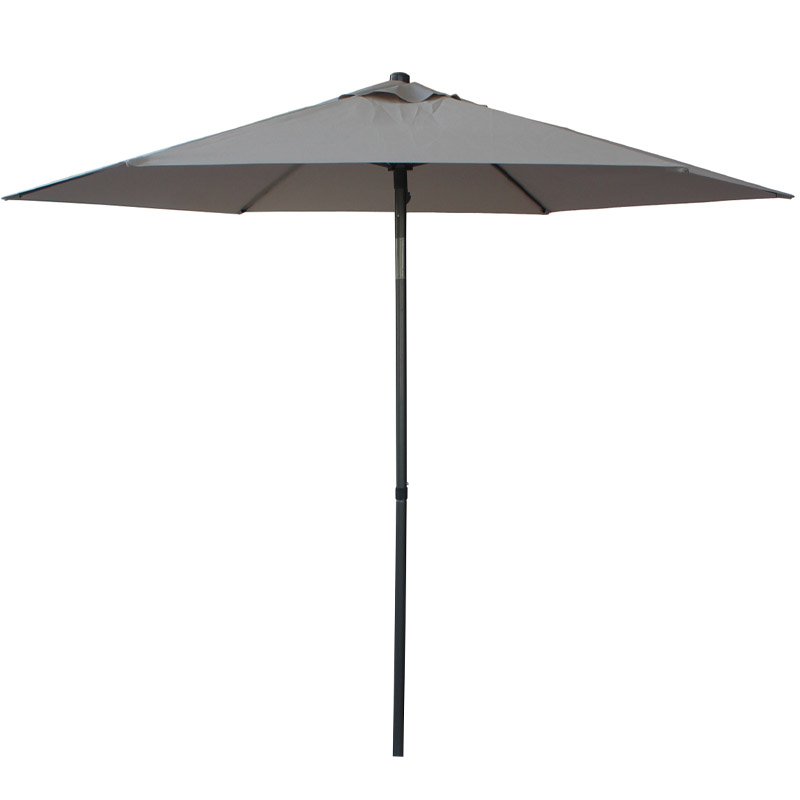
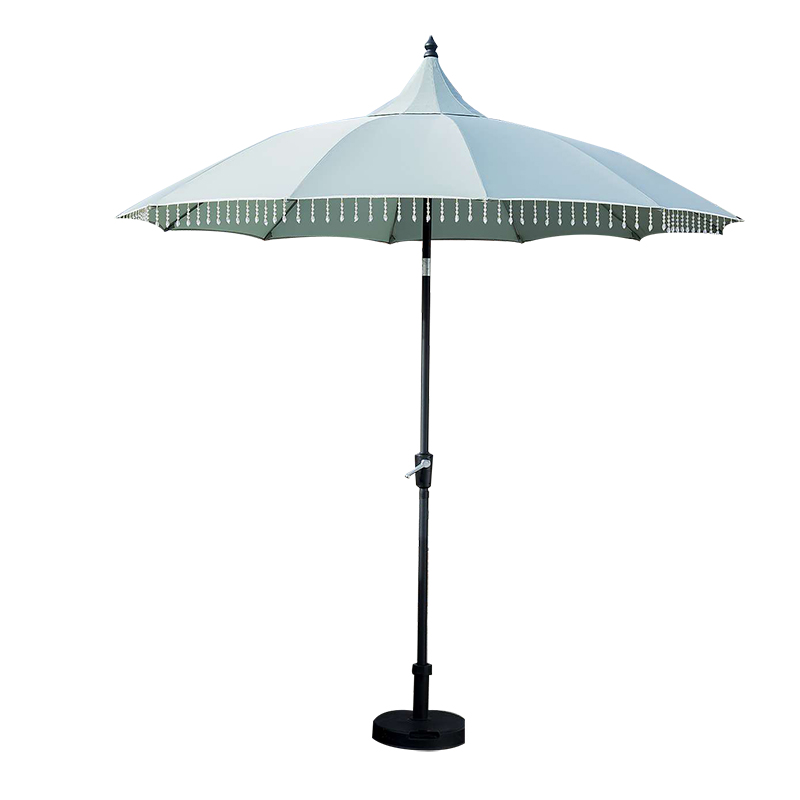
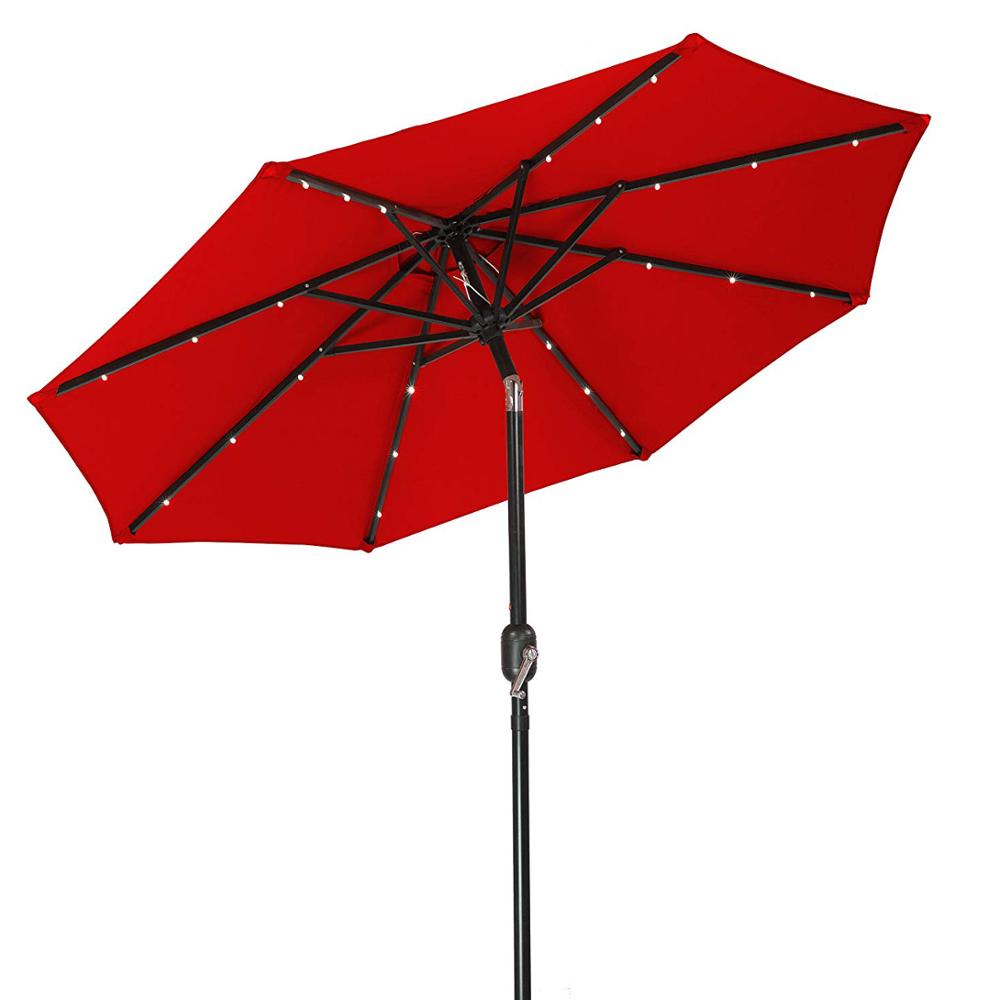
- Market umbrella: Classic octagonal or round canopy on a straight pole. The most common residential style, typically 7–11 feet in diameter.
- Commercial/restaurant umbrella: Heavier aluminum or fiberglass frames, reinforced ribs, and commercial-grade fabric rated for 8+ hours of daily use. Typically 10–15 feet with center vents.
Cantilever (Offset) Patio Umbrellas
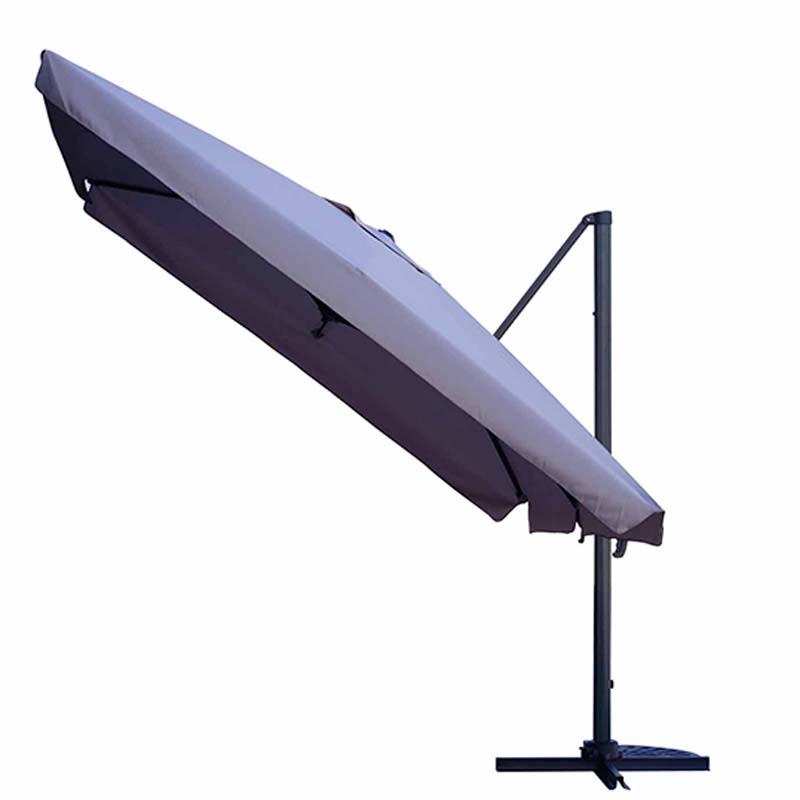
Cantilever umbrellas mount the pole to the side and extend the canopy over the seating area via a lateral arm, leaving the ground beneath the canopy completely unobstructed — ideal for pool decks, sectional sofas, and lounge chairs. Most cantilever designs allow the canopy to rotate 360 degrees and tilt in multiple directions, giving far greater sun-tracking flexibility than center-pole models. Their base must be significantly heavier to counterbalance the offset load: a quality 10-foot cantilever typically requires a base weighing 150–200 pounds when filled with sand or water.
Key cantilever features to evaluate include:
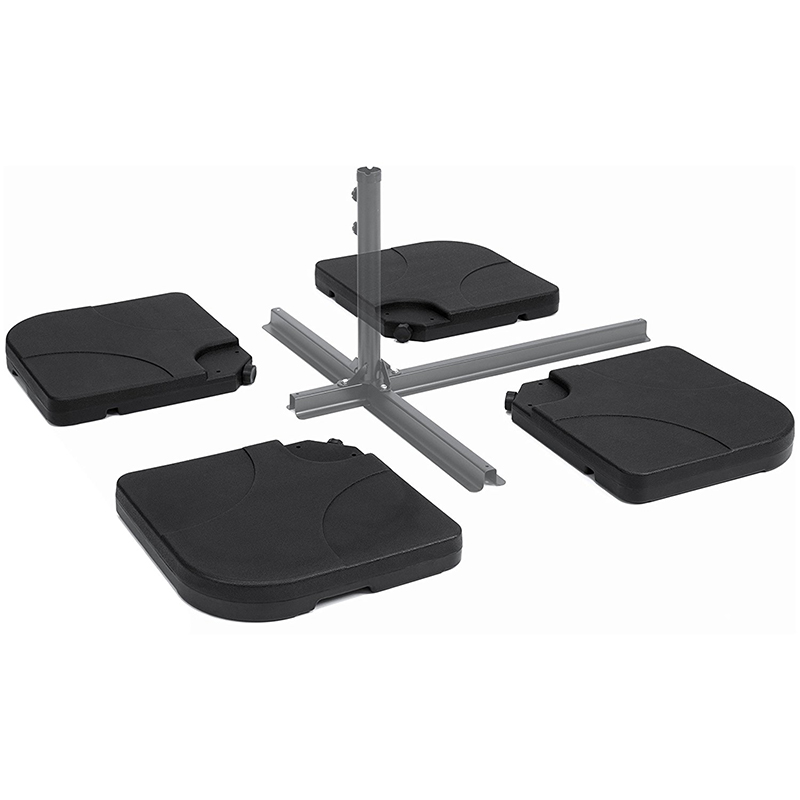
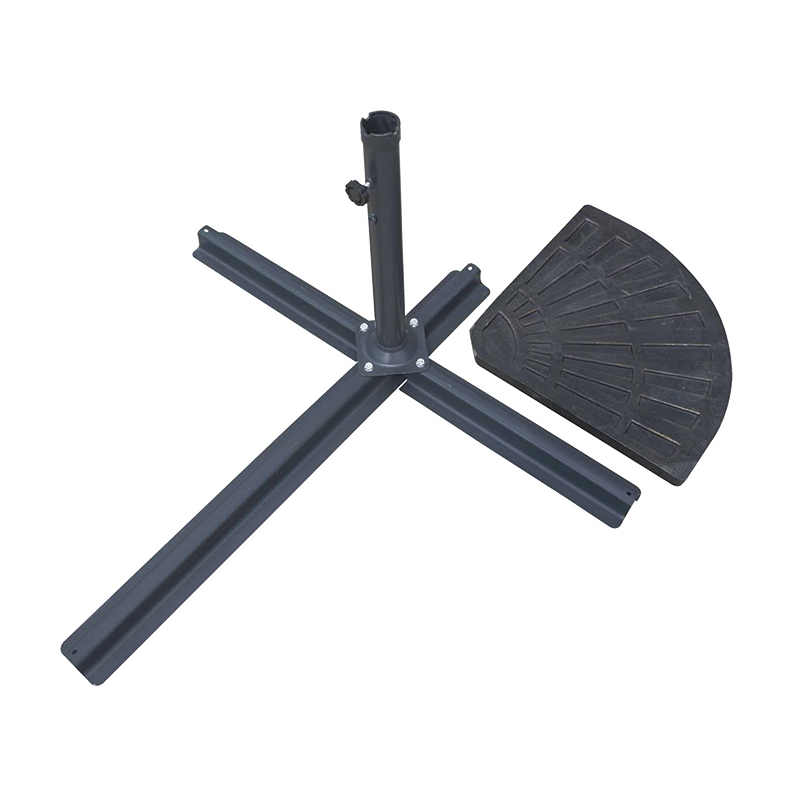
- Cross-base vs. single-post base: Cross-base designs distribute weight more effectively and are more stable in wind.
- 360-degree rotation: Allows canopy repositioning without moving the base, essential when the sun's angle changes throughout the day.
- Locking tilt: Look for infinite-position locking tilt rather than fixed-step tilt for precise angle adjustment.
| Feature | Center-Pole Umbrella | Cantilever Umbrella |
| Best For | Tables with umbrella hole, dining sets | Loungers, sofas, pools, flexible seating |
| Typical Size Range | 6 - 15 ft | 9 - 13 ft |
| Price Range | $50 - $600+ | $200 - $1,500+ |
| Stability in Wind | High (direct pole support) | Moderate (requires heavy base) |
| 360 Degree Rotation | No | Yes (most models) |
| Ground Clearance | Pole occupies center area | Fully unobstructed beneath canopy |
| Setup Complexity | Simple | Moderate to Complex |
Table 1: Comparison of center-pole and cantilever patio umbrella styles across key decision factors.
Step 3: Select the Best Canopy Fabric for Your Climate
Solution-dyed acrylic is the best canopy fabric for most outdoor applications because the color is embedded into each fiber during manufacturing rather than applied as a surface coating, making it fade-resistant, mold-resistant, and durable for 5–10 years of outdoor exposure.
Canopy fabric is the single biggest factor in how long a patio umbrella lasts and how well it performs in sun, rain, and wind. Here is a breakdown of the most common options:
Solution-Dyed Acrylic
Solution-dyed acrylic fabric offers the best combination of UV resistance, color retention, and water repellency of any patio umbrella canopy material, making it worth the premium price for anyone in a high-sun or coastal climate. It typically carries a UPF 50+ rating, blocking over 98% of UV radiation. It resists mold and mildew, cleans easily with mild soap and water, and retains color vibrancy for years even under direct sun in hot climates. The main drawback is cost: solution-dyed acrylic fabric umbrellas generally start at $150–$300 and can exceed $800 for large or commercial sizes.
Polyester
Polyester is the most common budget-friendly canopy fabric, typically found on patio umbrellas priced under $100, but it fades noticeably faster than acrylic — often showing significant color loss within 2–3 seasons of outdoor use. Polyester canopies are lightweight and available in a wide range of colors and patterns. Look for polyester canopies with a UV-resistant coating and a tight weave density of at least 180 GSM (grams per square meter) for acceptable durability. Most polyester canopies are not machine washable and require spot cleaning to avoid delaminating the UV coating.
Olefin (Polypropylene)
Olefin fabric sits between polyester and acrylic in performance and price, offering good UV resistance and faster drying than polyester, making it a solid mid-range choice for moderately sunny climates. Olefin is inherently hydrophobic (water-repellent at the fiber level) and resists staining from sunscreen and food — a practical advantage for poolside and dining applications. It is less vibrant and slightly less UV-resistant than solution-dyed acrylic but significantly more durable than standard polyester.
Sunbrella and High-Performance Weaves
Commercial-grade solution-dyed acrylic woven fabrics represent the top tier of patio umbrella canopy performance, with some products rated for over 2,000 hours of xenon-arc UV exposure testing without significant color change. These fabrics are the standard for restaurant patios, hotel pool decks, and resort installations where canopies must remain in presentable condition despite 8–10 hours of daily exposure. They are typically backed by 5-year manufacturer warranties against fading, mold, and mildew.
| Fabric Type | UV Resistance | Fade Resistance | Water Repellency | Expected Lifespan | Price Tier |
| Polyester | Moderate | Low | Moderate (coated) | 2 - 3 seasons | Budget ($) |
| Olefin | Good | Good | Good (inherent) | 3 - 5 seasons | Mid-range ($$) |
| Solution-Dyed Acrylic | Excellent (UPF 50+) | Excellent | Excellent | 5 - 10 seasons | Premium ($$$) |
| Commercial Acrylic Weave | Superior (2,000+ hrs) | Superior | Superior | 7 - 12 seasons | Commercial ($$$$) |
Table 2: Patio umbrella canopy fabric comparison by UV resistance, fade performance, water repellency, lifespan, and price tier.
Step 4: Evaluate Pole and Frame Materials
Powder-coated aluminum is the best all-around pole material for residential patio umbrellas because it is lightweight, rust-proof, and strong enough for canopies up to 11 feet, while fiberglass poles are superior for coastal environments and high-wind areas due to their flexibility and corrosion immunity.
Aluminum Poles
Aluminum is the dominant pole material in residential patio umbrellas, offering an ideal balance of light weight (a 9-foot aluminum-pole umbrella typically weighs 12–18 pounds), rust resistance, and structural rigidity. Look for poles with a wall thickness of at least 2.5 mm for 9-foot models and 3 mm+ for 11-foot models. Powder coating adds a protective decorative layer and is far more durable than paint, resisting chipping, fading, and corrosion. Anodized aluminum — used in higher-end products — is even more corrosion-resistant and maintains a clean metallic finish without peeling.
Fiberglass Poles and Ribs
Fiberglass ribs are significantly more wind-resistant than aluminum ribs because they flex under gusts rather than bending permanently, and they will not corrode in salt air — making them the preferred choice for coastal properties and high-wind climates. Fiberglass-rib models can typically withstand sustained winds of 35–45 mph before requiring closure, compared to 25–35 mph for standard aluminum-rib umbrellas. The trade-off is added weight and a higher price point.
Wood Poles
Hardwood poles — typically teak or eucalyptus — deliver a classic, warm aesthetic that suits traditional and natural garden settings, but require annual oiling or sealing to prevent cracking and graying in outdoor conditions. Wood poles are heavier than aluminum and should not be left standing in heavy rain or direct ground contact without appropriate base protection. They are best suited to covered patios and pergolas with partial overhead protection.
Step 5: Choose the Right Umbrella Base and Weight
A patio umbrella base must weigh at least 50 pounds for a 9-foot center-pole model in calm conditions, but windy or exposed locations require 75–100 pounds for safe stability — and cantilever umbrellas demand bases of 150 pounds or more.
The base is the most under-appreciated component of a patio umbrella setup. An undersized base is a genuine safety hazard: a falling umbrella can injure people and damage furniture or property. Key base considerations include:
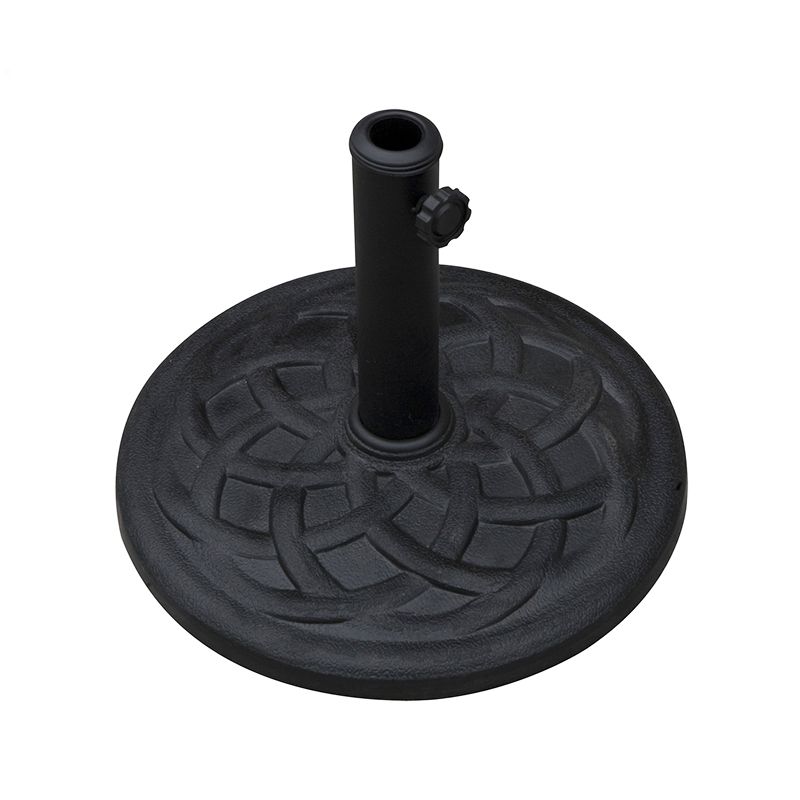
- Cast iron bases: Extremely heavy and durable, typically 50–75 pounds. Best for permanent freestanding setups. They resist tipping but are difficult to move.
- Resin/plastic fill bases: Lightweight when empty (10–20 lb), filled with sand or water to 40–75 pounds. Portable and versatile, suitable for most residential applications.
- Concrete bases: Maximum stability for commercial installations. Often 100–200 pounds. Typically not designed to be moved once placed.
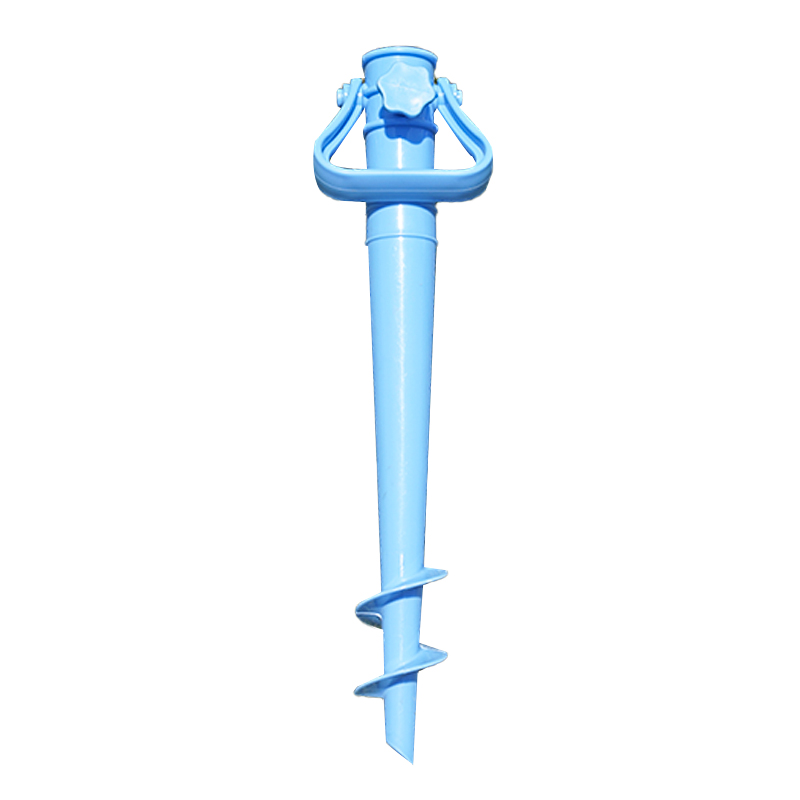
- In-ground anchors: Sleeve systems installed flush with a patio surface. Offer the cleanest look and maximum stability, but require professional installation.
- Table-mount adapters: For tables with umbrella holes, the table itself acts as a mount point. Effective for calm conditions but the table must be anchored or weighted for windy areas.
General base weight guidelines by umbrella size:
- 7-foot umbrella: 40–50 lb base
- 9-foot umbrella: 50–75 lb base
- 11-foot umbrella: 75–100 lb base
- 10–13-foot cantilever: 150–200 lb cross base
Step 6: Select the Opening Mechanism and Tilt System
A push-button tilt with crank-open mechanism is the most practical and reliable system for everyday residential use, while auto-tilt and collar-tilt designs offer convenience advantages for households where the umbrella is opened and repositioned frequently.
Opening and tilt mechanisms to understand:
- Crank open: A handle winds the umbrella open via a gear mechanism. Easier than lift-and-push systems, especially for larger umbrellas. Standard on most quality residential models.
- Push-button tilt: Pressing a button on the pole while tilting the canopy locks it at an angle. Simple, reliable, and affordable. Angle options are limited to 2–3 preset positions.
- Collar tilt: Rotating a collar on the pole adjusts the tilt angle continuously. Allows more precise sun-tracking but requires two hands to operate.
- Auto-tilt: Continuing to crank after the umbrella is fully open activates the tilt mechanism. Convenient one-handed operation, but internal gear systems are more complex and prone to failure over time.
- Wind vent: A gap or double-canopy layer at the top of the umbrella allows wind to pass through, reducing lift forces by up to 30% and dramatically improving stability in gusty conditions. Strongly recommended for open, exposed locations.
How to Choose a Patio Umbrella for Specific Situations
The best patio umbrella for a small apartment balcony, a poolside area, and a large outdoor dining set are three completely different products — matching the umbrella to the specific situation prevents the most common buying mistakes.
Small Balcony or Compact Patio
Choose a 7-foot market umbrella with a compact 40-pound resin base. Avoid cantilever models in small spaces as the offset arm and heavy base will dominate the area. A tilting mechanism is especially valuable on a balcony where the sun may come from one fixed direction throughout the day.
Pool Deck or Lounge Area
A 10–11-foot cantilever umbrella with 360-degree rotation is the superior choice for poolside use. It allows you to reposition shade without moving furniture, keeps the ground unobstructed for walking, and can be positioned beyond the pool edge where no center pole could stand. Prioritize solution-dyed acrylic or olefin fabric to handle splashing water and sunscreen contact.
Outdoor Dining Set
For a 6-person dining table, choose a 10-foot center-pole market umbrella with a crank-open and auto-tilt mechanism. The center pole feeds through the table hole, making the table itself a stabilizing element. Add a secondary 50-pound base underneath the table for added security in moderate wind.
Coastal or High-Wind Location
Prioritize a fiberglass-rib umbrella with a double wind vent and a minimum 75-pound base. Choose anodized aluminum or stainless steel hardware rather than standard powder-coated steel to resist salt air corrosion. Close and secure the umbrella whenever wind speeds exceed 20 mph, regardless of the manufacturer's wind rating.
Frequently Asked Questions: How to Choose a Patio Umbrella
Q: What is the most wind-resistant patio umbrella design?
The most wind-resistant patio umbrella design combines fiberglass ribs, a double wind vent canopy, and a center-pole configuration with a heavy base — this combination can safely handle sustained winds of 35–45 mph. The double vent allows wind to escape upward through the canopy instead of lifting it like a sail. Cantilever umbrellas are inherently less stable in wind than center-pole models of the same size due to the offset load on the base. In areas with frequent wind gusts above 20 mph, choose a weighted base 25–30% heavier than the minimum recommendation.
Q: Should I choose a round, square, or rectangular patio umbrella canopy?
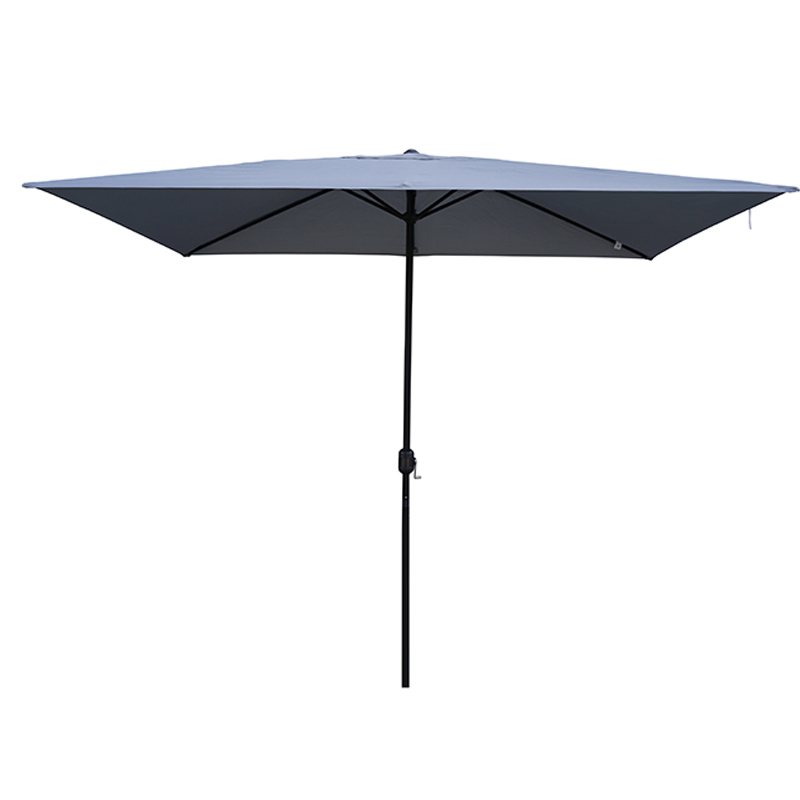
Round canopies are the most versatile and provide even shade coverage in all directions, making them the default choice for round and square tables; rectangular canopies are better matched to rectangular dining tables because their elongated coverage aligns with the table shape and seats more guests in shade. Square canopies offer the best coverage-to-diameter ratio for square tables and sectional sofas. Hexagonal and octagonal canopies are traditional market umbrella shapes that work well for most residential settings. For a 36-by-72-inch rectangular table, a 6.5-by-10-foot rectangular canopy covers the seating perimeter more efficiently than a 10-foot round canopy.
Q: How do I store a patio umbrella in winter?
For winter storage, close the canopy fully, remove it from the base, store it horizontally or vertically in a dry location away from freezing temperatures, and use a protective cover bag to prevent dust and moisture accumulation. Even high-quality acrylic canopies degrade faster when left open during winter months: accumulated snow and ice add structural stress to the ribs and pole, UV exposure continues on clear winter days, and prolonged dampness encourages mold even on mold-resistant fabric. Bringing the umbrella indoors or into a garage between October and April can extend its service life by 2–4 seasons.
Q: Can I replace just the canopy on a patio umbrella?
Yes, replacement canopies are available for most standard pole diameters (1.5 inches and 2 inches are the most common) and rib counts (8-rib is standard), and replacing just the canopy costs 30–60% less than buying a new umbrella. Before purchasing a replacement canopy, measure the pole diameter, count the number of ribs, and measure the canopy from tip to tip across the diagonal. Many manufacturers sell replacement canopies under the same model name or as universal fit options. Replacing the canopy also allows you to upgrade from polyester to acrylic without replacing the pole and hardware.
Q: Is a more expensive patio umbrella worth it?
A premium patio umbrella costing $300–$600 is worth the investment if you plan to use it daily for 5+ years, because the per-season cost of a $400 umbrella lasting 8 years ($50/year) is significantly lower than replacing a $100 umbrella every 2 seasons ($50/year) — and the premium product provides superior shade, safety, and aesthetics throughout. The key upgrade investments in order of value are: (1) solution-dyed acrylic fabric over polyester, (2) fiberglass ribs over aluminum ribs in windy locations, (3) a double wind vent, and (4) a heavier, more stable base. Spending more on decorative details like fringe or LED lighting provides comfort and style but does not extend service life.
Q: What UPF rating should a patio umbrella have?
Choose a patio umbrella with a UPF 50+ canopy rating, which blocks more than 98% of UV-B and UV-A radiation and provides the maximum available protection according to the Australian/New Zealand UV protection standard AS/NZS 4399. Many budget polyester canopies carry UPF 30–40 ratings, which block 93–97% of UV radiation — adequate for occasional use but insufficient for people with photosensitive skin conditions or for locations near the equator where UV index regularly exceeds 10. A tightly woven, darker-colored canopy fabric generally provides higher UPF than a loosely woven or light-colored fabric of the same material.
Final Checklist: How to Choose a Patio Umbrella
The right patio umbrella comes down to six aligned decisions — get all six right and you will have a product that provides years of reliable shade, holds up to weather, and looks great in your outdoor space.
- Size: Table diameter plus 4 feet minimum. Go larger rather than smaller.
- Style: Center-pole for tables with holes; cantilever for open lounge areas and pools.
- Fabric: Solution-dyed acrylic for maximum lifespan; olefin for mid-range value; polyester for budget projects.
- Frame: Powder-coated aluminum for most settings; fiberglass ribs for coastal or windy locations; hardwood for traditional aesthetics in sheltered spots.
- Base: Minimum 50 lb for 9-foot center-pole; minimum 150 lb for 10-foot cantilever. Add 25% in windy conditions.
- Mechanism: Crank-open with wind vent for reliability; add tilt for versatility; auto-tilt for convenience.
Taking 10 minutes to measure your space, evaluate your climate, and match these six factors before purchasing will save you the frustration of an undersized, short-lived, or unstable umbrella — and ensure that your outdoor space stays comfortable, protected, and stylish through many seasons to come.