English
 Español
 عربى
عربى
 Português

To measure for a replacement patio umbrella canopy, you need three core dimensions: the canopy diameter (measured from rib tip to rib tip across the widest point), the number of umbrella ribs, and the rib length from the center hub to the tip. Getting all three right is essential — a canopy that is even half an inch off in diameter or has the wrong rib count will not fit correctly, no matter how similar it looks in product photos.
Replacing just the canopy fabric instead of the entire umbrella is a smart, cost-effective choice. A quality patio umbrella frame can last 10 to 15 years or more, while the canopy fabric typically fades, tears, or loses its UV-protective coating within 3 to 7 years depending on sun exposure and climate. Measuring accurately the first time saves you from costly return shipping and weeks of waiting for a correct replacement to arrive.
This guide walks you through every measurement you need, explains the difference between umbrella types that affect sizing, and answers the most common questions shoppers have when ordering a replacement patio umbrella canopy.
Content
- What Tools Do You Need Before You Start Measuring?
- Step 1: Identify Your Umbrella Type
- Step 2: Count the Number of Ribs
- Step 3: Measure the Canopy Diameter
- Step 4: Measure the Rib Length
- Step 5: Identify the Canopy Attachment Style
- Step 6: Measure for Rectangular or Square Canopies
- Step 7: Note the Pole Diameter and Hub Opening
- Common Measurement Mistakes and How to Avoid Them
- Your Complete Measurement Checklist Before Ordering
- Choosing the Right Canopy Fabric for Your Replacement
- Frequently Asked Questions
- Q: What does "9-foot patio umbrella" actually mean — is that the pole length or the canopy size?
- Q: My measurement came out to 9 feet 3 inches. Should I order a 9-foot or a 10-foot replacement canopy?
- Q: Can I use a universal fit replacement canopy?
- Q: The old canopy had a center vent. Do I need to specify this when ordering?
- Q: How do I install a replacement canopy with rib sleeves?
- Q: How long should a replacement patio umbrella canopy last?
- Q: I cannot find a replacement canopy that matches my exact measurements. What are my options?
- Final Summary: Key Measurements at a Glance
What Tools Do You Need Before You Start Measuring?
Gather the right tools before you begin — using the wrong measuring method is the most common reason people order the wrong size replacement canopy.
- Flexible tape measure (at least 10 feet / 3 meters): A standard fabric or fiberglass tape measure works best. A rigid metal tape measure is acceptable but can be awkward when measuring across a curved canopy surface.
- A helper (strongly recommended): Measuring across a large canopy alone introduces significant error. Having one person hold each end of the tape measure produces much more accurate results, especially for canopies 9 feet and larger.
- Pen and paper or your phone: Write down each measurement immediately. Relying on memory between the backyard and a computer browser leads to mistakes.
- A ladder (for large umbrellas): For umbrellas 11 feet and above, measuring the full diameter accurately from ground level is difficult. A step ladder allows you to look straight down the center hub and verify that your tape is running directly through the center point.
- The old canopy (if still intact): Even a faded or torn canopy can be laid flat on a hard surface and measured directly — this is often more accurate than measuring the open frame.
Step 1: Identify Your Umbrella Type
Your umbrella type determines both where to take measurements and which canopy dimensions apply to your situation. There are four main types sold for residential and commercial patio use.
Market Umbrella (Center Pole)
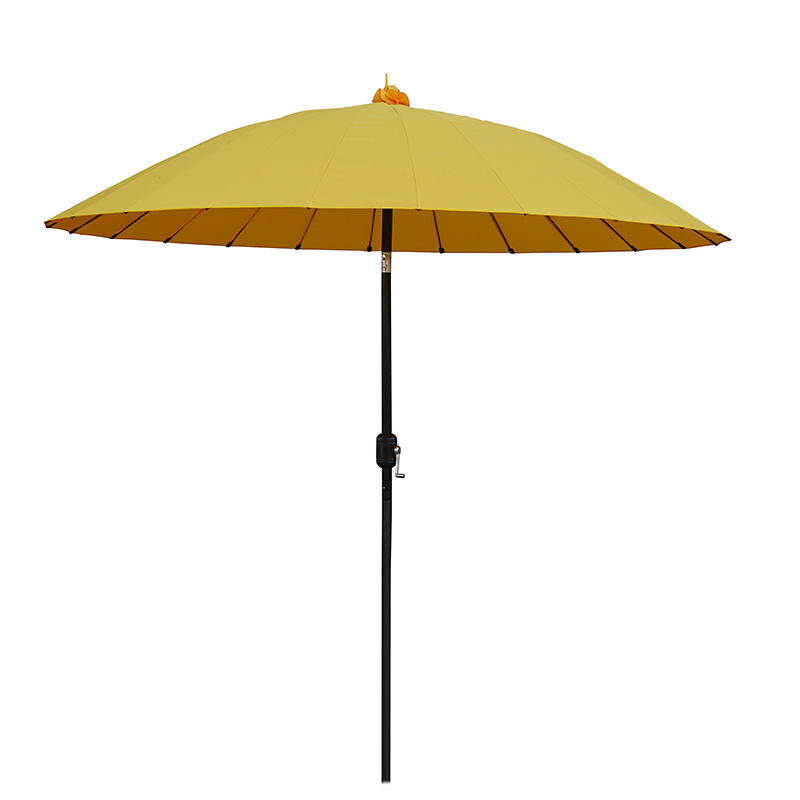
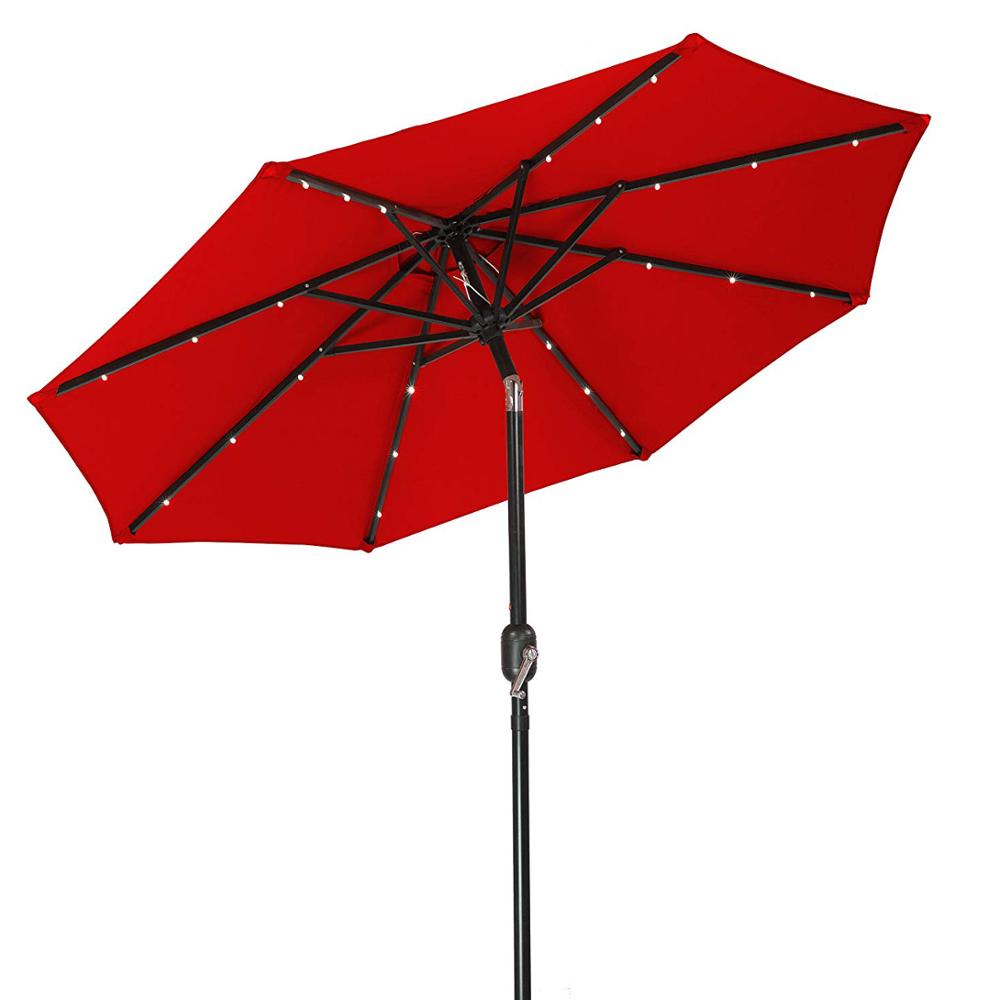
The most common type. The pole runs through the center of the canopy to a hub from which ribs radiate outward. Canopy replacement is straightforward — the fabric attaches to the ribs with sleeves, Velcro tabs, or snap hooks. This is the design covered by the majority of replacement canopy products.
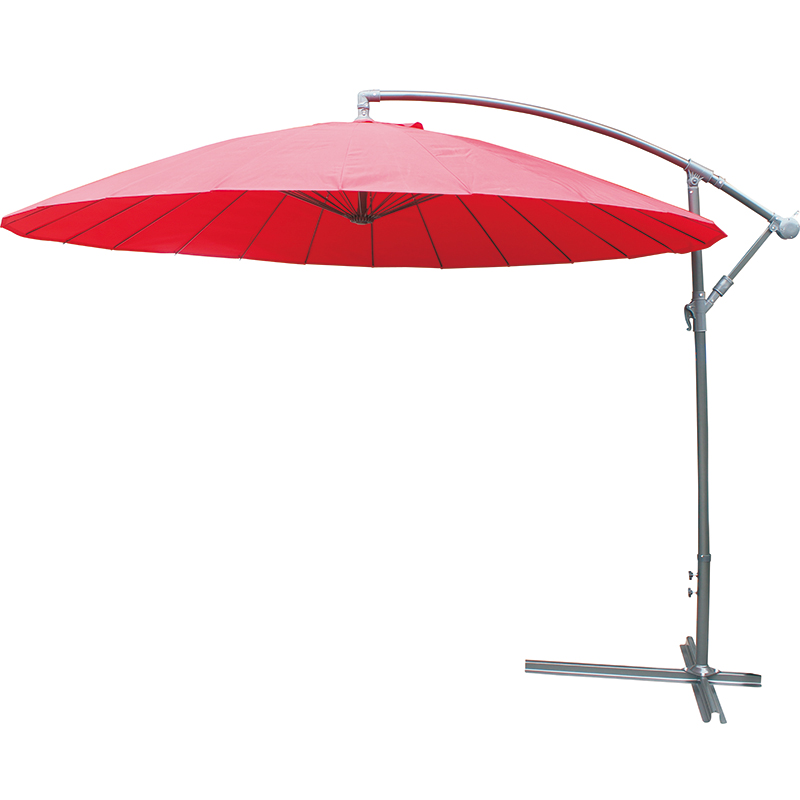
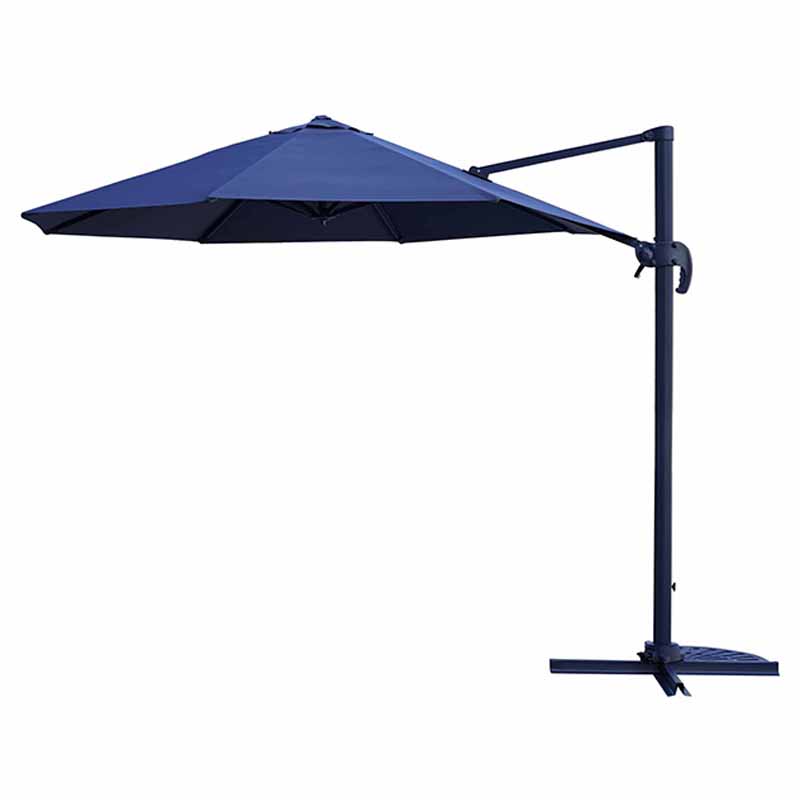
Cantilever (Offset) Umbrella
The pole is offset to the side, and the canopy hangs to one side from an articulated arm. Replacement canopies for cantilever umbrellas are frame-specific and harder to source as universal replacements. Most cantilever canopies attach via a track-and-pin system or a rigid frame insert. You must match both the canopy shape (usually square, rectangular, or octagonal) and the attachment method precisely.
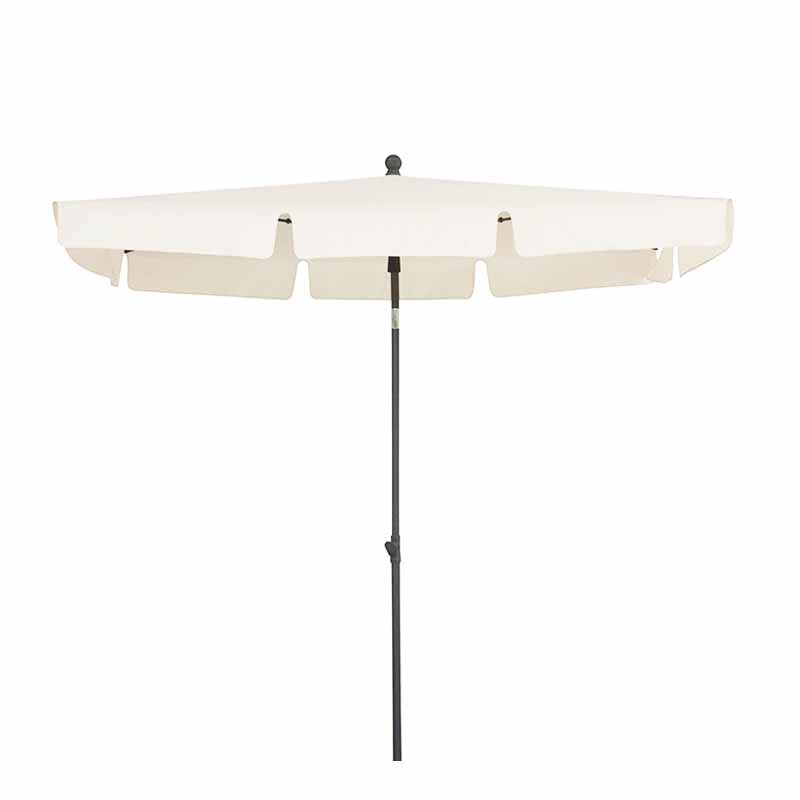
Rectangular or Square Umbrella
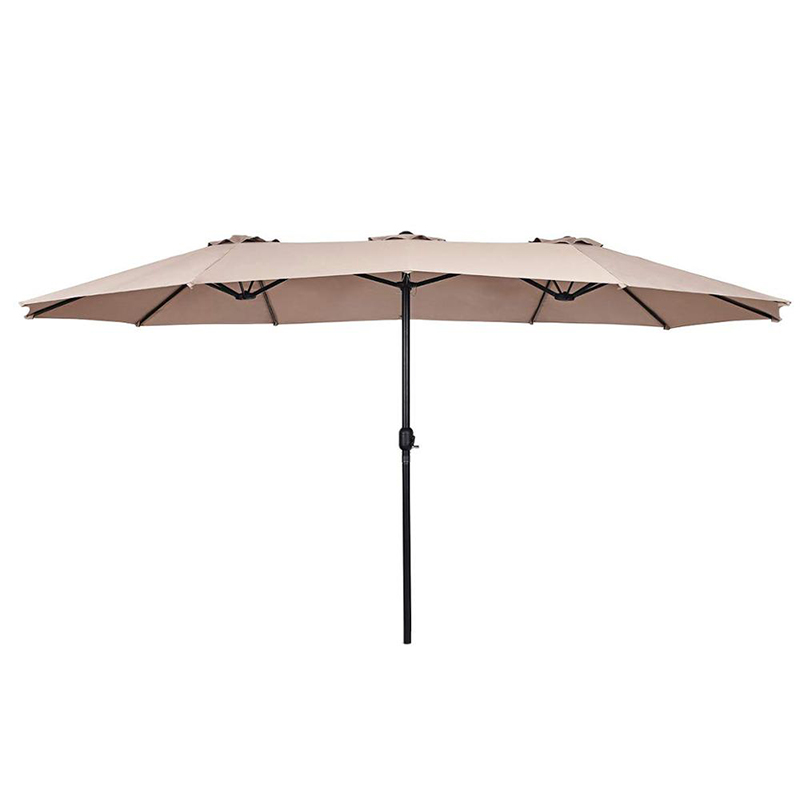
These can be either center-pole or cantilever style. Measuring requires both the length and width dimensions rather than a single diameter. The rib structure is still relevant for attachment, but the key dimensions are the two linear measurements across the canopy panels.
Beach or Portable Umbrella
Smaller diameter (typically 6 to 7.5 feet), usually with 8 ribs, and often with a tilt mechanism. Canopy replacement follows the same process as a market umbrella but with smaller dimensions.
Step 2: Count the Number of Ribs
Count the ribs before you measure anything else — rib count is the single most commonly overlooked measurement and one of the most important. Replacement canopies are manufactured with a specific number of fabric panels sewn to match a specific rib count. A canopy made for 8 ribs will not fit a frame with 6 ribs, even if the diameter is identical.
Open the umbrella fully and count each metal or fiberglass arm that radiates outward from the center hub. Common rib counts are:
- 6 ribs: Common on smaller budget umbrellas, 7 to 9 feet in diameter.
- 8 ribs: The most common configuration across 7.5-foot to 11-foot umbrellas. The majority of aftermarket replacement canopies are made for 8-rib frames.
- 12 ribs: Found on higher-end, larger-diameter umbrellas (typically 11 feet and above) for greater stability and a smoother canopy profile.
- 16 ribs: Uncommon; found on some commercial-grade umbrellas with very large diameters.
Write the rib count down immediately. If your umbrella uses a double-tier (valance) canopy design, also note whether the valance is a separate attached piece or integrated into the main canopy fabric.
Step 3: Measure the Canopy Diameter
The canopy diameter is measured tip-to-tip across the fully opened frame, passing through the center hub — not from the edge of the fabric. This is the dimension advertised on most replacement canopy listings (for example, "9-foot replacement canopy" means 9 feet from rib tip to rib tip).
Method A: Measure the Open Frame (Most Accurate)
- Open the umbrella completely and lock it in the fully open position.
- Have your helper hold one end of the tape measure at the very tip of one rib.
- Extend the tape across to the tip of the directly opposite rib, passing the tape through or just above the center hub.
- Read the measurement in feet and inches. Record it to the nearest quarter inch.
- Repeat this measurement across a second pair of opposite ribs (perpendicular to the first measurement) to confirm the frame is symmetrical. For a round umbrella, both measurements should be within half an inch of each other.
Method B: Measure the Old Canopy Laid Flat
- Remove the old canopy from the frame and lay it flat on a clean, hard surface such as a driveway or deck.
- Pull all panels outward as flat as possible to approximate the fully open diameter.
- Measure from the outermost edge of one panel tip to the outermost edge of the opposite panel tip, passing through the center hole.
- Note: If the canopy is torn or bunched, this method is less reliable. Use the frame measurement instead.
What to Do If Your Measurement Falls Between Standard Sizes
Standard replacement canopy diameters are typically sold in whole-foot or half-foot increments: 7.5 ft, 9 ft, 10 ft, 11 ft, 13 ft. If your measured diameter falls at, say, 9 feet 4 inches, order the next size up (10 foot) rather than the next size down. Replacement canopies have a small amount of fabric stretch and overlap built into the design, and a slightly larger canopy will generally seat on the ribs better than a slightly undersized one that pulls tight.
Step 4: Measure the Rib Length
Rib length — measured from the center hub to the tip of a single rib — is a secondary but important verification measurement. It should be approximately half the total canopy diameter. If rib length multiplied by two differs significantly from your diameter measurement, recheck both measurements before ordering.
To measure rib length: with the umbrella open, place the tape measure at the point where the rib attaches to or emerges from the center hub, then extend it to the tip of the same rib. Record this number. For a 9-foot canopy, rib length should be approximately 54 inches (4.5 feet). For an 11-foot canopy, expect approximately 66 inches (5.5 feet).
Rib length is especially useful when the canopy diameter measurement is ambiguous or the ribs on your umbrella are not perfectly straight (some designs have a slight bow or curve near the tip that can make tip-to-tip measurement inconsistent).
Step 5: Identify the Canopy Attachment Style
Even with perfect diameter and rib count measurements, ordering the wrong attachment style will result in a canopy that cannot be installed on your frame. There are five main attachment methods used on residential patio umbrellas.
| Attachment Type | Description | Common On | Replaceability |
| Fabric sleeve / rib pocket | Each rib slides through a sewn fabric channel | Most common; mid-range umbrellas | Easy; widest selection available |
| Velcro tabs | Fabric wraps around rib and fastens with hook-and-loop strips | Budget to mid-range; easy-open designs | Easy; verify tab placement matches rib positions |
| Snap hooks / bungee cord | Elastic cord or plastic snap clips attach panel corners to rib tips | Beach umbrellas; some residential styles | Moderate; confirm snap hardware size |
| Pulley / drawstring system | Canopy is raised and tensioned via a cord running through a center pulley | Push-up and crank umbrellas | Requires exact canopy profile match |
| Rigid frame insert (cantilever) | Canopy fabric is mounted to a rigid aluminum or steel frame that clips to the arm | Offset / cantilever umbrellas | Difficult; usually frame-model specific |
Table 1: Patio umbrella canopy attachment types, descriptions, and replacement considerations.
To identify your attachment type, look at the underside of your existing or old canopy where it contacts the ribs. Take a close-up photo before removing the canopy — this is invaluable when comparing options online.
Step 6: Measure for Rectangular or Square Canopies
Rectangular and square umbrella canopies require two measurements instead of one, taken along each axis of the canopy from rib tip to rib tip. The process is the same as for round canopies but you must measure both the length (longer dimension) and the width (shorter dimension) separately.
Common rectangular replacement canopy sizes include 6.5 x 10 ft, 7 x 10 ft, 8 x 11 ft, and 9 x 12 ft. Square canopies are most commonly found at 9 x 9 ft and 10 x 10 ft. Always specify both dimensions when ordering — listing only one measurement is one of the most common ordering errors for non-round canopies.
For rectangular canopies on center-pole umbrellas, also verify the orientation of the rectangular frame relative to the pole. Some models allow the canopy to rotate 360 degrees, while others have a fixed orientation. The rib arrangement will indicate which pairs of ribs define the long axis and which define the short axis of the rectangle.
Step 7: Note the Pole Diameter and Hub Opening
The center pole diameter determines the size of the hole at the top of the replacement canopy. Most residential umbrella poles fall within a small range of diameters, but ordering a canopy with the wrong hole size produces a canopy that either slides off the pole or cannot be threaded over it at all.
Common center pole diameters and corresponding canopy hub opening sizes:
| Pole Diameter | Typical Application | Canopy Hub Opening | Notes |
| 1 inch (25 mm) | Small beach / portable umbrellas | 1.25–1.5 inches | Usually 6 or 8 ribs, 6–7.5 ft canopy |
| 1.5 inches (38 mm) | Standard residential market umbrella | 1.75–2 inches | Most common size; 7.5–9 ft canopies |
| 2 inches (51 mm) | Large residential / entry commercial | 2.25–2.5 inches | 9–11 ft canopies; heavier frames |
| 2.5 inches (63 mm) and above | Commercial grade umbrellas | 2.75 inches and above | 11 ft and above; specialized replacement parts |
Table 2: Common patio umbrella pole diameters and corresponding canopy hub opening sizes by application type.
To measure your pole diameter, wrap the tape measure around the pole and divide the circumference by 3.14 to get the diameter. Alternatively, use a set of calipers if precision is needed. Many canopy product listings specify the pole diameter they are designed for — always cross-check this against your measurement.
Common Measurement Mistakes and How to Avoid Them
The majority of wrong-size canopy returns come from a handful of recurring errors. Knowing these in advance helps you measure correctly the first time.
Mistake 1: Measuring the Fabric Edge Instead of Rib Tip to Rib Tip
The advertised canopy size always refers to the rib-tip-to-rib-tip span of the frame, not the edge of the fabric. Fabric edges typically sit 1 to 3 inches inside the rib tips due to hem allowance. Measuring only the fabric produces a number that is 2 to 6 inches smaller than the actual canopy size, which leads to ordering a size too large.
Mistake 2: Measuring a Partially Opened Umbrella
The umbrella must be fully opened and locked before measuring. Ribs that are even slightly angled inward will produce a measurement 6 to 18 inches smaller than the true fully-open diameter. Always engage the open latch or crank the umbrella to its full open position and verify visually that all ribs are fully extended.
Mistake 3: Forgetting to Count Ribs
Many shoppers measure the diameter correctly but forget to count or record the rib number. A 9-foot replacement canopy designed for 8 ribs will have 8 fabric panels with 8 attachment points — it cannot be installed on a 6-rib frame regardless of diameter. Always confirm rib count before placing any order.
Mistake 4: Assuming All Umbrellas of the Same Labeled Size Are Identical
Umbrella manufacturers do not use a universal sizing standard. One company's "9-foot umbrella" may have a true rib-tip span of 8 feet 10 inches, while another's may measure 9 feet 2 inches. Never rely solely on the original umbrella's advertised size — always measure the actual frame before ordering a replacement canopy.
Mistake 5: Ignoring the Valance Design
A valance (also called a flap or skirt) is the decorative downward-hanging border around the perimeter of many patio umbrella canopies. If your original canopy has a valance, you need to specify this when ordering. A canopy listed without a valance will look noticeably different and may not fit the same attachment points. Measure the valance drop separately — typically 6 to 10 inches — and include this in your replacement specifications.
Your Complete Measurement Checklist Before Ordering
Use this checklist to confirm you have all the information needed to order the correct replacement patio umbrella canopy.
| Measurement / Detail | How to Obtain It | Your Recorded Value |
| Canopy diameter (ft / in) | Rib tip to rib tip across center hub, frame fully open | _____ ft _____ in |
| Number of ribs | Count arms radiating from center hub | _____ |
| Rib length (in) | Hub to tip of one rib | _____ in |
| Canopy shape | Round / square / rectangular / hexagonal | _____ |
| Rectangular dimensions (if applicable) | Tip-to-tip length AND width | _____ x _____ ft |
| Attachment method | Inspect underside of existing canopy at rib contact points | _____ |
| Pole diameter (in) | Wrap tape around pole, divide circumference by 3.14 | _____ in |
| Valance present? | Inspect perimeter of canopy for hanging fabric border | Yes / No / Drop: _____ in |
| Umbrella type | Center pole / cantilever / other | _____ |
Table 3: Complete measurement checklist for ordering a replacement patio umbrella canopy. Fill in the right column before shopping.
Choosing the Right Canopy Fabric for Your Replacement
Once you have the correct measurements, fabric choice determines how long your replacement canopy will last. The most common replacement canopy materials each have distinct trade-offs between cost, durability, UV resistance, and water performance.
| Fabric Type | UV Resistance | Water Resistance | Expected Lifespan | Relative Cost |
| Polyester (standard) | Moderate (UPF 30–40) | Water-resistant coating | 2–4 years | Low |
| Solution-dyed polyester | Good (UPF 50+) | Water-resistant; fade-resistant | 4–6 years | Moderate |
| Solution-dyed acrylic | Excellent (UPF 50+) | Highly water-resistant; breathable | 6–10 years | High |
| Olefin (polypropylene) | Good (UPF 50+) | Water-resistant; mold-resistant | 4–7 years | Moderate |
| Coated canvas | Moderate (UPF 30–40) | Waterproof coating | 3–5 years | Moderate |
Table 4: Comparison of common patio umbrella canopy fabric types by UV resistance, water performance, lifespan, and cost.
For most residential outdoor settings in sunny climates, solution-dyed acrylic is the best long-term investment. The dye is part of the fiber itself rather than a surface coating, which means it does not fade or wash off over time. In climates with moderate sun or where the umbrella is stored seasonally, a quality solution-dyed polyester canopy offers a good balance of performance and value.
Frequently Asked Questions
Q: What does "9-foot patio umbrella" actually mean — is that the pole length or the canopy size?
The size designation on a patio umbrella always refers to the canopy diameter, measured rib tip to rib tip when fully open — not the pole height or length. A "9-foot umbrella" has a canopy that spans approximately 9 feet across. The pole height is a separate specification and is not relevant for canopy replacement sizing.
Q: My measurement came out to 9 feet 3 inches. Should I order a 9-foot or a 10-foot replacement canopy?
Order the 10-foot canopy. Replacement canopies are sized to match the frame at the rib tips, and a canopy slightly larger than the measured span will drape correctly over the frame and attach without tension. A canopy sized smaller than the rib span will be pulled too tight across the panels, stressing the seams and attachment points, and will look visually distorted when open.
Q: Can I use a universal fit replacement canopy?
Universal fit canopies work well for standard 8-rib umbrellas in the most common sizes (7.5 ft, 9 ft, 10 ft) with sleeve-style or Velcro attachment. If your umbrella has 6 or 12 ribs, a non-standard diameter, or a cantilever design, universal canopies are unlikely to fit correctly. Always verify rib count and attachment type before selecting a universal replacement.
Q: The old canopy had a center vent. Do I need to specify this when ordering?
Yes. A center vent (also called a wind vent or top vent) is a small secondary canopy mounted above an opening at the top center of the main canopy. It allows wind to pass through, reducing lift and improving stability in breezy conditions. Many replacement canopy listings offer both vented and non-vented versions. If your frame has a vent attachment ring or supports vent ribs, you need to specify a vented replacement — the hardware for a vented canopy differs from a solid-top design.
Q: How do I install a replacement canopy with rib sleeves?
Close the umbrella fully first, then thread each rib through its corresponding fabric sleeve starting from the center hub end and working outward to the tip. Once all ribs are in their sleeves, open the umbrella gradually. If the canopy has a drawstring at the top, thread it around the pole and tie it before opening. Do not force ribs through sleeves if resistance is felt — recheck that the correct sleeve is aligned with each rib, as a twisted canopy is the most common installation problem with sleeve-style designs.
Q: How long should a replacement patio umbrella canopy last?
A standard polyester replacement canopy used in full sun year-round typically shows significant fading within 2 to 3 years. A solution-dyed polyester canopy maintained with seasonal storage and occasional UV protectant spray can last 4 to 6 years. A premium solution-dyed acrylic canopy stored during winter months in colder climates can realistically last 7 to 10 years. The single most impactful factor in extending canopy life is closing and covering the umbrella when not in use — UV exposure during hours when the patio is unoccupied accounts for the majority of premature fading.
Q: I cannot find a replacement canopy that matches my exact measurements. What are my options?
If a standard replacement does not exist for your umbrella's specifications, you have three practical options. First, try the next standard size up and adapt the attachment if the method allows it. Second, contact the umbrella's original retailer or manufacturer with your serial number or model number — many maintain a parts catalog that includes canopy replacements not listed on general retail sites. Third, consider a custom canopy from an awning or marine canvas fabricator, who can produce a canopy to your exact measurements in your choice of fabric. Custom canopies typically cost two to four times the price of a standard replacement but can extend the life of a premium umbrella frame indefinitely.
Final Summary: Key Measurements at a Glance
To order the correct replacement patio umbrella canopy, confirm these five things before you add anything to your cart:
- Canopy diameter — measured rib tip to rib tip with the frame fully open, rounded up to the nearest standard size.
- Number of ribs — count every arm on the frame; never assume 8 without counting.
- Canopy shape — round, square, or rectangular; record both dimensions if non-round.
- Attachment method — sleeve, Velcro, snap, or frame insert; verify from the existing canopy before removing it.
- Valance and vent — note whether your canopy has a decorative skirt and/or a top wind vent, and specify accordingly.
Accurate measurement takes less than 10 minutes but saves weeks of return shipping delays and the cost of reordering. Write every number down, take a photo of your frame before disassembling anything, and cross-reference your measurements against the product listing's specifications — not just the advertised size name — before purchasing.