2026-06-17
The best patio umbrella for wind is one built with flexible fiberglass ribs, a vented double-canopy design, a heavy aluminum or steel pole reinforced with an Advanced Ceramic coating, and a weighted base of at least 50 to 90 pounds. This combination allows the umbrella to bend with gusts instead of snapping, release pressure through the vents instead of catching wind like a sail, and stay anchored to the ground instead of tipping over. Below, this guide breaks down exactly which features matter, how much wind different umbrella types can realistically handle, and how a frame's surface treatment -- including ceramic-based coatings -- affects long-term durability in windy climates.
Content
Wind, not rain or sun, is the leading cause of patio umbrella failure. According to the National Weather Service's Beaufort Wind Scale, umbrella use becomes noticeably difficult once sustained winds reach 25 to 31 mph, classified as a "Strong Breeze," and by 39 to 46 mph (a "Gale"), unsecured umbrellas are at serious risk of bending, inverting, or becoming airborne. Most backyard patios experience gusts in the 15 to 35 mph range during a typical storm front, which is exactly the window where frame material, canopy venting, and base weight make the difference between an umbrella that survives the season and one that ends up in a neighbor's yard.
The engineering reality is straightforward: a patio umbrella behaves like a sail mounted on a pole. Wind load increases with canopy surface area, so a 10-foot umbrella catches significantly more force than a 7-foot one in the same gust. The only way to offset that load is through three design choices: a frame that flexes rather than fractures, vents that let air pass through instead of pushing against the full canopy, and a base heavy enough to resist the leverage created by the pole.
Knowing your local wind range is the first step to choosing the right umbrella. The table below, based on the Beaufort Wind Scale published by the National Weather Service and the Royal Meteorological Society, shows how umbrellas behave at each wind level.
| Beaufort Number | Wind Speed (mph) | Description | Effect on Patio Umbrellas |
| 3 | 8-12 | Gentle Breeze | No issues for any standard umbrella |
| 4 | 13-18 | Moderate Breeze | Light umbrellas without a weighted base may shift |
| 5 | 19-24 | Fresh Breeze | Non-vented canopies start to strain at the ribs |
| 6 | 25-31 | Strong Breeze | Umbrella use becomes difficult; only vented, weighted models stay upright |
| 7 | 32-38 | Near Gale | Recommended to close and store any umbrella |
| 8+ | 39+ | Gale or higher | No freestanding umbrella should remain open |
Table 1. Beaufort Wind Scale ranges and their typical effect on patio umbrellas, adapted from National Weather Service and Royal Meteorological Society wind classification data.
A wind-resistant patio umbrella is defined by its frame, vents, base, canopy material, and hardware finish working together, not by any single feature alone.
Fiberglass ribs bend under gusts and spring back to their original shape, which prevents the snapping that destroys aluminum or wood ribs in sudden wind. Industry materials testing has consistently found that fiberglass rib systems flex under pressure and return to their original shape, reducing structural stress during wind events and extending the umbrella's usable lifespan compared with rigid rib materials.
A vented canopy releases trapped air through a small gap near the top, reducing the "sail effect" that causes inversion. For open patios, rooftops, or pool decks, a vented canopy design is considered essential, since it allows wind to pass through the top of the canopy rather than building pressure against a sealed surface, which is the mechanism that flips closed umbrellas inside out.
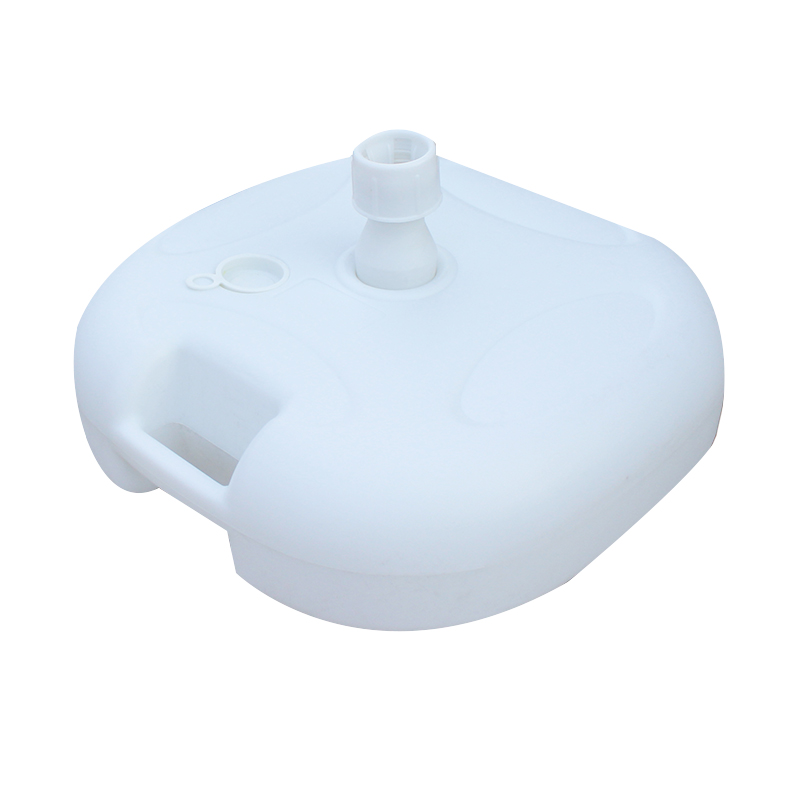
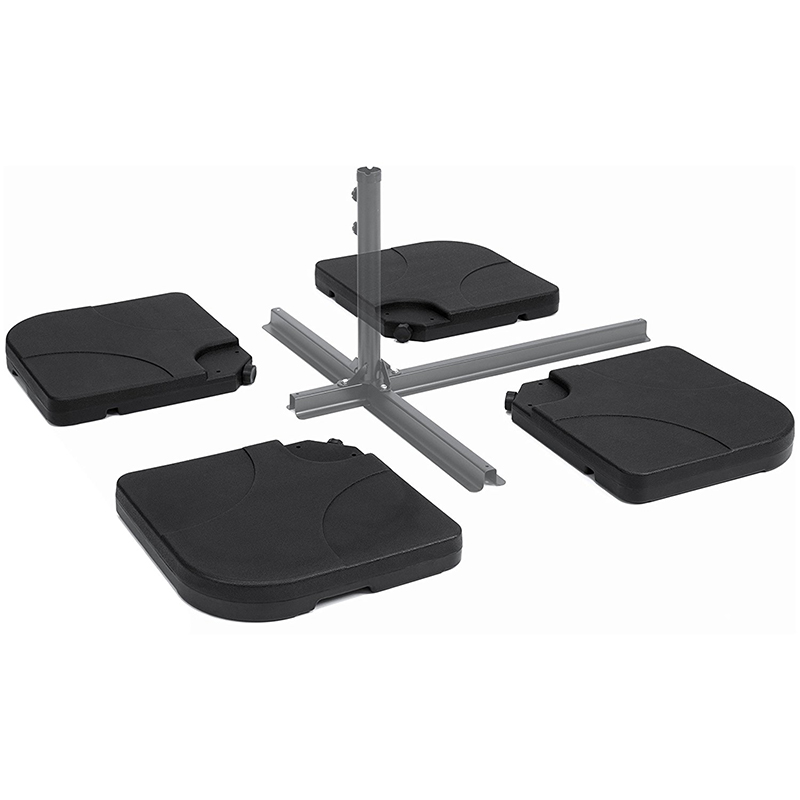
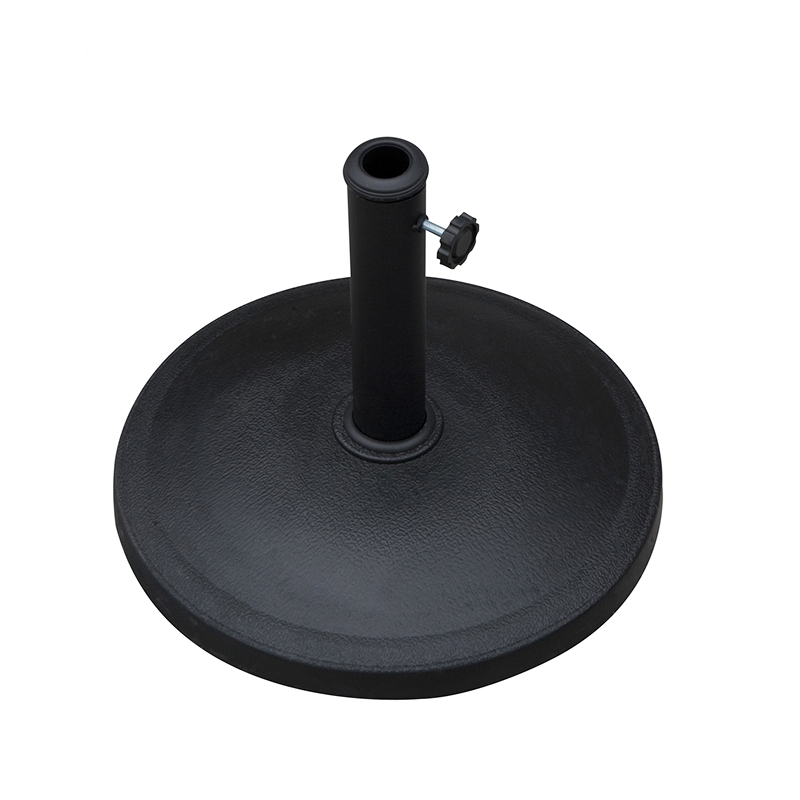
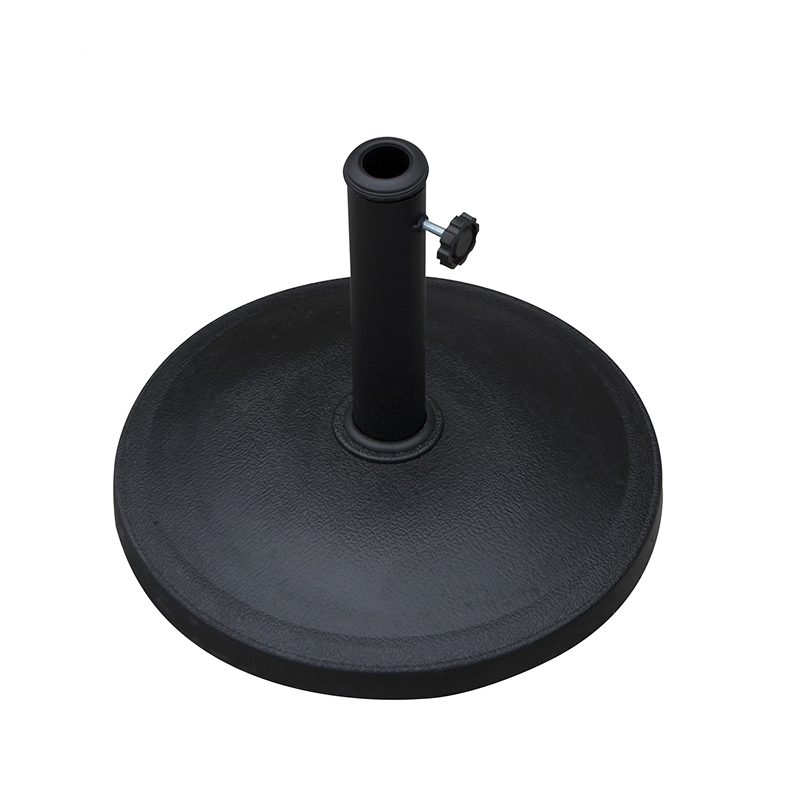
The base must be treated as part of the engineering system, not a decorative accessory. As a general guideline drawn from outdoor furniture engineering sources, a 9-foot umbrella typically needs at least 50 pounds of base weight in moderate wind areas, while umbrellas in the 10- to 11-foot range used in consistently breezy regions perform best with 75 to 90 pounds, or with an in-ground or bolted deck mount, which significantly outperforms any freestanding base.
The metal pole, ribs, and hinge hardware need a surface treatment that resists both corrosion and heat buildup, and this is where Advanced Ceramic coatings have become a meaningful upgrade over standard powder coating. Ceramic-based coatings form a hard, glass-like layer over aluminum or steel components that resists moisture penetration, salt exposure, and UV-driven degradation far longer than conventional paint or basic powder finishes. Because rust forms when moisture penetrates the protective coating on a frame and triggers iron oxidation that spreads rapidly in humid or coastal environments, a ceramic-reinforced finish on the pole and rib joints directly extends the structural life of the umbrella in the exact conditions -- wind-driven rain, salt air, repeated flexing -- that cause frames to weaken over time. Aluminum frames finished with Advanced Ceramic coatings also resist the micro-abrasion that occurs at hinge points every time the umbrella tilts or folds in wind, which is typically the first place a lower-quality frame begins to crack or pit.
Solution-dyed acrylic fabric outlasts surface-dyed polyester in wind-heavy, sun-heavy climates. Solution-dyed acrylic is widely regarded by textile engineers as the gold standard for outdoor performance, because the color is embedded throughout the fiber rather than applied as a surface coating, which means repeated flexing and flapping in the wind does not crack or flake the color away the way it can on cheaper printed fabrics.
Fiberglass-ribbed aluminum frames with ceramic-coated hardware deliver the best overall balance of flexibility, corrosion resistance, and weight when compared against steel and wood alternatives.
| Frame Type | Wind Behavior | Corrosion Resistance | Typical Weight | Best For |
| Fiberglass ribs + aluminum pole | Flexes and recovers | Excellent, especially with Advanced Ceramic coating | Light to medium | Coastal and regularly windy patios |
| Steel ribs + steel pole | Bends then releases (flex-arm models) | Moderate, depends on coating | Heavy | Inland patios with occasional gusts |
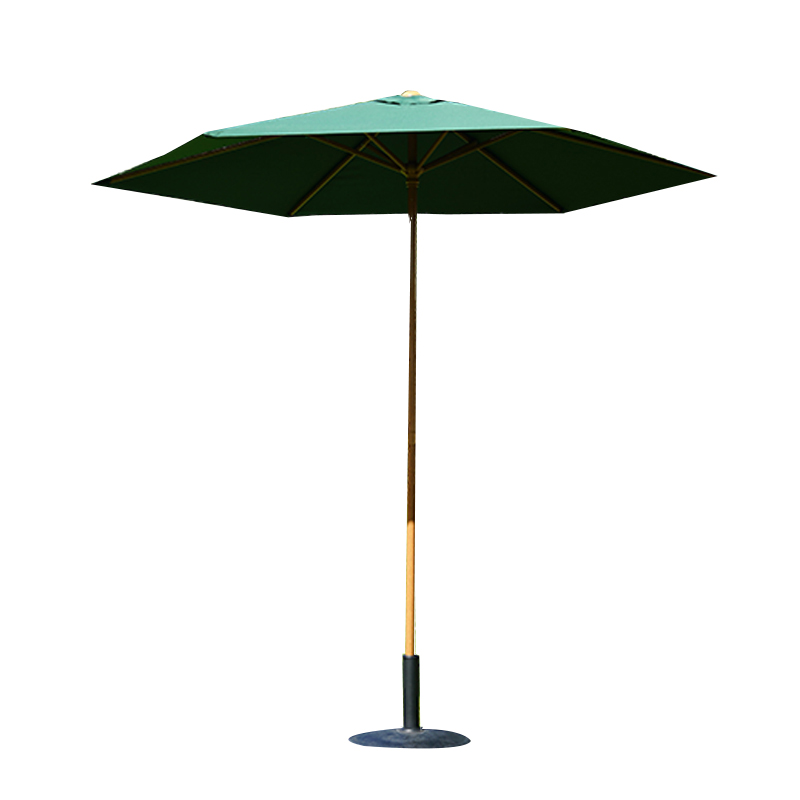
| Rigid wood ribs + wood pole | Cracks or splits under load | Low without sealant | Heavy | Sheltered, low-wind patios only |
| Basic aluminum, uncoated | Rigid, prone to bending out of shape | Fair, oxide layer only | Light | Budget, mild-climate use |
Table 2. Comparison of common patio umbrella frame materials and their wind performance characteristics, compiled from outdoor furniture materials guides and manufacturer specification data.
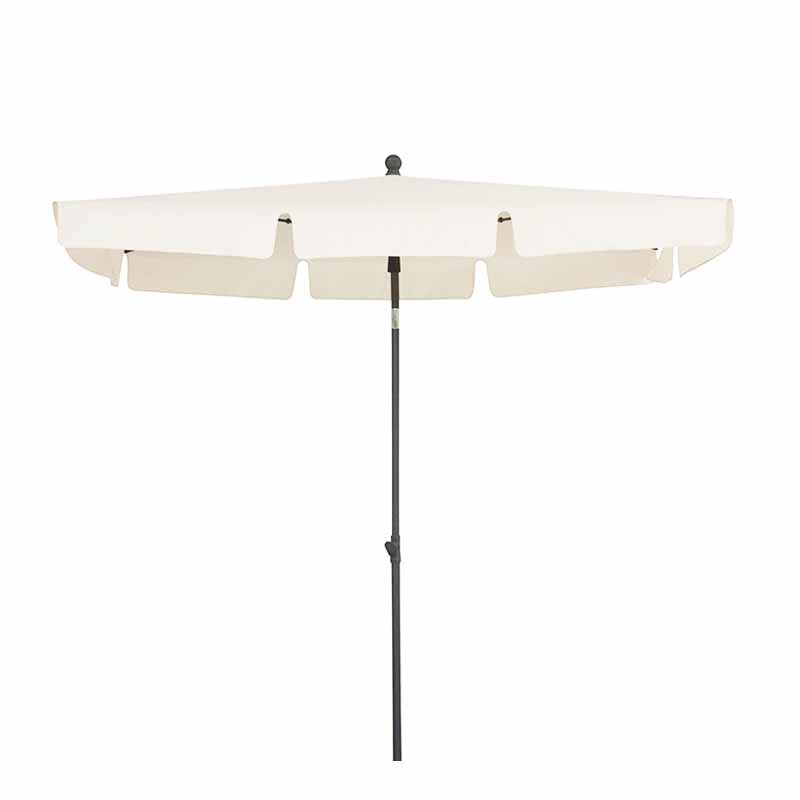
Smaller, lower-profile umbrellas with vented or half-umbrella designs handle wind better than large, fully open canopies. The relationship is simple physics: a 6-foot octagon umbrella exposes far less surface area to a gust than an 11-foot model, which directly reduces the force transferred to the pole and base. For patios that consistently experience wind, market-style umbrellas in the 6.5- to 9-foot range strike the best balance between usable shade and manageable wind load.
Half umbrellas, mounted flat against an exterior wall, are a particularly effective option for windy courtyards. Positioned on the leeward side of a structure, away from the prevailing wind direction, a half umbrella can provide strong shading during peak sun hours while using the building itself to block the majority of wind exposure, rather than relying on the umbrella's own structure to resist it directly.
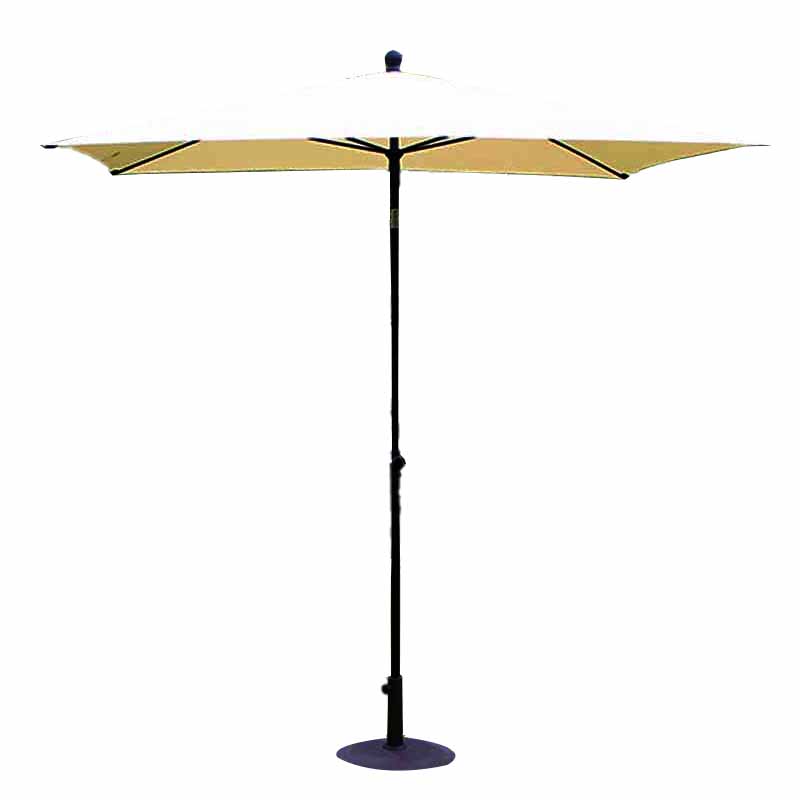
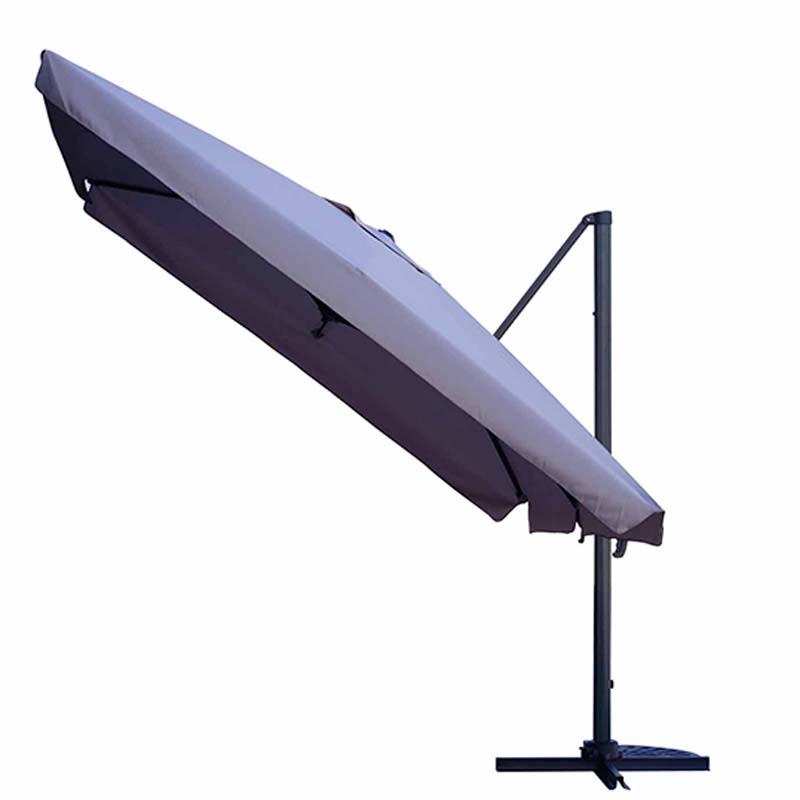
Center-pole market umbrellas generally outperform cantilever umbrellas in sustained wind because their load path runs straight down through the pole into a base directly beneath the canopy, while cantilever umbrellas place the base off to one side and rely on leverage and counterweight to stay upright.
A frame is only as wind-durable as its weakest joint, which is why hinge and runner coatings deserve as much attention as the rib material. Every time wind pushes an open umbrella, the force concentrates at the hinges, the crank mechanism, and the point where the ribs meet the central pole. Standard powder coating offers reasonable protection in mild climates, but in regions with frequent wind combined with rain or coastal salt air, that protection degrades faster than the frame underneath it.
Advanced Ceramic coatings address this gap by forming a denser, more chemically inert barrier than standard paint or powder finishes. This matters specifically at stress points because ceramic coatings maintain their protective integrity even after repeated flexing, whereas thinner finishes can micro-crack at hinge points after a season or two of wind exposure, allowing moisture to reach the bare metal underneath. For buyers shopping in genuinely windy regions -- coastal properties, elevated decks, or open plains -- prioritizing a frame with an Advanced Ceramic hardware coating is one of the highest-value upgrades available, because it protects the umbrella precisely where wind stress is concentrated.
Confirm five things before purchasing a patio umbrella for a windy location: rib material, vent design, published wind rating, base weight, and frame hardware coating.
Most unsecured umbrellas begin struggling at 25 to 31 mph (Beaufort Force 6) and face serious damage risk at 39 mph and above (Beaufort Force 8). Even a well-built, weighted umbrella with fiberglass ribs and a vented canopy should be closed and stored once sustained winds approach 32 mph.
Yes. A vent allows wind to pass through the top of the canopy instead of building pressure underneath it, which is the specific mechanism that causes a closed canopy to invert or flip in a gust. This is considered essential design for any umbrella used on open patios, rooftops, or pool decks without a nearby windbreak.
As a general baseline, a 9-foot umbrella needs roughly 50 pounds of base weight in moderate-wind areas, while a 10- to 11-foot umbrella in a consistently breezy region performs better with 75 to 90 pounds, or with a bolted or in-ground mount, which outperforms any freestanding base of comparable size.
In coastal, humid, or consistently windy climates, yes. The repeated flexing an umbrella frame undergoes during wind exposure stresses hinge points and joints first, and an Advanced Ceramic finish resists the micro-cracking and corrosion that standard powder coating develops over time at exactly those stress points, extending the umbrella's structural life by multiple seasons.
For winds above roughly 32 mph (Beaufort Force 7, "Near Gale"), yes, regardless of how well-built the umbrella is. Below that threshold, a properly vented, fiberglass-ribbed umbrella on an adequately weighted base should remain stable, but it is still good practice to close any umbrella overnight or whenever it will be unattended during a forecasted wind event.
For wind resistance specifically, yes. Fiberglass ribs flex under pressure and return to their original shape, while rigid aluminum or steel ribs are more prone to bending permanently out of shape under repeated wind loads. Many higher-performing umbrellas combine fiberglass ribs with an aluminum pole to get flexibility in the ribs and strength and corrosion resistance in the main support structure.
In short, the best patio umbrella for wind is not defined by brand or price alone, but by a specific combination of engineering choices: flexible fiberglass ribs, a vented canopy, an adequately weighted or anchored base, solution-dyed fabric, and frame hardware protected by a coating -- ideally an Advanced Ceramic finish -- capable of withstanding repeated flexing and moisture exposure at the joints where wind stress concentrates. Matching these features to the actual wind conditions of a specific patio, using the Beaufort Scale as a practical reference point, is the most reliable way to choose an umbrella that will still be standing -- and still look good -- after a full season of wind.
related products
Be the First to Know
+86 13357500282
Songxia Town, Shangyu District, Shaoxing City, Zhejiang Province, China
China Parasols Factory And Wholesale Garden Umbrellas Manufacturers


 English
 Español
 عربى
عربى
 Português