English
 Español
 عربى
عربى
 Português

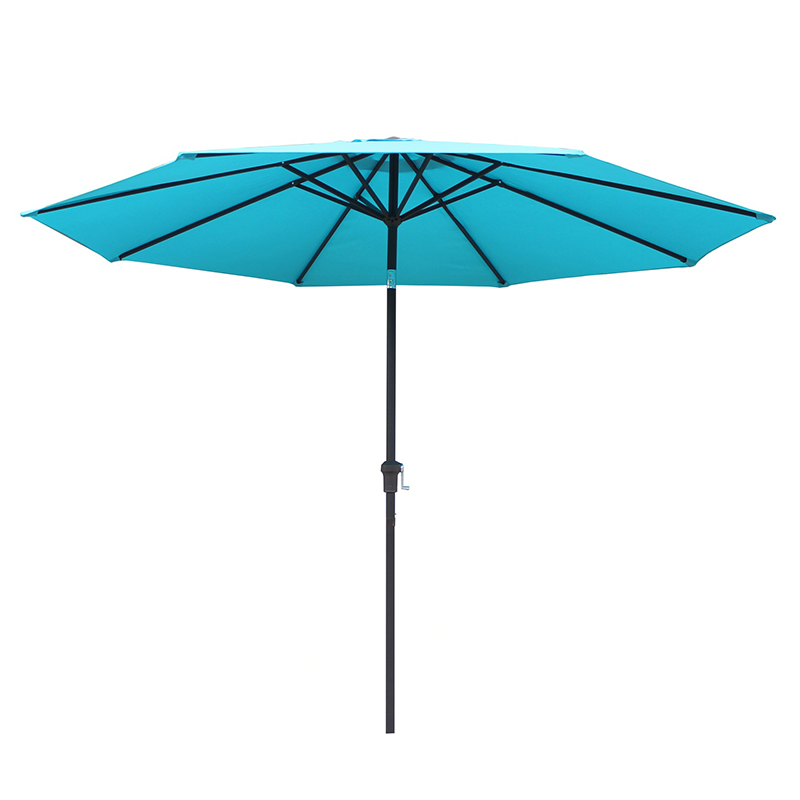
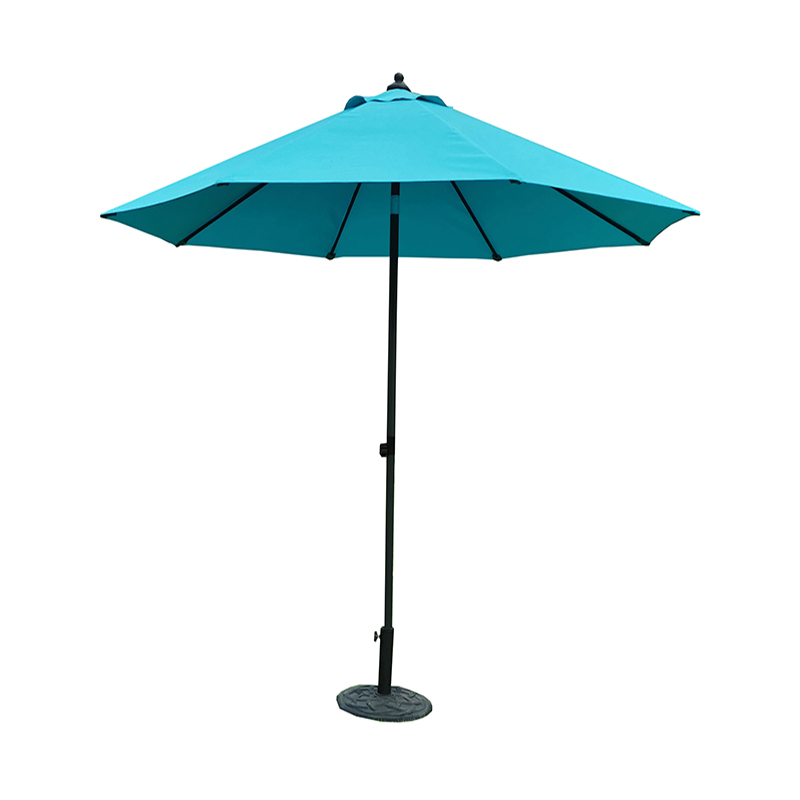
A market patio umbrella is a freestanding outdoor umbrella with a central pole, a wide circular or octagonal canopy, and a crank or pulley lift system — designed to shade dining tables, patios, and decks rather than to be carried by hand. Unlike handheld umbrellas, market umbrellas are engineered for stability in wind, durability under prolonged sun exposure, and coverage large enough to shade multiple people seated around a table. This guide breaks down exactly what defines a market umbrella, how it differs from other patio shade options, and what to consider before buying one.
Content
- The Defining Features of a Market Patio Umbrella
- How a Market Umbrella Differs From Other Patio Umbrella Types
- Common Market Umbrella Canopy Shapes and Sizes
- Lift Mechanisms: Crank, Pulley, and Push-Button Systems
- Fabric Materials: What Makes a Canopy Last Outdoors?
- How Much Wind Can a Market Umbrella Withstand?
- How to Choose the Right Market Umbrella Base
- Market Umbrella vs. Cantilever Umbrella: Which Should You Choose?
- Caring for a Market Patio Umbrella to Extend Its Lifespan
- Frequently Asked Questions About Market Patio Umbrellas
- Why is it called a "market" umbrella?
- Can a market umbrella be used without a table?
- What size umbrella do I need for a 6-seat dining table?
- Do market umbrellas provide real UV protection, or just shade?
- How long do market umbrellas typically last?
- Is it safe to leave a market umbrella open overnight?
- Can I replace just the canopy fabric instead of buying a new umbrella?
- Conclusion
The Defining Features of a Market Patio Umbrella
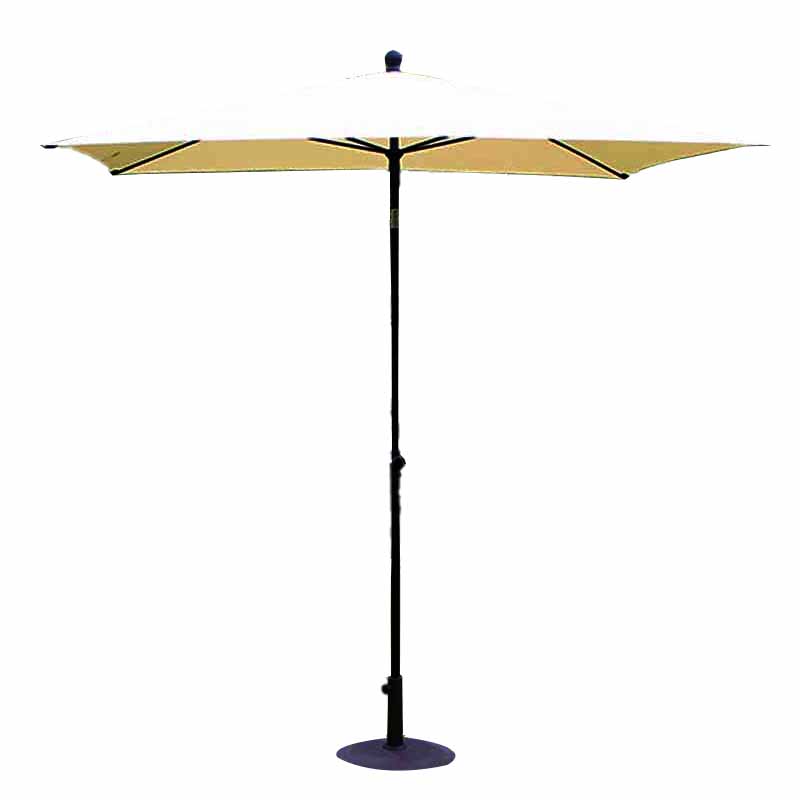
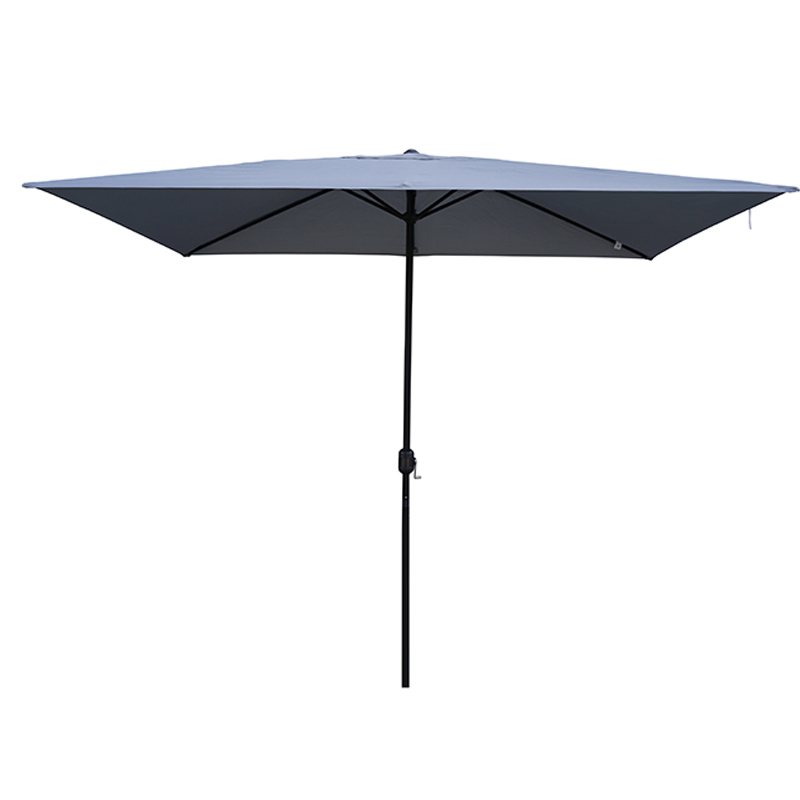
A true market umbrella is identified by four core features: a center pole running through the middle of a table opening, a push-button or crank-and-pulley lift mechanism, ribs that fold outward in a fan pattern, and a canopy shape that is typically round, square, or octagonal. These design choices trace back to the umbrella's origin as shade for outdoor market stalls in 19th-century Europe, where vendors needed a stable, easily adjustable canopy that didn't take up valuable selling space.
The center pole design is what separates a market umbrella from a cantilever (offset) umbrella. Because the pole runs straight down through the table's umbrella hole into a base, market umbrellas distribute weight directly beneath the canopy, which makes them inherently more wind-stable than offset designs of comparable size — though this also means the pole occupies the center of the table.
Typical Construction Materials
Most market umbrella frames are made from aluminum, wood, or fiberglass, while canopies are typically constructed from solution-dyed acrylic, polyester, or olefin fabric — each material trading off cost, weather resistance, and longevity differently. Aluminum frames resist rust and are lightweight, making them the most common choice for residential market umbrellas. Wood frames offer a classic aesthetic but require more maintenance in humid climates. Fiberglass ribs are valued for their flexibility, allowing them to bend in strong gusts and spring back rather than snapping.
How a Market Umbrella Differs From Other Patio Umbrella Types
Market umbrellas differ from cantilever and tilt umbrellas primarily in pole position and movement range — market umbrellas have a fixed center pole, while cantilever umbrellas use a side-mounted arm that frees up the table space below. Understanding these distinctions is essential, since each type suits a different outdoor layout and budget.
| Umbrella Type | Pole Position | Best Use Case | Typical Price Range |
| Market umbrella | Center, through table | Dining tables, patios with umbrella-hole tables | $50–$400 |
| Cantilever (offset) umbrella | Side-mounted arm | Lounge areas, pools, open seating with no table hole | $150–$800 |
| Tilt umbrella | Center, with hinge joint | Tables that need angled shade as the sun moves | $60–$300 |
| Beach umbrella | Center, sand-anchored | Sand or grass, portable single-person shade | $25–$120 |
| Cantilever with rotation | Side-mounted, 360-degree rotating | Large patios needing flexible shade angles | $250–$1,200 |
Caption: Comparison of market umbrellas against other common patio umbrella types based on pole position, best use case, and typical price range.
Common Market Umbrella Canopy Shapes and Sizes
Market umbrellas typically range from 6 to 13 feet in diameter, with round and octagonal canopies covering the widest area per square foot of fabric and square canopies fitting more efficiently against walls or in corners. Choosing the right size depends on table dimensions, the number of people you need to shade, and how far the umbrella will overhang the seating area.
| Canopy Size | Approx. Shade Area | Recommended Table Size | Seats Comfortably |
| 6–7 ft | 28–38 sq ft | Bistro tables, small balconies | 2–4 people |
| 8–9 ft | 50–64 sq ft | Standard 4-seat dining tables | 4–6 people |
| 10–11 ft | 79–95 sq ft | 6–8 seat dining sets | 6–8 people |
| 13 ft | 133 sq ft | Large dining sets, restaurant patios | 8–10 people |
Caption: Approximate shade coverage and recommended seating capacity by market umbrella canopy size, based on standard round-canopy dimensions.
Canopy Shape: Round, Square, and Octagonal
Round and octagonal canopies are the most common market umbrella shapes because their fan-style rib structure folds compactly and distributes wind load evenly, while square canopies maximize coverage over rectangular tables. A square 9-by-9-foot canopy covers a rectangular table more completely than a round canopy of the same diameter, since the corners extend coverage that a circular shape would miss.
Lift Mechanisms: Crank, Pulley, and Push-Button Systems
Market umbrellas open and close using one of three mechanisms — a crank handle, a pulley and rope system, or a push-button auto-tilt lift — and the right choice depends on how often the umbrella will be opened, the canopy size, and physical ease of use.
- Crank lift — A geared handle at the base of the pole winds the canopy open smoothly with minimal effort, even on larger umbrellas. This is the most common mechanism on umbrellas 9 feet and larger, since it distributes the physical effort of opening a heavy canopy.
- Pulley and rope — A simple rope-and-pulley system that the user pulls to raise the canopy, then secures with a cleat or knot. This system is lightweight, lower-cost, and common on smaller umbrellas under 8 feet.
- Push-button auto-tilt — A spring-assisted button mechanism that opens the canopy and can tilt it to a fixed angle with one motion. This adds convenience but is generally limited to smaller and mid-sized umbrellas due to the mechanical load involved.
Fabric Materials: What Makes a Canopy Last Outdoors?
Solution-dyed acrylic fabric is widely regarded as the most durable and fade-resistant material for market umbrella canopies, since the color is woven into the fiber itself rather than applied as a surface coating that can wear off.
| Fabric Type | Fade Resistance | Water Resistance | Typical Lifespan |
| Solution-dyed acrylic | Excellent | Good (water-repellent finish) | 5–10 years |
| Polyester (coated) | Moderate | Good | 2–4 years |
| Olefin | Good | Moderate | 3–5 years |
| Cotton / canvas blend | Low–moderate | Low (needs reproofing) | 1–3 years |
Caption: Comparison of common market umbrella canopy fabrics across fade resistance, water resistance, and typical functional lifespan outdoors.
According to UV exposure research published by the U.S. Environmental Protection Agency, ultraviolet radiation intensity varies significantly by season and altitude, which is why canopy fabrics are increasingly rated using a UPF (Ultraviolet Protection Factor) scale. A canopy rated UPF 50+ blocks approximately 98% of ultraviolet radiation, providing meaningfully better sun protection underneath than an untreated or lower-rated fabric.
How Much Wind Can a Market Umbrella Withstand?
Most residential market umbrellas are rated to withstand sustained winds between 15 and 25 mph when properly weighted, though gusts beyond this range can cause tipping or frame damage regardless of base weight. Wind resistance depends heavily on base weight, pole material, and whether vented canopy designs are used to release wind pressure.
The National Weather Service classifies winds of 25–31 mph as "strong breeze" on the Beaufort scale, a range at which most patio umbrellas — even with adequate base weight — are recommended to be closed and stored. Manufacturers commonly recommend matching base weight to umbrella size: roughly 50 pounds of base weight for umbrellas up to 9 feet, and 75 to 100 pounds for larger umbrellas in the 10- to 13-foot range. Vented canopies, which include a small flap or double-canopy design at the top, allow wind to pass through rather than catching the full force of a gust, measurably reducing tipping risk in moderate wind.
How to Choose the Right Market Umbrella Base
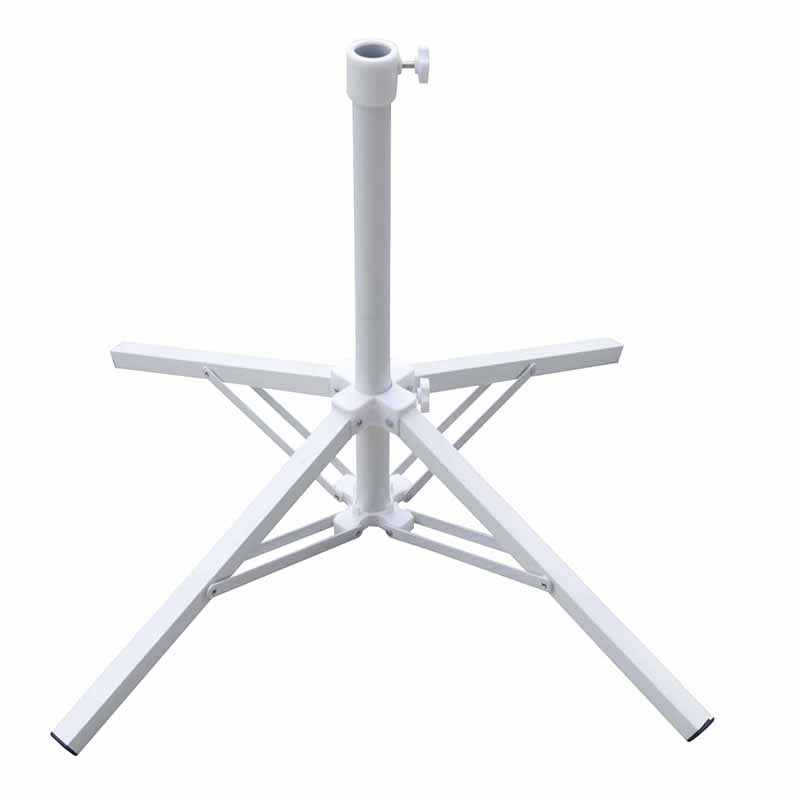
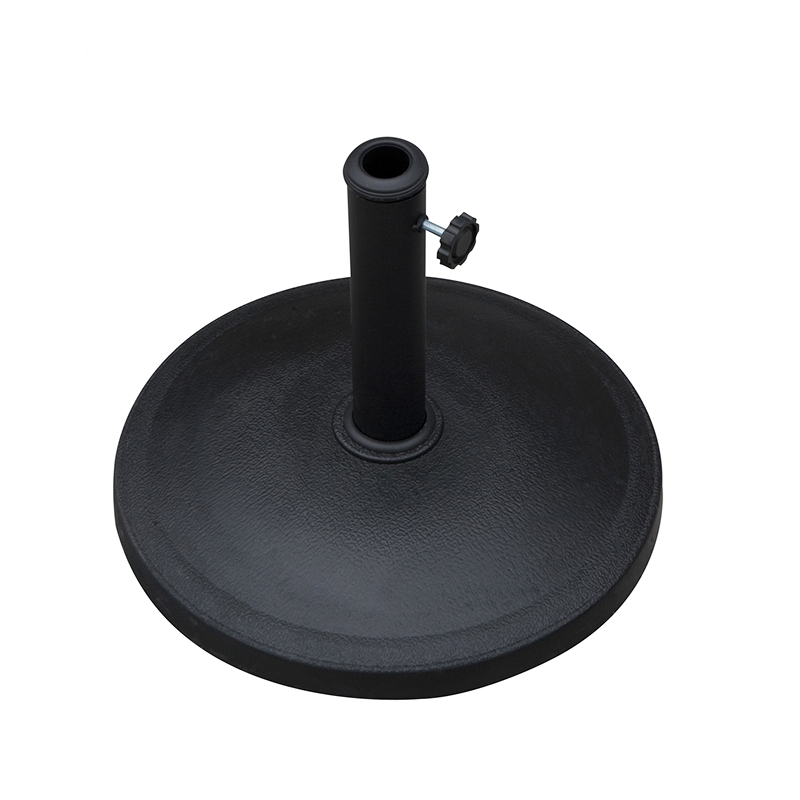
The umbrella base is just as important as the canopy itself — an undersized base is the leading cause of tipping accidents, and the right base weight depends directly on canopy size, pole diameter, and typical wind exposure at your location.
- Table-mounted base — A small weighted ring or bracket that secures the umbrella pole through a table's built-in umbrella hole. Suitable only for smaller umbrellas in low-wind, sheltered areas.
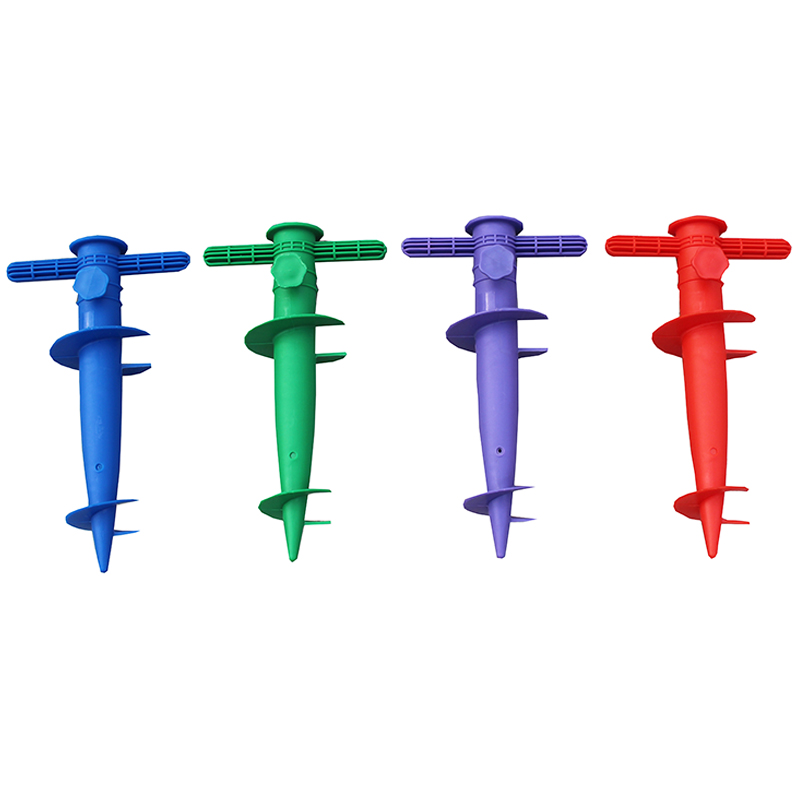
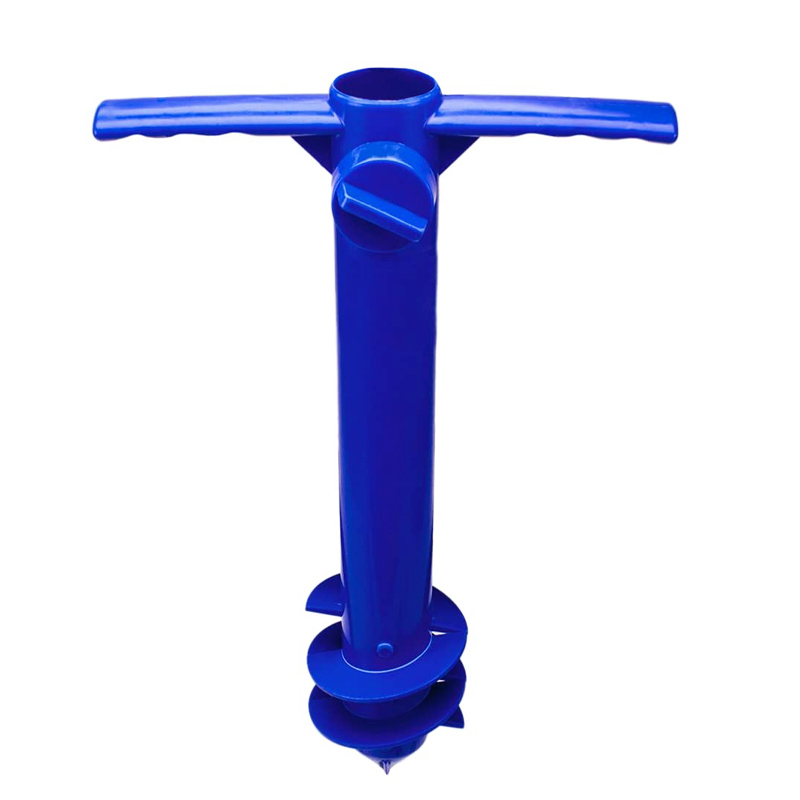
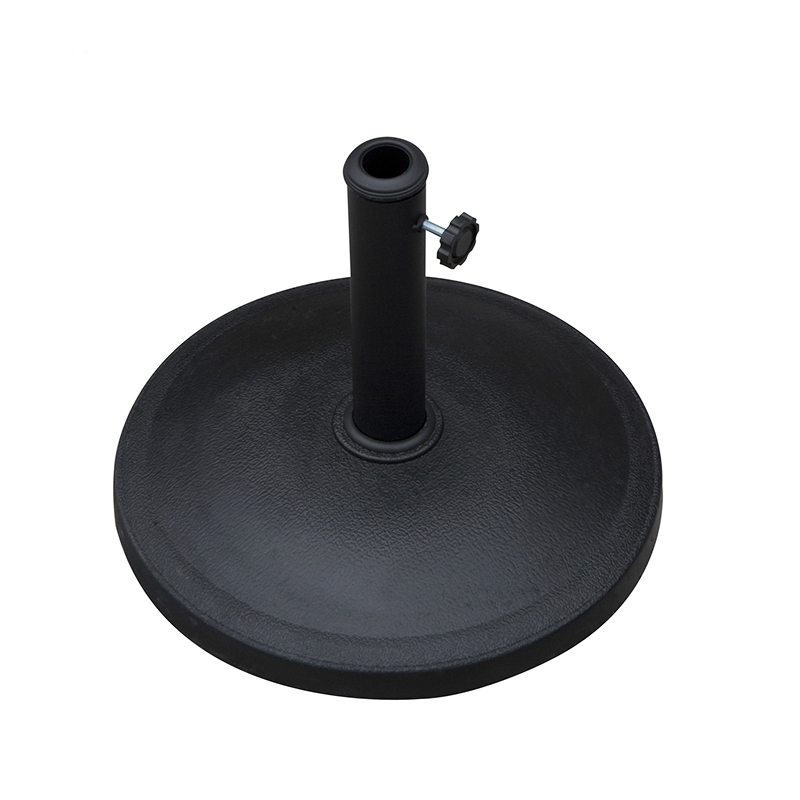
- Freestanding weighted base — A separate base (often filled with sand, water, or solid concrete/cast iron) used when there is no table or when extra stability is needed regardless of table weight.
- Fillable plastic base — A hollow plastic base filled with sand or water on-site, offering an affordable and adjustable-weight option, though typically lighter than solid bases of the same size.
- Cast iron or concrete base — The heaviest and most stable option, often used for larger market umbrellas or in consistently windy locations, but also the most difficult to relocate.
A widely cited rule of thumb among outdoor furniture retailers is that base weight should increase by roughly 25 pounds for every additional 2 feet of canopy diameter beyond a 9-foot umbrella, since wind load increases disproportionately with surface area rather than linearly.
Market Umbrella vs. Cantilever Umbrella: Which Should You Choose?
Choose a market umbrella if you have a table with a built-in umbrella hole and want a budget-friendly, stable shade solution; choose a cantilever umbrella if you need the area beneath the canopy completely free of a center pole, such as over a lounge seating area or a pool deck.
Market umbrellas are generally more affordable and easier to set up, since the center-pole design is mechanically simpler and requires less structural reinforcement than a cantilever's side arm, which must counterbalance the entire canopy weight from an offset position. Cantilever umbrellas, however, offer much greater flexibility in positioning the shade independently of the table or seating arrangement, and many models rotate 360 degrees around their base to follow the sun throughout the day.
Caring for a Market Patio Umbrella to Extend Its Lifespan
Closing the umbrella during high winds and storms, cleaning the canopy regularly, and storing it properly during off-seasons are the three most effective steps for extending a market umbrella's functional lifespan well beyond its average rating.
- Close during storms and overnight — Leaving a canopy open in wind, even when weighted, is the single most common cause of frame and rib damage.
- Clean the fabric seasonally — A mild soap and water solution applied with a soft brush removes mildew spores and dirt before they set into the fabric weave, which is especially important for solution-dyed acrylic to maintain its water-repellent finish.
- Dry fully before closing — Storing a damp canopy folded against itself for extended periods promotes mold and mildew growth between the fabric layers.
- Use a protective cover — A fitted umbrella cover reduces UV exposure and dust accumulation when the umbrella is closed but left outside.
- Lubricate moving parts annually — A light silicone-based lubricant on the crank mechanism and rib joints prevents stiffness and rust buildup over time.
Frequently Asked Questions About Market Patio Umbrellas
Why is it called a "market" umbrella?
The term originates from outdoor market stalls in 19th-century Europe, where vendors used large center-pole umbrellas to shade goods and customers while keeping the selling surface beneath fully accessible. The name has carried forward into modern outdoor furniture terminology to describe any standard center-pole umbrella, regardless of whether it is actually used at a market.
Can a market umbrella be used without a table?
Yes — a market umbrella can stand independently using a freestanding weighted base instead of being mounted through a table's umbrella hole. This setup is common for creating shaded seating areas, garden corners, or standalone shade spots where no table is present.
What size umbrella do I need for a 6-seat dining table?
A 10- to 11-foot canopy is generally recommended for a 6-seat dining table, since it provides enough overhang beyond the table edges to shade chairs as the sun moves throughout the day. A canopy sized too closely to the table dimensions will only provide shade for a short window each day before the sun angle shifts coverage off the seating area.
Do market umbrellas provide real UV protection, or just shade?
Market umbrellas provide measurable UV protection in addition to visible shade, but the degree depends on the fabric's UPF rating. A canopy rated UPF 50+ blocks the large majority of ultraviolet radiation, while an untreated or older, sun-faded fabric may allow significantly more UV to pass through even though it still blocks direct sunlight. Checking the manufacturer's UPF rating is the most reliable way to know the actual protection level.
How long do market umbrellas typically last?
A well-maintained market umbrella with a solution-dyed acrylic canopy and an aluminum or quality wood frame typically lasts 5 to 10 years before fabric replacement or frame issues become necessary. Lower-cost polyester canopies with painted or powder-coated steel frames generally last 2 to 4 years, especially in regions with intense sun or frequent storms.
Is it safe to leave a market umbrella open overnight?
It is not recommended to leave a market umbrella open overnight, since overnight weather conditions — including sudden wind gusts, dew accumulation, and temperature swings — are unpredictable and increase the risk of frame stress or tipping when no one is present to respond. Closing the umbrella each evening, even in calm weather, is the safest standard practice.
Can I replace just the canopy fabric instead of buying a new umbrella?
Yes — replacement canopies are widely available and sized to match standard frame dimensions (such as 9-foot or 11-foot round frames), making it possible to refresh a faded or torn canopy without replacing the entire frame and base. This is typically far more cost-effective than buying a completely new umbrella, provided the frame and ribs are still structurally sound.
Conclusion
A market patio umbrella remains one of the most practical, affordable, and widely used outdoor shade solutions precisely because its center-pole design offers reliable stability, broad fabric and size options, and straightforward setup for tables with a built-in umbrella hole. Whether you are shading a small balcony bistro set or a full backyard dining table, matching canopy size, fabric type, and base weight to your specific space is the key to getting years of dependable shade.
Before buying, measure your table and seating area, check your local wind conditions, and decide whether a center pole through the table is acceptable for your layout — if not, a cantilever umbrella may be the better fit. With the right combination of size, material, and base, a market umbrella can comfortably serve a patio, deck, or garden table for many seasons to come.