English
 Español
 عربى
عربى
 Português

A patio umbrella base is the part that keeps the whole umbrella system safe. The right base supports the pole, adds enough counterweight for the canopy, and prevents the umbrella from tipping over in a gust of wind. Choose the wrong base and the umbrella becomes a hazard even in a mild breeze.
Use this three-step rule when you evaluate any base: match the pole diameter, match the canopy weight, and add a margin for windy conditions.
Content
What a Patio Umbrella Base Does
A patio umbrella base does three jobs: it holds the pole in position, it adds weight to resist wind, and it protects the umbrella frame from stress. Without a stable base, the umbrella pole bends at the collar, the ribs overload, and the fabric tears around the top hub.
Why Weight and Stability Matter
When wind pushes the canopy, it creates leverage at the pole. The base needs enough mass to resist that force before the umbrella starts to move. A base that is too light allows the umbrella to rock, which eventually damages the pole and the mounting plate.
Why Pole Fit Matters
The pole must sit inside the base sleeve with minimal gap. If the sleeve is larger than the pole, the umbrella will wobble and the set-screws will not hold. Always measure the pole diameter before ordering a base.
How Much Weight Does a Patio Umbrella Base Need?
For a standard straight patio umbrella, the base should weigh at least 20 kg (44 lb) for a 2.1 m (7 ft) canopy, and around 40–50 kg (88–110 lb) for a 3.5 m (11 ft) canopy. The heavier the canopy, the more counterweight required because wind force increases with surface area.
Use the table below as a starting point. These figures assume a patio with average wind exposure up to about 20 km/h (12 mph).
| Canopy diameter | Minimum base weight | Recommended for exposed patios |
|---|---|---|
| 6 ft (1.8 m) | 18–25 lb (8–11 kg) | 30–40 lb (14–18 kg) |
| 7.5 ft (2.3 m) | 30–40 lb (14–18 kg) | 50 lb (23 kg) |
| 9 ft (2.7 m) | 40–50 lb (18–23 kg) | 60–70 lb (27–32 kg) |
| 10 ft (3.0 m) | 50–70 lb (23–32 kg) | 80–90 lb (36–41 kg) |
| 11 ft (3.4 m) | 70–90 lb (32–41 kg) | 100–110 lb (45–50 kg) |
| 13 ft (4.0 m) | 90–110 lb (41–50 kg) | 130 lb (59 kg) |
What Happens When the Base Is Too Light
A lightweight base makes the umbrella act like a sail. The first gust can lift the pole out of the sleeve, bend the ribs, or push the entire umbrella across the patio. Even if the umbrella does not tip over, repeated rocking loosens the screw joints and shortens the life of the canopy.
Matching the Base to Your Umbrella Pole
The base must fit the umbrella pole diameter; otherwise no amount of weight will make it secure. Most straight-pole patio umbrellas use one of three round pole sizes, but square and tapered poles are also common.
| Pole shape | Pole diameter | Base sleeve size needed |
|---|---|---|
| Round | 1.5 in (38 mm) | 38 mm inner diameter |
| Round | 1.9 in (48 mm) | 48 mm inner diameter |
| Round | 2.2 in (56 mm) | 56 mm inner diameter |
| Square | Around 3 in (76 mm) | Square socket or reducer insert |
How to Measure the Pole Correctly
Measure the widest point at the lower end of the pole with a tape measure or calliper. If the umbrella has a collar or a tapered pole, use the section that enters the base sleeve as your reference. When in doubt, choose a base with a slightly larger sleeve and use a reducer bushing.
What to Check on the Base Sleeve
Look at the sleeve depth and the side-locking screws. A deeper sleeve supports the pole better, and at least two locking points keep the pole vertical. For commercial patios, a sleeve without sharp internal edges helps prevent damage to powder-coated poles.
Types of Patio Umbrella Bases and Where to Use Them
Base shape matters as much as weight, because each base type distributes weight differently and suits different surfaces and umbrella styles. Standard straight umbrellas work well with cross bases, while offset umbrellas need a wide plate or a dedicated counterweight.
Cross Bases for Straight Umbrella Poles
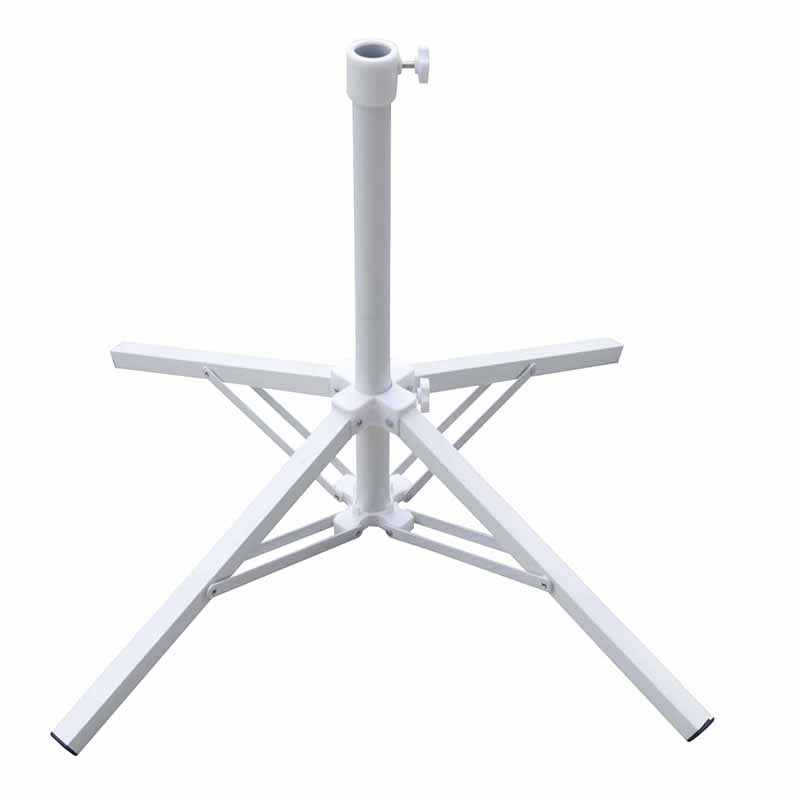
A cross base has four short arms radiating from a central sleeve. It spreads the load over a wide footprint and works on decks, stone, and paved surfaces. For most 7–9 ft straight umbrellas, a base for straight patio umbrellas with a powder-coated steel frame offers a good balance of weight and footprint. Choose a version with rubber pads on each arm so it does not scratch your patio.
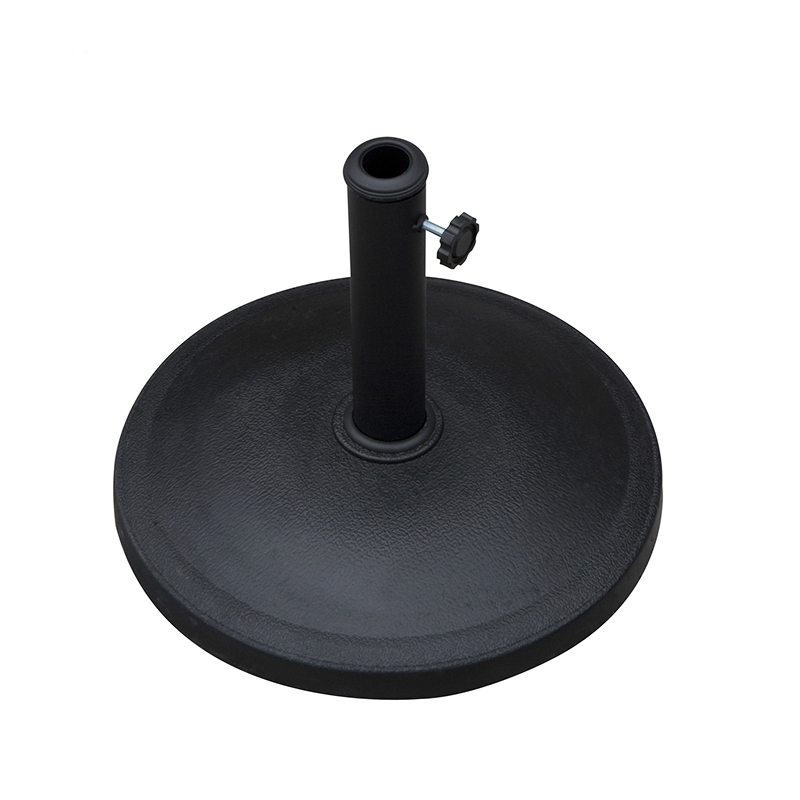
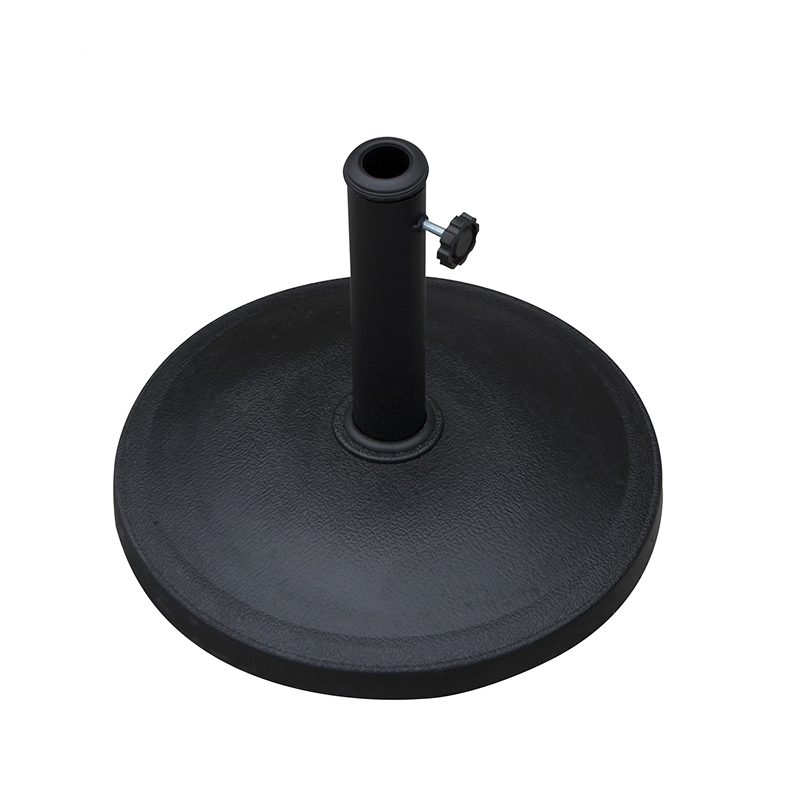 China φ44.5xH33cm resin adjustable height base for straight umbrella UA1919 withShaoxing Gaobu Tourism Products Co.,Ltd is China φ44.5xH33cm resin adjustable height base for straight umbrella UA1919 with anti-slip pad...View Product →
Flat Plate and Round Bases
Flat round bases look cleaner under dining tables and are easier to slide across a floor. They tend to have a lower center of gravity, which improves stability. However, they take up more floor area and can be harder to move when loaded. Round bases suit heavy-duty market umbrellas and double-functional tables with a center hole.
Cantilever and Roma Umbrella Bases
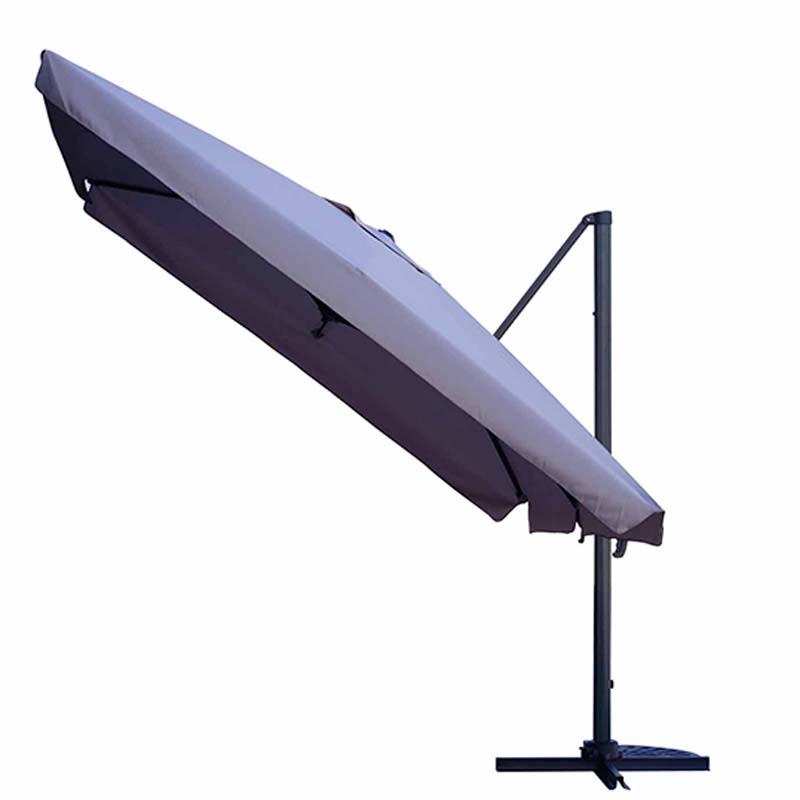
Cantilever and Roma umbrellas put the pole at the side or in a fixed offset position, so the base must handle more leverage. Choose a base with a wide footprint and a weight rating that matches the umbrella manufacturer's recommendation. A dedicated cantilever umbrella base is usually shaped as a square plate with gusseted corners for lateral strength. For offset Roma-style frames, a Roma umbrella base made from high-density polyethylene resists cracking and holds the side pole securely.
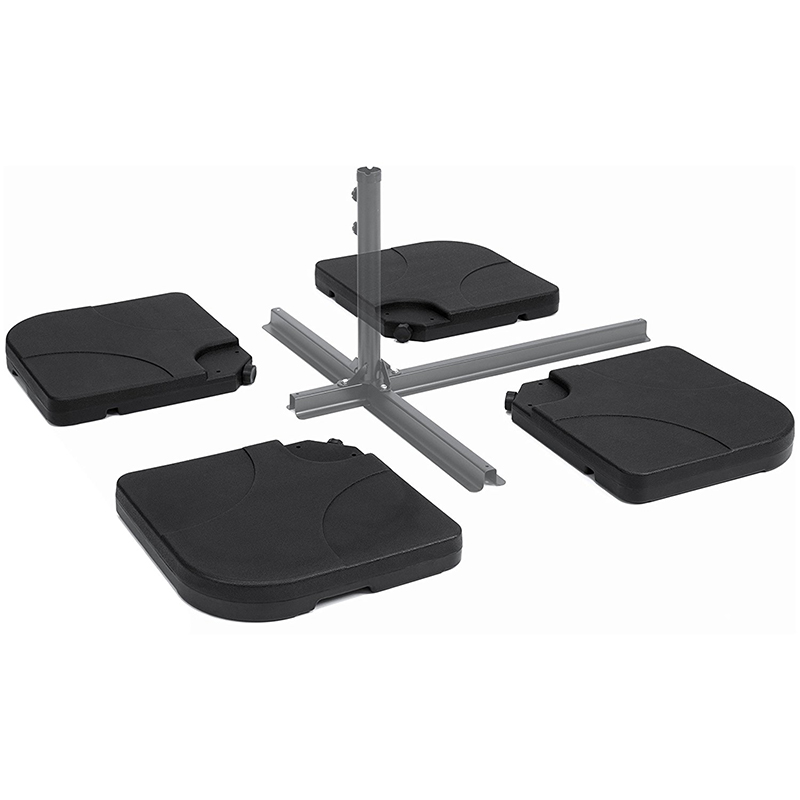 China Base for Roma umbrella1/4 HDPE UA1914 Suppliers, Custom FactoryShaoxing Gaobu Tourism Products Co.,Ltd is China Base for Roma umbrella1/4 HDPE UA1914 suppliers and factory, specializing in custom ODM/...View Product →
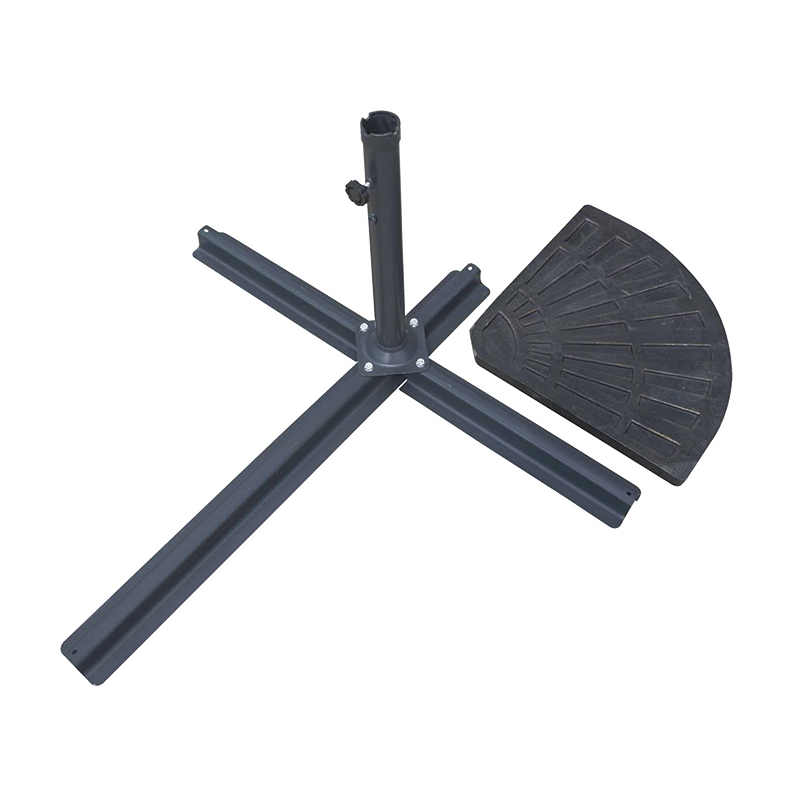 China Base for cantilever umbrella 1/4 UA1917 Suppliers, Custom FactoryShaoxing Gaobu Tourism Products Co.,Ltd is China Base for cantilever umbrella 1/4 UA1917 suppliers and factory, specializing in custom OD...View Product →
Space-Saving Half Bases for Small Balconies
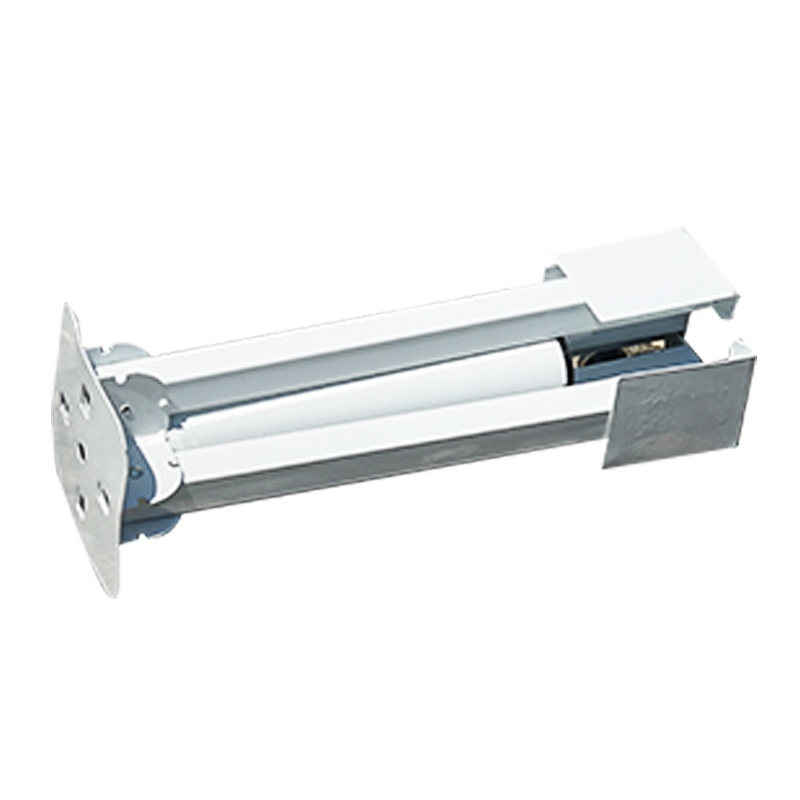
Half bases are designed for wall-mounted or railing-mounted umbrellas where full floor coverage is not possible. They rely on a smaller footprint and should only be used with lightweight compact umbrellas in sheltered spots. If your balcony faces an open wind direction, choose a full-width cantilever base even if it takes more space.
| Base type | Best for | Main advantage | Main trade-off |
|---|---|---|---|
| Cross base | Straight poles on flat hard surfaces | Compact, fits under chairs | Can be heavy to lift |
| Flat round base | Dining tables and market umbrellas | Smooth, low profile | Wide footprint, heavier to store |
| Cantilever/Roma base | Offset umbrella frames | Wide stance for leverage | Requires more patio space |
| Half base | Small balconies and rail mounting | Saves floor space | Only for sheltered, lightweight umbrellas |
Wind Resistance and Patio Safety
Wind, not water or sun, is the main reason umbrella bases fail, so choose a heavier base than the minimum recommendation if your patio is exposed. In exposed locations, combine a heavy base with an anchor or a tie-down.
- Close the umbrella when it is not in use, especially overnight or before an afternoon storm.
- Use the tilt position to spill wind instead of catching it. A flat canopy acts like a sail when the umbrella is left fully open.
- Check the set-screws and locking pins every few weeks, as vibration can loosen them.
- Store the umbrella in a protective cover during storm season and take it inside when the forecast exceeds 40 km/h (25 mph).
- Do not place a lightweight base on grass or soft soil; the arms can sink and make the umbrella lean.
Extra Anchoring Options for Windy Areas
If your patio is on a rooftop, a balcony, or an open field, add a ground anchor or a screw-in tie-down kit. These accessories work together with the base to hold the umbrella down without adding 30 kg of extra weight.
Patio Umbrella Base FAQ
These are the most common patio umbrella base questions buyers ask before ordering.
How much weight do I need for a 9-foot patio umbrella?
At minimum, use a 40–50 lb (18–23 kg) base for a 9 ft round canopy. If your patio is windy, move up to 60–70 lb (27–32 kg) or add an anchor system.
Can I use sand or water to weight a base?
Yes, but only if the base is designed for filling. Hollow plastic bases typically have a fill capacity and a sealed plug. Overfilling can crack the plastic, and an unsealed plug can leak while the umbrella is being moved.
What if my umbrella pole is smaller than the base sleeve?
Use a reducer bushing or an adjustable-base sleeve. Never force the pole into a larger sleeve without support, because the wobble will damage the pole and the canopy ribs.
Do cantilever umbrellas need a special base?
Yes. Cantilever and Roma umbrellas should use a base rated for offset frames. The base must be wider and heavier because the load is applied off-center, and a standard cross base is not enough.
How to Choose the Right Base in Three Steps
The fastest way to choose a patio umbrella base is to check the pole diameter, measure the canopy width, and estimate your patio's wind exposure. Once you have these numbers, select a base that meets the heavier end of the recommended range.
- Measure the pole diameter at the bottom and record the shape.
- Measure canopy diameter from one rib tip to the opposite rib tip.
- Add 20–30% extra base weight if your patio is on a balcony, a rooftop, or an exposed lawn.
If the base is for custom or bulk procurement, work with a factory that understands frame geometry and weight distribution. Read our detailed guide on how to choose the right patio umbrella base for more variables. For custom base projects or wholesale orders, visit our patio umbrella customization service or contact our export team directly.