English
 Español
 عربى
 Português

A three tier patio umbrella answers one problem that flat canopies handle badly: moving air. Its canopy is built in three stacked layers with open gaps between them, so wind escapes instead of lifting the whole structure, and hot air rises out of the seating area instead of sitting under the fabric. On a breezy terrace, a coastal garden or a busy café patio, that difference is worth paying for. Where driving rain rather than wind is the real enemy, a single-canopy umbrella with a sewn-in vent is cheaper, drier and simpler, because the tier gaps will drip.
Tier count is a wind-and-comfort decision; diameter is the shade decision. Below is what the layers actually do, how to write frame and fabric tolerances into an order, how to size and anchor the umbrella, and where a tiered canopy stops making sense.
Content
- What "Three Tier" Really Means on a Patio Umbrella
- Three Tier vs. Single Canopy vs. Two Tier: What Actually Changes
- How the Tier Gaps Change Wind and Heat Behaviour
- Which Patio Umbrella Styles Carry a Tiered Canopy
- Frame and Fabric Specs to Write Into the Purchase Order
- Sizing a Three-Tier Umbrella to the Table and the Space
- Bases and Stability: Where the Tier Advantage Is Easily Lost
- Rain, Cleaning and Storage: The Honest Trade-Offs
- Sourcing Three-Tier Patio Umbrellas: What to Verify With a Factory
- Frequently Asked Questions
What "Three Tier" Really Means on a Patio Umbrella
Three tier describes the canopy, never the pole. A three-tier canopy stacks three fabric panels of decreasing diameter on one frame: a wide lower tier that does the shading, a middle tier, and a small top cap. Each tier has its own rib pockets, its own ring of ribs, and an open gap of roughly 5 to 15 cm depending on overall diameter.
Two naming collisions cause most of the confusion in this category:
- Three-section poles. A "3-section" beach or travel umbrella folds into three telescoping pole segments so it packs short. That is a transport feature with no link to canopy tiers.
- Tiered gazebo roofs. Roof tiers work on the same pressure-relief logic on gazebos and pavilions, but the hardware, hub and base are entirely different components.
So when a buyer asks for a three tier patio umbrella, they are usually asking for three things at once: a vented canopy that resists uplift, a longer visual presence above a dining set, and a more architectural look than a flat market umbrella. Only the first of those is structural.
Three Tier vs. Single Canopy vs. Two Tier: What Actually Changes
Tier count changes wind behaviour and appearance far more than it changes shade. Shade comes from diameter; stability comes from how fast the canopy sheds air.
| Factor | Single canopy with vent | Two tier | Three tier |
|---|---|---|---|
| Heat escape | Vent panel opens only when wind lifts it | Upper tier permanently open, moderate airflow | Two permanent gaps, the most continuous airflow |
| Wind uplift | Full sail area, highest peak load | Reduced load at the crown | Pressure bleeds off continuously, calmest of the three |
| Shade directly overhead | Maximum | Slightly reduced | Slightly reduced; compensate with a wider lower tier |
| Rain performance | Best of the three | Light drips at the gap | More drips, gaps align with gravity |
| Frame load and weight | Lightest ribs and hub | Heavier hub and ribs | Heaviest; needs a reinforced hub and a sturdier base |
| Relative cost | Baseline | Roughly 10 to 20 percent more | Roughly 25 to 40 percent more |
| Typical use | Sheltered courtyards and patios | Mixed sun and breeze | Windy terraces, cafés, coastal gardens |
How the Tier Gaps Change Wind and Heat Behaviour
A solid canopy fails in wind because uplift is cumulative: the underside becomes a sail, and the load lands on the hub, ribs and base all at once. Tier gaps break that sail into segments, so air entering the lower tier can exit through the first gap before reaching the crown. Peak load at the hub drops, and the umbrella oscillates instead of snapping back.
Two practical consequences follow:
- Less ballast for the same stability. A three-tier canopy at 3 m usually behaves in a fresh breeze like a single-canopy umbrella one size smaller, because venting is continuous rather than pressure-triggered.
- A cooler space underneath. Hot air that collects under a closed canopy now has a route out, which is often the difference between a table that stays occupied and one that gets abandoned at midday.
It does not make an umbrella windproof. Rib geometry, hub design and base mass still decide whether the frame survives a squall; the gaps only reduce the peak load those parts must resist. For the frame-level detail, our note on wind-resistant patio umbrella construction covers rib counts and hub reinforcement.
Which Patio Umbrella Styles Carry a Tiered Canopy
Tiered canopies appear most often on cantilever and Roma-style frames, and on thatch or tiki models where layering is part of the look. Center-pole market umbrellas can carry tiers too, but the design is wasted unless the diameter reaches 3 m or more, because the pole still blocks seating space.
A cantilever frame moves the pole to the side and mounts the canopy on a rotating collar, which pairs naturally with a three-tier crown: the tiers rotate with the canopy, so shade can be swung without moving the base. Roma-style models use the same layered logic with a different rib layout and a valance on the lower tier, which is why they appear so often in café and hotel work.
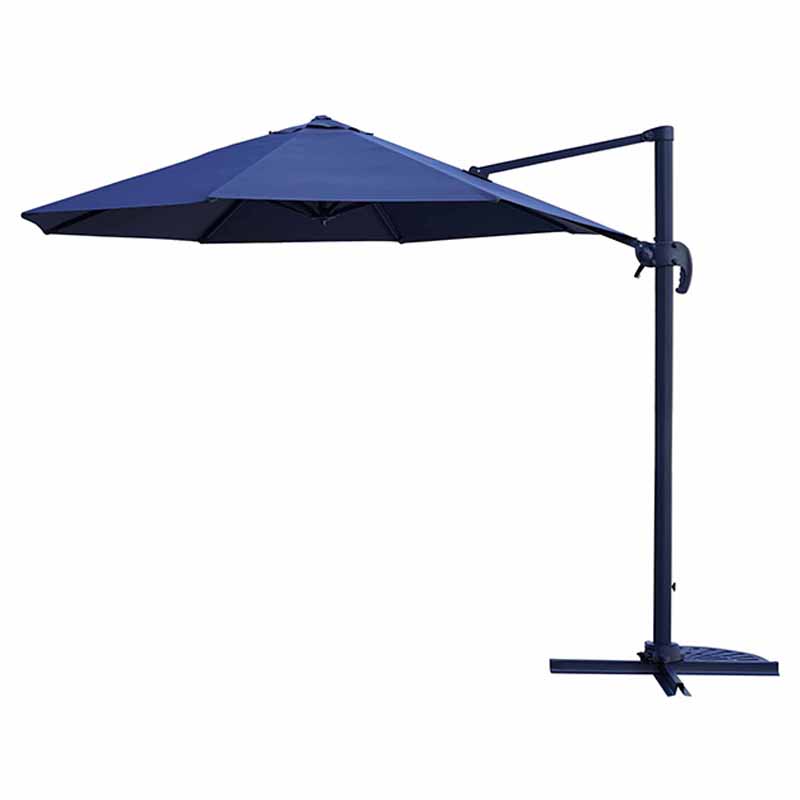 Cantilever Roma Umbrella GP1931 for Courtyard and Terrace ShadeRoma-style cantilever parasol for courtyards and terraces, offered in 3.0m and 3.5m with UV-resistant 200g polyester canopy and aluminum frame.View Product →
When you review samples, check that every tier has its own stitched and bar-tacked rib pocket, that gap widths are even all the way round when the canopy is open, and that the top cap is tensioned rather than flapping. A tier that flutters in a light breeze will fray at the pocket within a season.
Frame and Fabric Specs to Write Into the Purchase Order
Spend the extra budget on rib geometry and canopy fabric, not on tier count. A tiered canopy carries two to three times the seam length and twice the rib pockets of a flat canopy, so weak stitching or a low-grade coating fails earlier and more visibly.
Frame and coating
Aluminum ribs and poles resist corrosion and keep the umbrella light enough to crank by hand. Steel is stiffer and cheaper but depends entirely on coating integrity, because a chip on a rib becomes a rust streak. Sensible production targets are 1.4 to 2.0 mm wall thickness on ribs and poles, a powder coating of roughly 60 to 80 micrometres, and a salt-spray result matched to the destination climate, short for inland Europe and long for coastal or island programs.
Canopy fabric
Look for solution-dyed polyester in the 180 to 260 gsm range or an acrylic fabric, with UPF 50+ and a light-fastness grade of at least 4 on the blue scale. Coating matters more on a tiered canopy: a PU or PA backing stops water wicking through the extra seams, and every tier gap should carry a folded, double-stitched hem rather than a raw cut edge.
Hub, crank and tilt
The hub takes the highest load on a three-tier frame. Specify a reinforcement plate, a metal rather than plastic-only runner, and stainless or zinc-plated fasteners. If the model tilts, test the tilt with the canopy fully open and loaded, because that is where cheap hardware shows up first.
Sizing a Three-Tier Umbrella to the Table and the Space
Buy tier count for wind and diameter for shade; they are separate decisions. A three-tier canopy does not add coverage, because the upper tiers are smaller and the gaps let low-angle sun through.
Use the standard overhang rule: the canopy should extend 60 to 75 cm past the table edge on every side. On a tiered model, go one size larger than you would for a single-canopy umbrella on the same frame.
| Canopy size | Typical seating | Tier note | Base guidance |
|---|---|---|---|
| 2.7 m (8 ft) | 2 to 4 seats | Single or two tier is enough | 25 to 40 kg fillable base |
| 3.0 m (10 ft) | 4 to 6 seats | Two or three tier | 40 to 60 kg fillable base |
| 3.5 m (11.5 ft) | 6 to 8 seats | Three tier recommended | 60 to 90 kg, or in-ground sleeve |
| 4.0 m (13 ft) | 8 to 10 seats, hospitality | Three tier with reinforced hub | Cantilever base filled with water or sand |
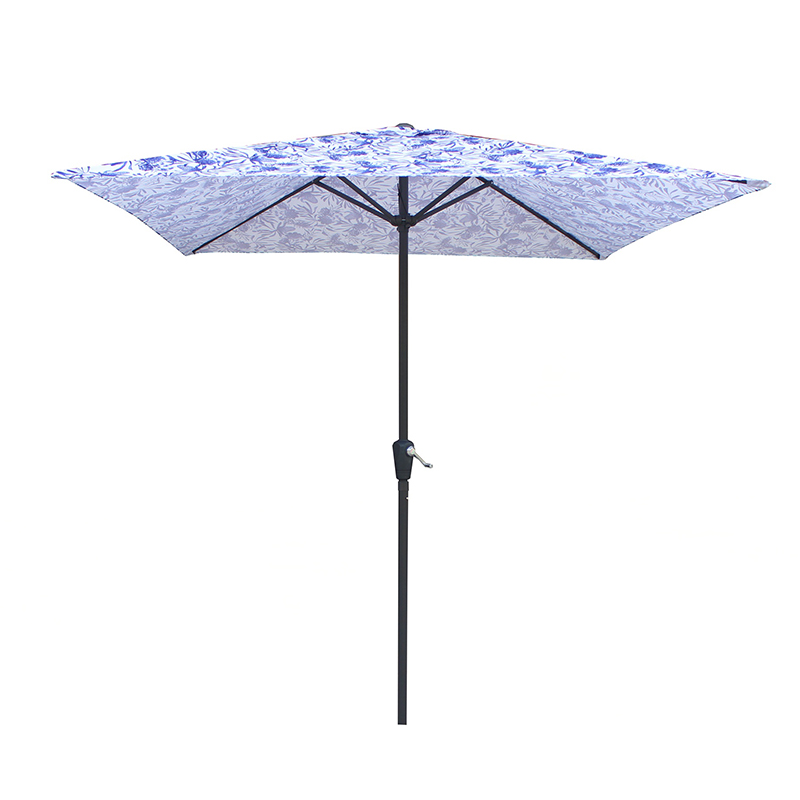
A square canopy is the shape most six-seat dining sets are built around, since it matches rectangular tables without wasting fabric at the corners.
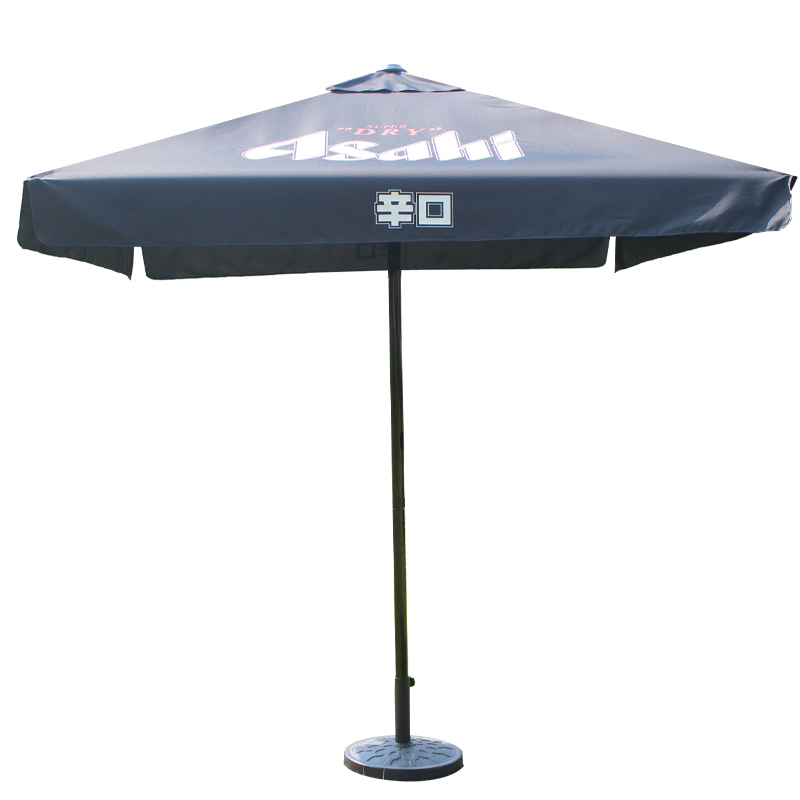 GP1919-2 3m Square Garden Parasol for Outdoor DiningSquare 3m patio umbrella for gardens, terraces and dining sets, with 200g polyester waterproof canopy, UV protection and rope-pull operation.View Product →
Bases and Stability: Where the Tier Advantage Is Easily Lost
A tiered canopy lets you get away with less ballast, not with no ballast. An undersized base will still let the umbrella go over; the tiers only lower the peak load it has to resist.
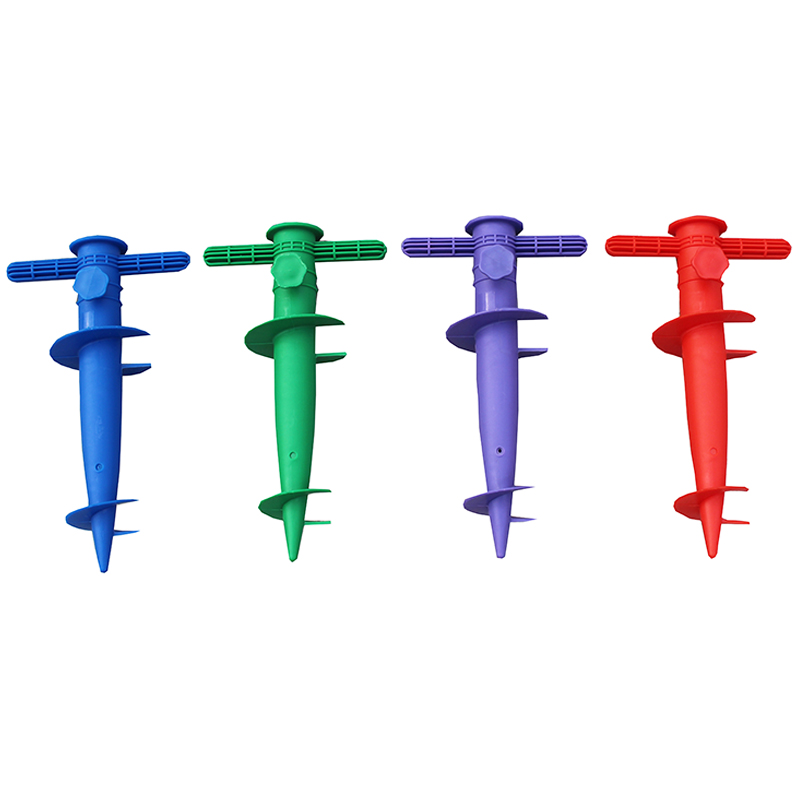
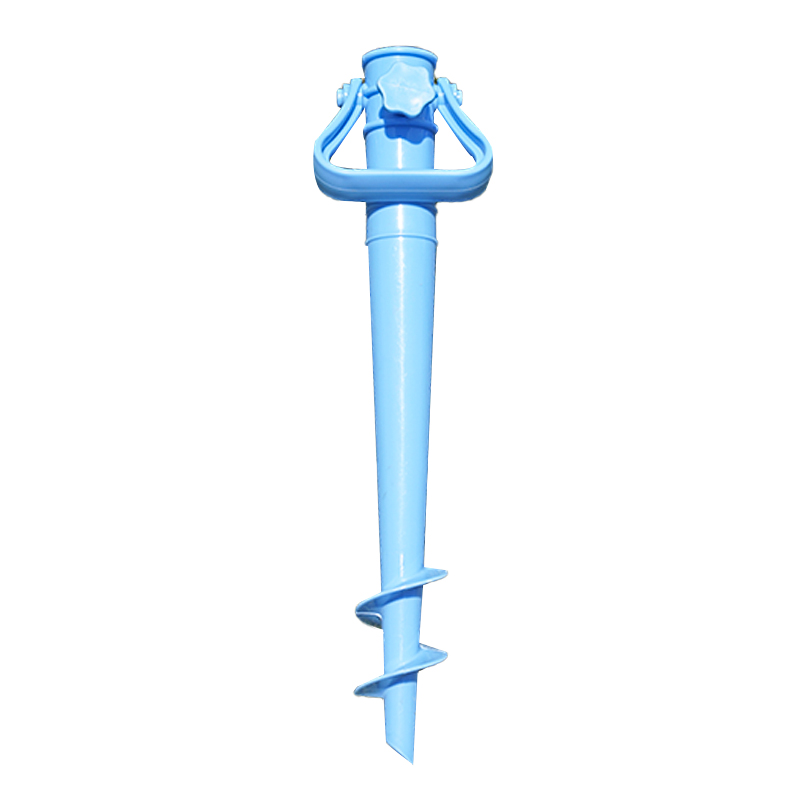
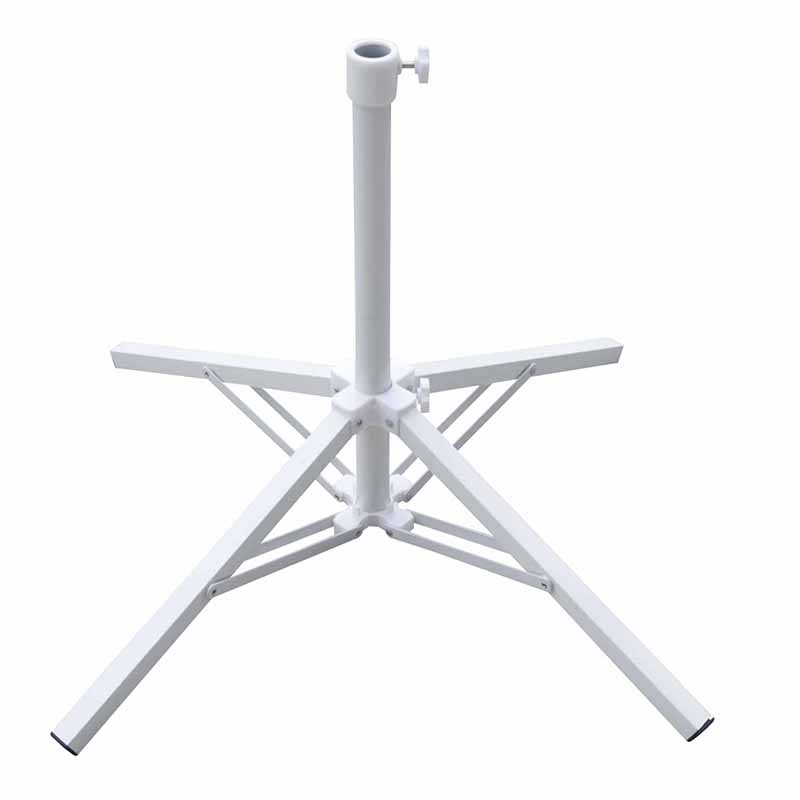
- Center-pole models. Use a cross base plus pavers, or a fillable ring base. Empty plastic bases are shipping dunnage, not ballast.
- Cantilever models. The base carries the entire moment of the arm, so a fillable base filled with water or sand is the normal minimum at 3 m; go heavier above 3.5 m, or bolt down.
- Exposed sites. Once gusts regularly exceed the canopy rating, in-ground sleeves or a permanent anchor beat any portable base.
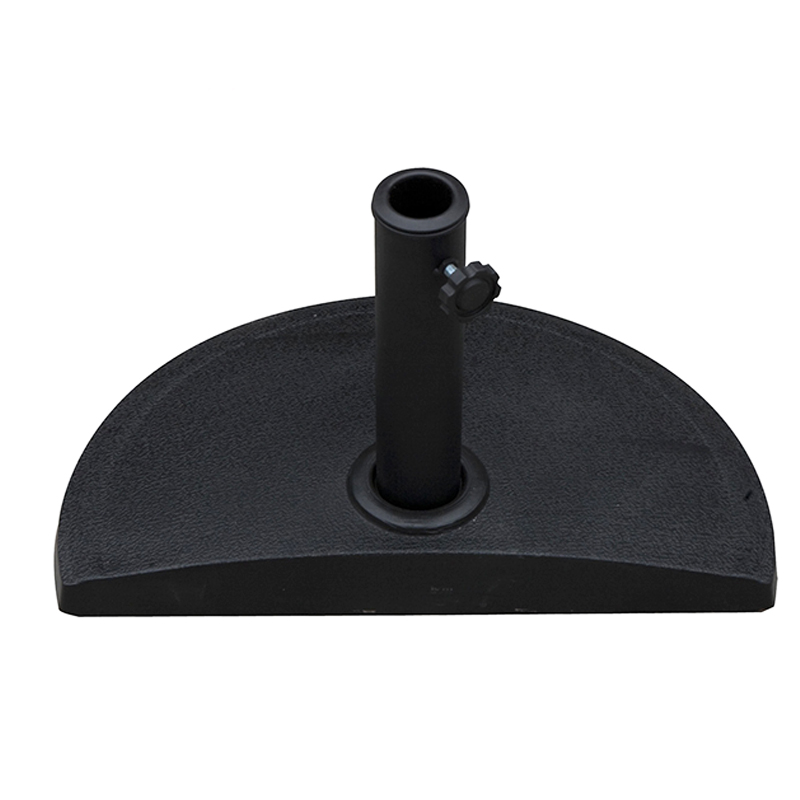
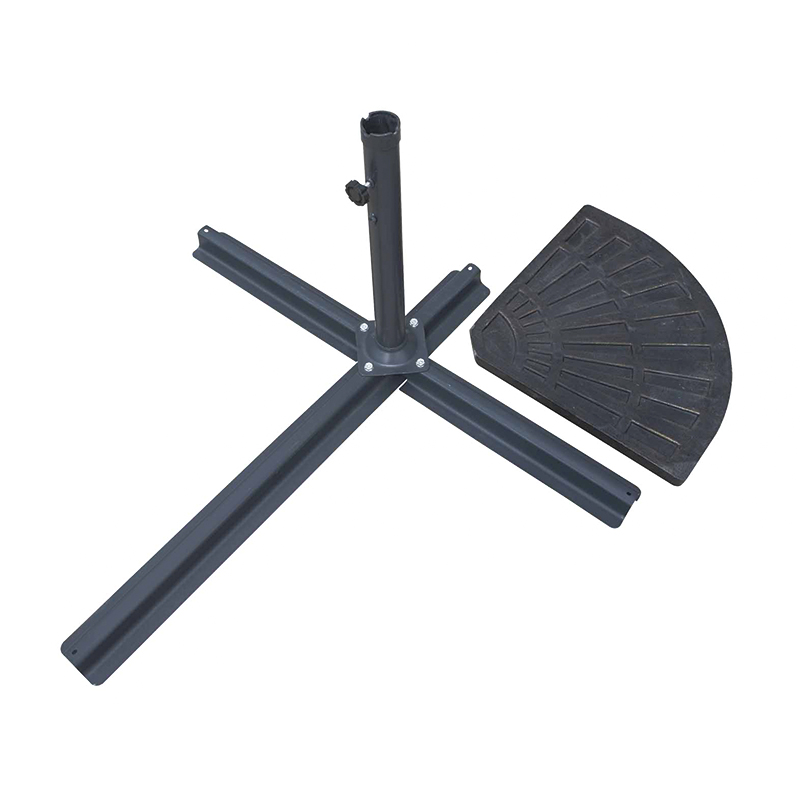 UA1917 Resin Cantilever Umbrella Base for Outdoor UseFan-shaped 12 kg resin base with central metal pole interface, designed to stabilize cantilever umbrellas in courtyards, terraces, gardens and commercial settings.View Product →
Check fill volume and empty weight before quoting, because two visually identical bases can be rated for very different loads depending on wall thickness and whether wheels are fitted.
Rain, Cleaning and Storage: The Honest Trade-Offs
Three tier umbrellas are sun-first products. The gaps that vent air also let rain through, so they suit sunny climates with occasional showers rather than all-day downpours.
- In rain: the lower tier stays dry while water drips at the two gaps. In a wet climate, choose a single canopy with a vent instead.
- Cleaning: more seams mean more places for mould. Brush off dust, wash with mild soap and water, rinse, and dry fully open, twice a season in humid regions.
- Storage: close and cover at the end of the season and store canopy and frame dry. Tiered canopies crease at the gaps, so avoid tight folding for months at a time.
- Repairs: most failures are a broken rib, a frayed tier pocket or a stiff crank, all fixable if the canopy can still be bought separately.
Sourcing Three-Tier Patio Umbrellas: What to Verify With a Factory
Order from a factory that finishes its own metal, because tiered canopies live or die on rib consistency and coating quality.
- In-house tube drawing and coating. A supplier that draws its own tube and runs its own powder line can hold rib thickness and colour batch to batch, which matters when you reorder canopies for frames already in the field.
- Certification documents. ISO 9001, ISO 14001, ISO 45001 and ISO 50001 cover quality, environment, occupational safety and energy. Social audit reports such as BSCI, SEDEX and ICS are separate documents and should be requested individually rather than assumed.
- Per-process quality control. Ask exactly where inspection points sit: incoming fabric, cutting, stitching, tube bending, coating thickness, hub assembly, and a final open-and-close test on every unit.
- Sampling tolerances. Confirm plus or minus 0.1 mm on rib wall, the powder coat thickness range, stitch density, and canopy weight per tier. Sign off on a pre-production sample with the base included.
Custom work runs smoothest when the brief states tier geometry (gap width and tier diameters), fabric and coating, base type and branding method. A manufacturer with design and development in house can work from a drawing or a sample and return a counter-sample within a normal sampling cycle; our custom patio umbrella program explains how drawings, samples and packaging are handled.
Frequently Asked Questions
Is a three-tier umbrella really more stable in wind than a single canopy?
Generally yes, because it sheds pressure continuously through two gaps instead of loading the hub all at once. It is not windproof. Rib count, hub reinforcement and base mass still decide the outcome, so compare those numbers rather than tier counts alone.
Does a three-tier patio umbrella leak in the rain?
It drips rather than leaks. Water runs down the lower tier and off the frame, but the gaps pass droplets through, especially in gusty rain. Treat it as sun protection with light-shower tolerance.
What size should I choose for a six-seat table?
3 m is the standard starting point and 3.5 m is safer on tiered canopies, because upper tiers cover less area directly overhead. Measure table and chairs, then add 60 to 75 cm of overhang per side.
Can the canopy alone be replaced on a tiered frame?
Yes, if the frame is standard. Match rib count, rib length per tier and pocket spacing, and order from a supplier that controls its own tube and fabric so the canopy can be reproduced from measurements plus one sample tier.
Three tiers are a wind and comfort decision, not a shade upgrade. Specify a tiered canopy when the site is breezy, the umbrella shades a dining set for hours at a time, and the base can be sized properly; stay with a single vented canopy when rain and budget make the call. Either way, the frame, fabric and base written into the order will matter more than the number of layers on the crown.