English
 Español
 عربى
 Português

A resin patio umbrella base is a hollow, UV-stabilised plastic shell that you fill with water, sand or concrete once the umbrella is standing where it will live. The resin is only the container; the fill is the counterweight. That is why two bases with the same footprint behave nothing alike in a gust — one is a 13 kg empty shell, the other 70 kg of wet sand. When an umbrella goes over in a storm, the base is the weak link far more often than the canopy.
This guide takes the decisions in the order that affects stability: what "resin" actually means in this category, how much filled weight a canopy needs, which fill suits which climate, how to check pole fit before ordering, and how HDPE ages outdoors.
Content
What "Resin" Really Means in an Umbrella Base
In this product category, resin means moulded HDPE — high-density polyethylene — chosen because it cannot rust, does not chip the way precast concrete does, and will not scratch a hardwood deck when it is dragged into storage.
A typical base is a two-part hollow moulding: 5-8 mm walls, a 15-30 litre cavity, a screw cap or push plug for filling, and a moulded socket or steel insert that takes the pole. Three formats cover most of the market:
- Pedestal plate — one wide plate with a central socket. The best match for straight centre-pole umbrellas, but a tall pole needs a wide plate, not merely a heavy one.
- Cross base — a low cross with four feet and a short centre tube. Cheaper and flatter to ship, though the feet can creep across smooth paving under vibration.
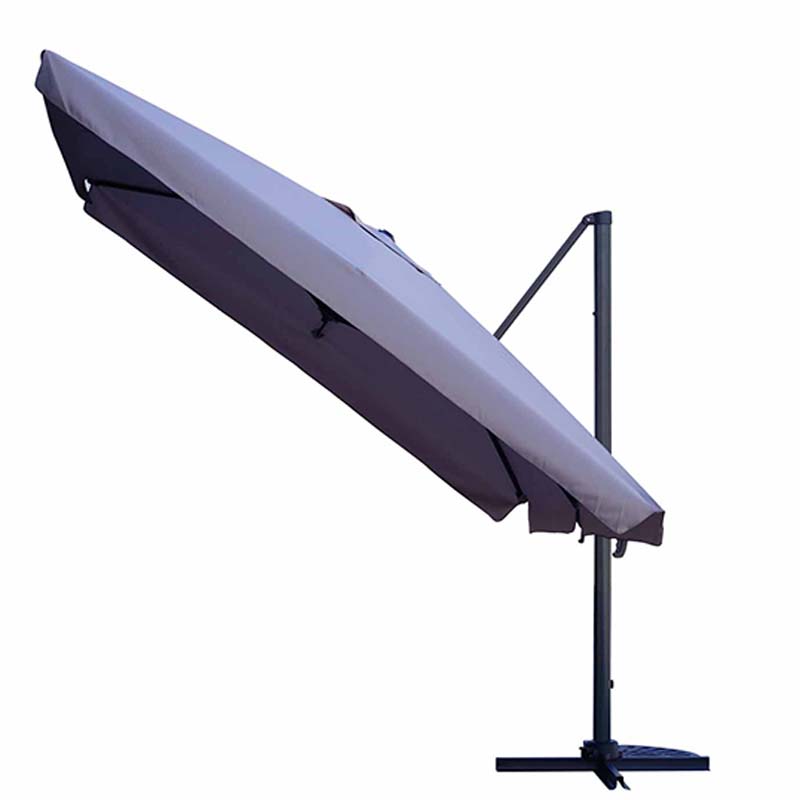
- Cantilever ballast — blocks that slide onto a rail or bolt under a cantilever frame, where the weight has to sit behind the pivot rather than under the canopy.
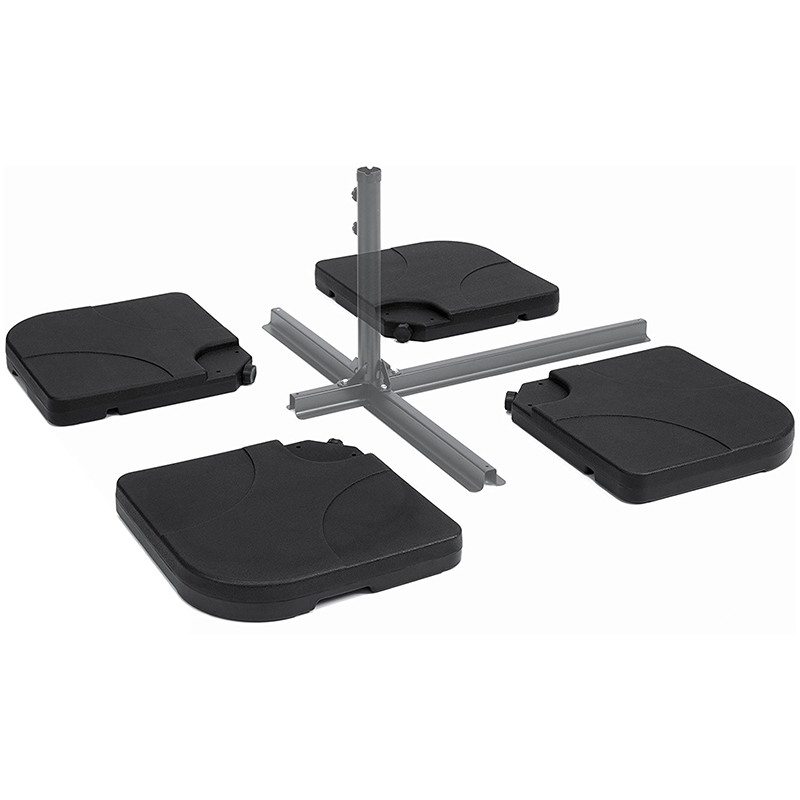 UA1914 HDPE Square Cantilever Umbrella BaseA square HDPE base for cantilever umbrellas with four corner counterweight blocks and central metal bracket, suited to courtyards, terraces, gardens, cafes and commercial settings.View Product →
Bases ship empty because freight is priced on weight: a 25 kg filled base leaves the factory at 10-15 kg, and the buyer supplies the ballast on site for almost nothing. One limit is worth stating plainly — a resin base resists tipping through mass alone, so rooftops, piers and wind-funnelled courtyards need a bolt-down plate or a railing clamp instead.
How Heavy Does a Resin Base Need to Be?
Match filled weight to canopy area and wind exposure; empty weight tells you almost nothing about performance. Wind load rises with the square of wind speed and roughly with canopy area, so a 3 m canopy carries around 40% more load than a 2.5 m one at the same speed. Cantilever and offset frames add a second penalty: the overturning moment is measured around the foot or the pivot, not the centre of the canopy, so the counterweight has to be several times heavier for the same shade area.
| Umbrella type | Typical canopy | Suggested filled weight | Base format that works |
|---|---|---|---|
| Centre pole, sheltered courtyard | 2.0-2.5 m | 15-20 kg (33-44 lb) | Single resin pedestal, 40-50 cm plate |
| Centre pole, open terrace or rooftop | 2.7-3.0 m | 25-35 kg (55-77 lb) | Resin pedestal plus a 4-foot cross base |
| Cantilever / offset frame | 2.5-3.0 m | 70-100 kg (155-220 lb) | 4-plate HDPE ballast or bolted plate |
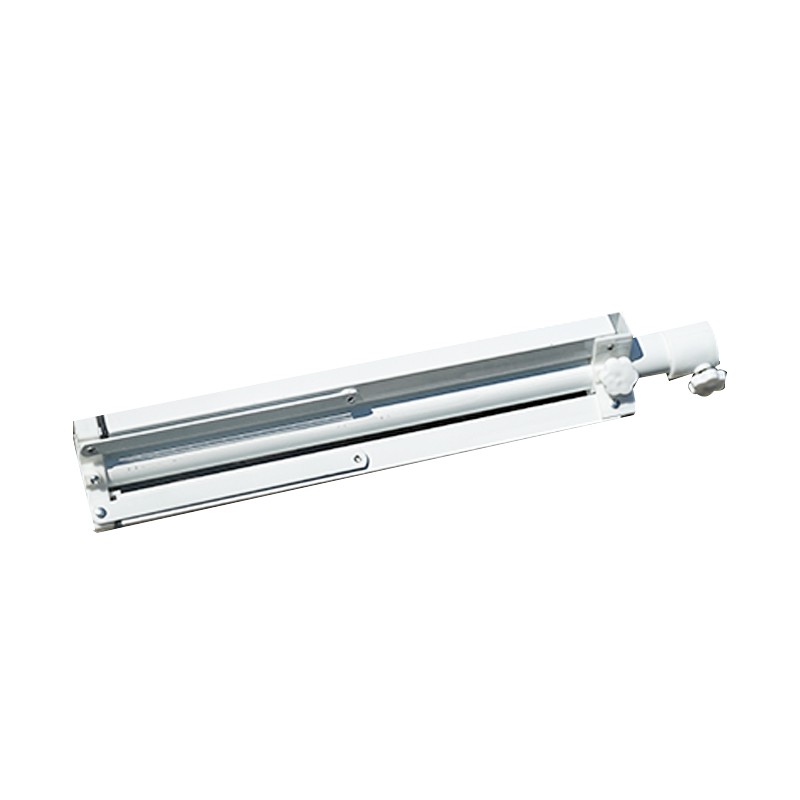
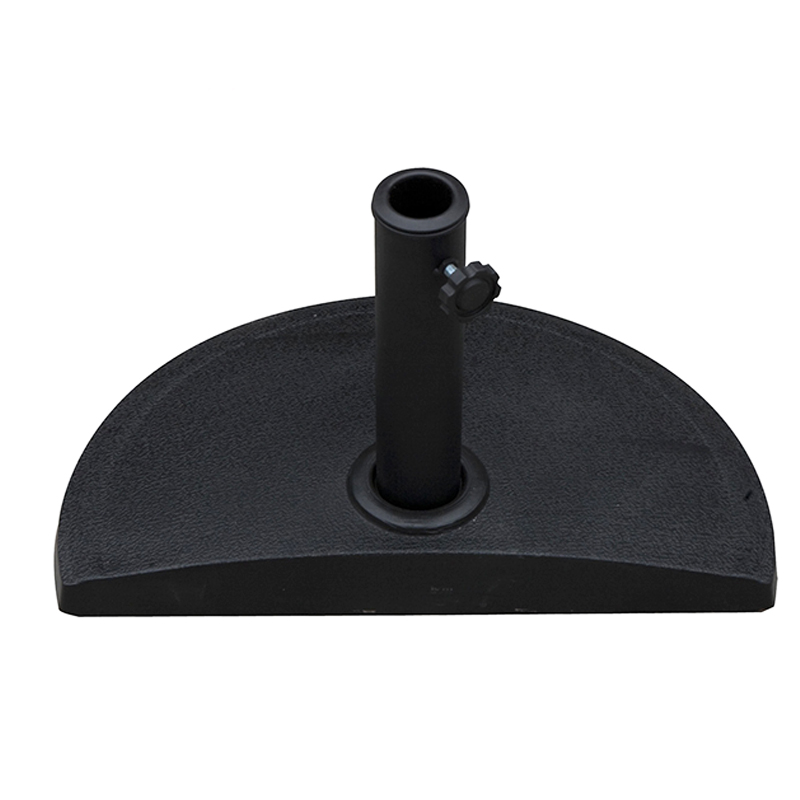
| Balcony half base | 2.0-2.5 m | 10-15 kg (22-33 lb) | Half base clamped to the railing |
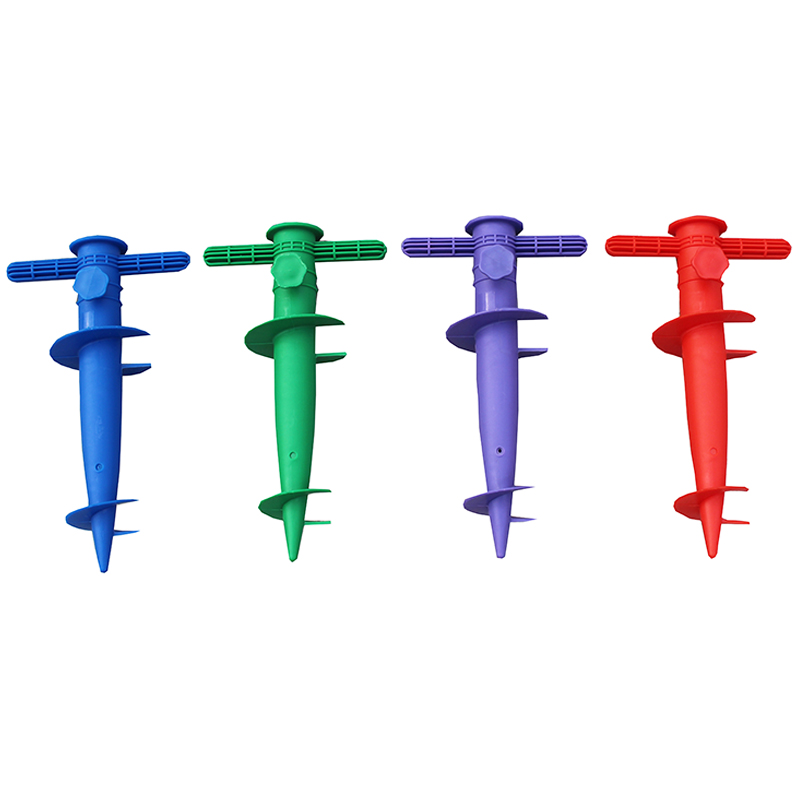
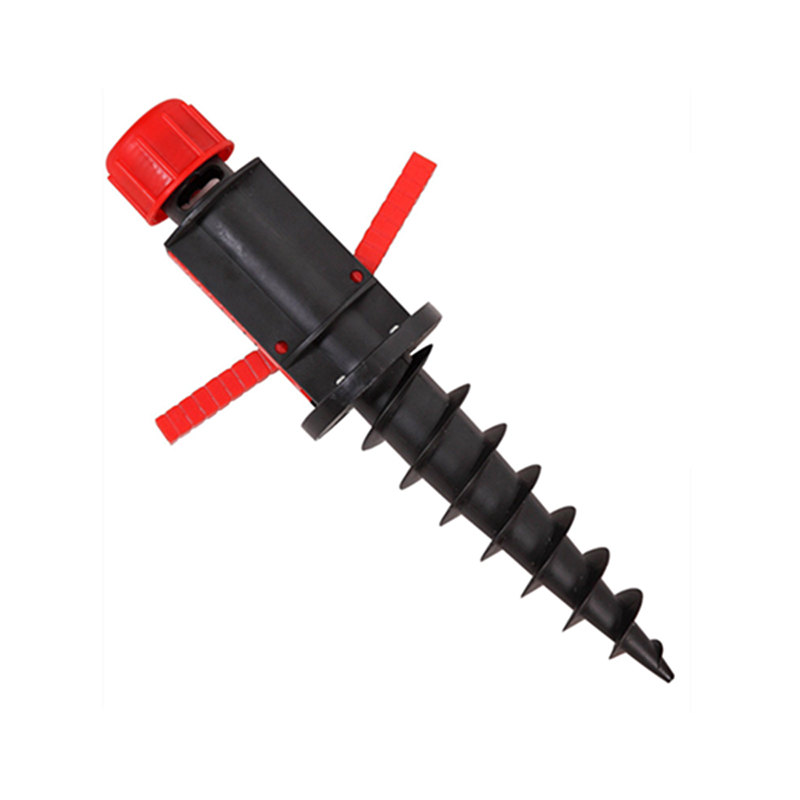
| Beach umbrella | 1.8-2.2 m | Not weight-driven | Sand anchor or screw-in auger |
Two adjustments matter in practice. On a rooftop, a coastal terrace or any site that channels wind, add 30-50% to those figures or bolt the plate down. And keep the base standing fully on one surface — a pedestal half on a paving slab and half on gravel rocks, and a rocking base loses grip long before it runs out of mass.
Cantilever frames are the hardest case, because the ballast has to resist a long lever arm. Four-plate HDPE ballast that can be bolted to a deck solves that far better than one heavy block, and it can be repositioned when the furniture layout changes.
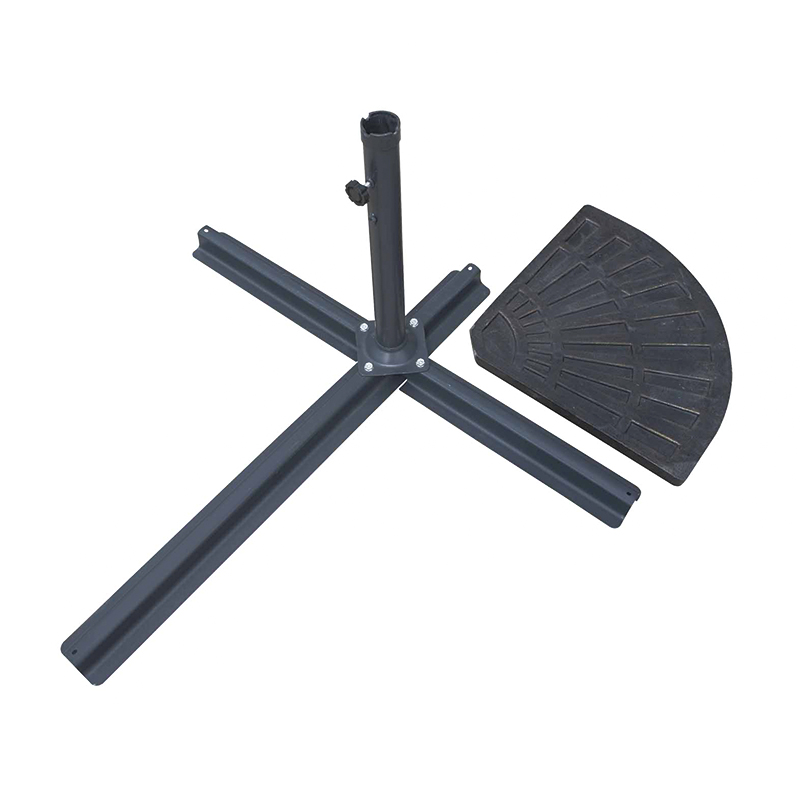 UA1917 Fan-Shaped Resin Cantilever Umbrella BaseA fan-shaped resin cantilever umbrella base, 12 kg, with central metal pole interface for stability in courtyards, terraces, gardens, cafes and restaurants.View Product →
Water, Sand or Concrete: Choosing a Fill
Use water when the base may need draining or moving, sand when you want more weight without freeze risk, and concrete only when the umbrella will never move again.
| Fill | Density | Weight in a 20 L cavity | Best for | Watch out for |
|---|---|---|---|---|
| Water | 1.0 kg/L | About 20 kg (44 lb) | Bases that will be drained, moved or shipped | Expands about 9% when it freezes and can split a full shell |
| Wet sand | 1.9-2.0 kg/L | About 38-40 kg (84-88 lb) | Extra weight with no freeze risk | Hard to empty through a 25 mm plug; grit jams the threads |
| Concrete | 2.3-2.4 kg/L | About 46-48 kg (101-106 lb) | Fixed commercial settings and windy sites | Permanent — the base can no longer be moved for cleaning |
In cold climates, never fill a resin shell to the brim with water. Leave roughly 20% air space, or drain to half before the first hard frost, because freezing water expands about 9% and a split HDPE base cannot be trusted above a table. Sand settles after a few wet weeks, so top it up before the season starts; dry sand that is then watered gains another 10-15% in weight as the grains compact, which is usually enough to steady a 2.5 m centre-pole umbrella.
Pole Fit: The Specification Buyers Get Wrong Most Often
Measure the pole's outside diameter at its lowest 10 cm and the socket's inside diameter — a 2 mm mismatch shows up as a wobbling canopy three metres overhead. Most straight umbrellas use 32 mm (1.25 in), 38 mm (1.5 in) or 48 mm (1.9 in) poles, and a base bored for 38 mm will hold a 32 mm pole only with an adapter sleeve. Sleeves are cheap; wobble is not.
Three fit details decide whether a base stays quiet for ten seasons: socket depth, which runs 12-20 cm on most models and must be deep enough that a tall pole cannot lever itself loose; the condition of the joint between pole and hub; and whether the fill plug sits clear of the ground, so the base can be topped up without lifting the umbrella out.
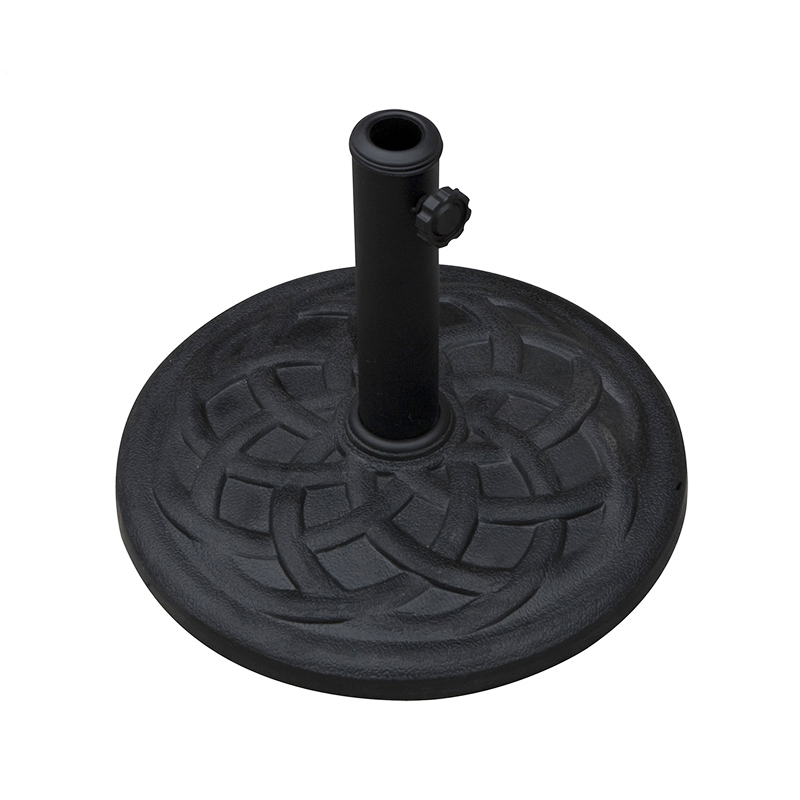 UA1921 Circular Resin Base for Straight UmbrellasA 19 kg circular resin base for straight umbrellas with cross-line texture, top pole hole, and decorative woven-pattern surface for outdoor stability.View Product →
Cantilever sockets are usually square and built into a rotating housing, so bases are not interchangeable between centre-pole and offset frames even when the pole diameter matches exactly.
Surfaces, Weather and Off-Season Storage
The surface under the base decides how you ballast it; the local climate decides what you fill it with.
- Timber decking: fit rubber pads so the plate grips, and sweep grit off before it grinds into the grain.
- Paving and tiles: fine for pedestals, but four-foot cross bases can walk across joints, so check them after windy weeks.
- Grass: stake the cross base or use a ground socket; a pedestal base sinks after heavy rain and loosens.
- Sand: skip ballast altogether and use an anchor or auger, since weight alone gives no lateral grip.
Wind protocol matters more than any spec sheet: close and lower umbrellas when a site is unattended, and never leave a canopy tilted up into a gust — tilt is a sun-position tool, not a wind tool. UV-stabilised HDPE holds its structure for five to ten years outdoors, with colour chalking first and the shell turning noticeably more brittle below about minus 20 °C, which is exactly when a frozen fill is pushing outward. Recycled HDPE blends suit bases well because the parts are thick and carry no structural stress, and the company's sustainability programme sets out how that material is sourced.
A Short Buying Checklist
- Confirm the filled weight, not the shipping weight, and compare it with the table above.
- Measure pole diameter and socket diameter, and request an adapter sleeve if they differ.
- Check socket depth against pole height.
- Ask for the cavity volume in litres so filled weight can be predicted.
- Find out which fill the moulding was designed for — thin shells are for water, thicker ones tolerate sand.
- Look for UV-stabilised HDPE and a fill plug with a proper seal.
- Match the format to the surface: pedestal for paving, cross base or stakes for grass, anchor for sand.
- For cantilever frames, insist on bolt-down or four-plate ballast.
Frequently Asked Questions
Are resin bases better than cast iron or concrete?
For most patios, yes. HDPE will not rust or stain paving, and it can be moved by one person when empty. Cast iron is denser but corrodes; concrete bases chip and cannot be emptied.
Can I use a resin base with a cantilever umbrella?
Only if the base is designed for it. Cantilever frames need 70-100 kg of ballast behind the pivot, usually as four plates or a bolt-down plate rather than a single pedestal.
Is water or sand better in a resin base?
Water if the base may be moved or drained, sand if you need more weight with no freeze risk. Wet sand is roughly twice as heavy as water in the same cavity.
How long does an HDPE umbrella base last?
Five to ten years outdoors with UV stabilisation. Expect colour fading before any structural change, and store the base dry through an unused winter.
Shaoxing Gaobu Tourism Products Co., Ltd. has manufactured outdoor shade products since 2013 from a 50,000 sq m plant in Shangyu, with in-house tube-making and coating lines and quality checks at each process step. The accessories range — pedestal and cross bases, cantilever ballast plates, balcony half bases and anchors — is developed alongside the patio umbrella, beach parasol, gazebo and tent lines, so base weight and socket size can be specified together with the frame rather than matched afterwards. Buyers who need a particular cavity volume, socket bore, colour or private-label moulding can send a drawing or sample through the customisation service, and the team will confirm filled weight, pole fit and packaging before production starts.