English
 Español
 عربى
عربى
 Português

The right patio umbrella size depends primarily on your table diameter: as a general rule, your umbrella canopy should extend 2 feet (60 cm) beyond the table edge on all sides. For a 48-inch (4-foot) round patio table, a 9-foot umbrella is the standard recommendation. For a 6-person rectangular table, a 10–11 foot umbrella or a double-canopy option is typically required. Read on for a complete breakdown by table size, seating count, space type, and use case.
Content
- The Core Sizing Rule: Add 2 Feet on Every Side
- Patio Umbrella Size by Table Dimension: Quick Reference
- Types of Patio Umbrellas and When to Choose Each
- Patio Umbrella Types Compared
- Sizing by Specific Use Case: Dining, Lounging, Pool, and Balcony
- Patio Space Requirements: How Much Room Does a Patio Umbrella Need?
- Pole Diameter and Base Weight: Sizing for Stability
- Canopy Material and UPF Rating: Does Bigger Always Mean More Protection?
- Tilt Mechanisms: How They Affect Effective Shade Coverage
- Frequently Asked Questions About Patio Umbrella Size
- Q: Is a 9-foot patio umbrella big enough for a 6-person table?
- Q: What size patio umbrella do I need without a table?
- Q: Can a patio umbrella be too big?
- Q: What is the most popular patio umbrella size?
- Q: How do I measure my patio umbrella canopy diameter?
- Q: How do I know if my patio umbrella base is heavy enough?
- Q: Should I choose a round or rectangular patio umbrella?
- Final Decision Guide: Choose Your Patio Umbrella Size in 3 Steps
The Core Sizing Rule: Add 2 Feet on Every Side
The universal starting point for choosing a patio umbrella size is to add at least 2 feet (24 inches) to each side of whatever you want to shade. This overhang ensures that seated guests are covered even when the sun is at a low angle — not just directly overhead. A canopy that only covers the table surface will leave guests in direct sun within a couple of hours of midday.
Concretely: if your patio table measures 48 inches in diameter, add 24 inches on each side to get a minimum canopy diameter of 96 inches — or 8 feet. Most experts round up to a 9-foot umbrella to account for sun angle and chair overhang. If your table is 60 inches (5 feet) in diameter, the same math yields a minimum of 108 inches (9 feet), making a 10-foot umbrella the sensible choice.
This rule applies to both round and square umbrella canopies. For rectangular tables, measure the longest dimension and apply the same +2-foot-per-side formula, then match that to the umbrella's longest canopy span.
Patio Umbrella Size by Table Dimension: Quick Reference
The table below maps the most common outdoor table sizes to the correct patio umbrella diameter, so you can make a decision without doing the math yourself.
| Table Size / Shape | Seats | Recommended Umbrella Size | Best Canopy Shape |
| 36-inch round (bistro) | 2 | 7 ft | Round |
| 48-inch round | 4 | 9 ft | Round or Octagonal |
| 60-inch round | 6 | 10–11 ft | Round or Octagonal |
| 48 × 72-inch rectangle | 6 | 11 ft or 9×12 ft rectangle | Rectangle |
| 48 × 96-inch rectangle | 8 | 11–13 ft or double cantilever | Rectangle or Double |
| Open lounge area (no table) | 4–6 loungers | 11–13 ft cantilever | Cantilever / Offset |
Table 1: Recommended patio umbrella sizes matched to common outdoor table dimensions and seating capacities.
Types of Patio Umbrellas and When to Choose Each
Choosing the right patio umbrella type matters as much as choosing the right size — the wrong style can obstruct seating, limit shade coverage, or fail in wind conditions common to your area.
Center-Pole Market Umbrella
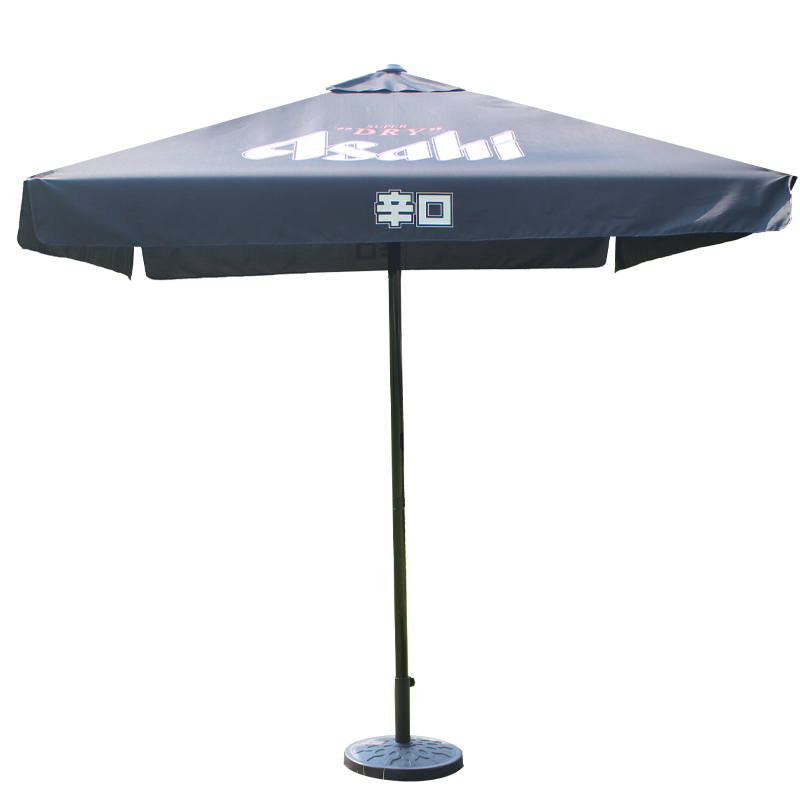
The center-pole market umbrella is the most common and affordable option, available in sizes from 6 feet to 11 feet in diameter. It fits through a hole in a center-hole patio table and is stabilized by a weighted base or the table itself. This style works best for round and square tables up to 60 inches across. Because the pole runs through the center of the table, it can slightly obstruct access to the center of the dining surface — a minor inconvenience for most households.
Best for: Standard dining tables, balconies, decks with a table-hole setup. Sizes of 9 feet are the most popular for 4-person tables and represent the best value for money in this category.
Cantilever (Offset) Umbrella
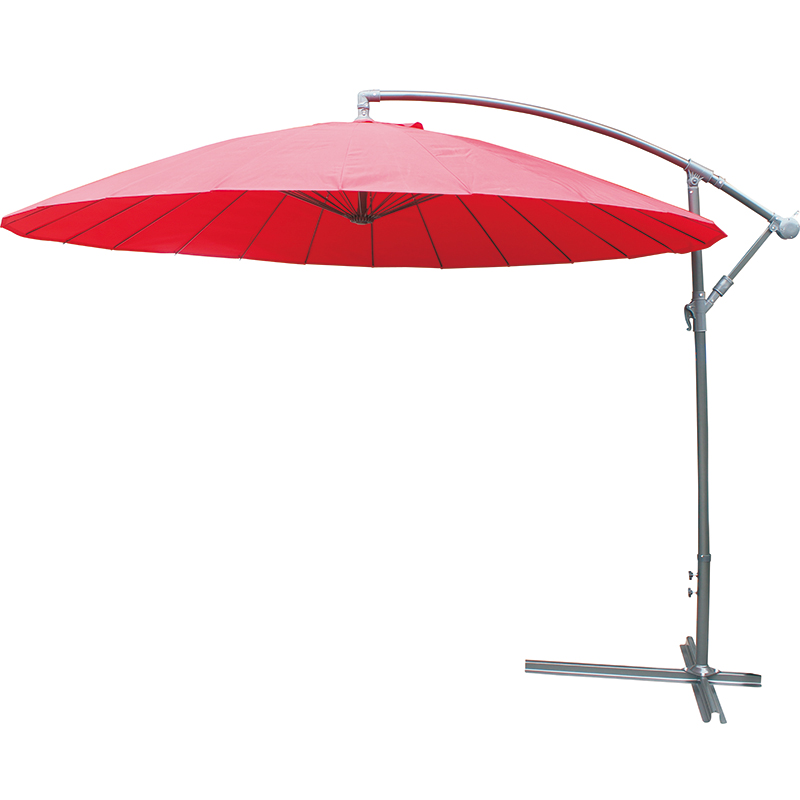
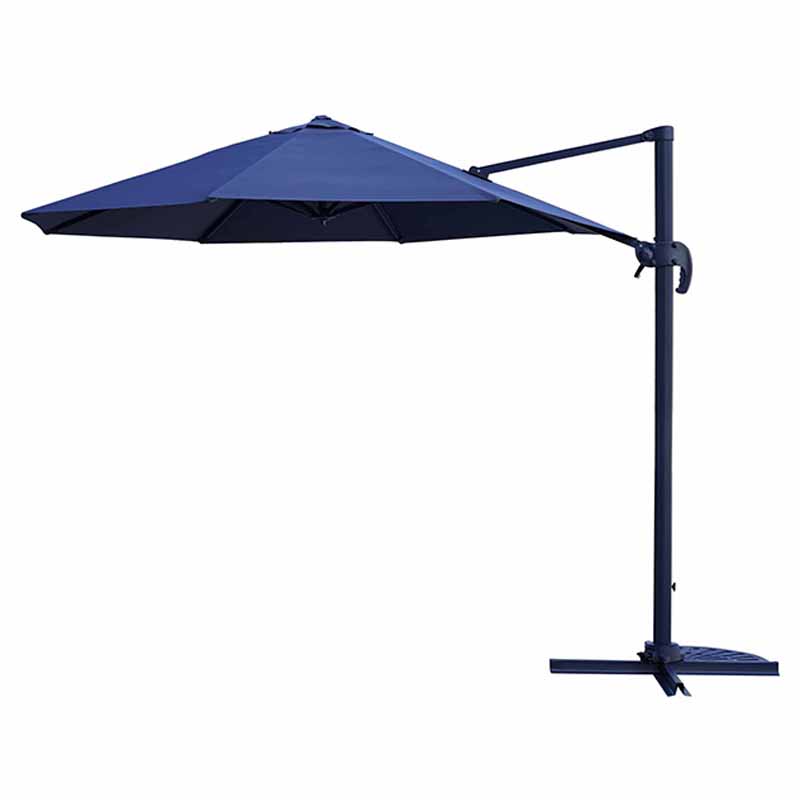
A cantilever patio umbrella has its pole positioned to the side, with the canopy extending overhead on a horizontal or angled arm. This eliminates the center pole entirely, giving unobstructed access to the entire shaded area beneath. Cantilever umbrellas are available from 9 feet to 13+ feet in canopy diameter and are ideal for lounging areas, sectional sofas, hot tubs, or any situation where a center pole would be in the way.
The trade-off is weight and base size: a quality cantilever umbrella requires a base weighing 150–200 lbs (68–90 kg) to remain stable in moderate wind. Budget models with inadequate bases are the leading cause of umbrella tip-over accidents. Cantilever umbrellas also typically cost 2–3× more than comparable center-pole models.
Best for: Pool areas, lounge seating, rectangular dining tables where a center pole would obstruct the table, and spaces where you need to rotate the shade direction throughout the day.
Wall-Mounted and Clamp Umbrellas
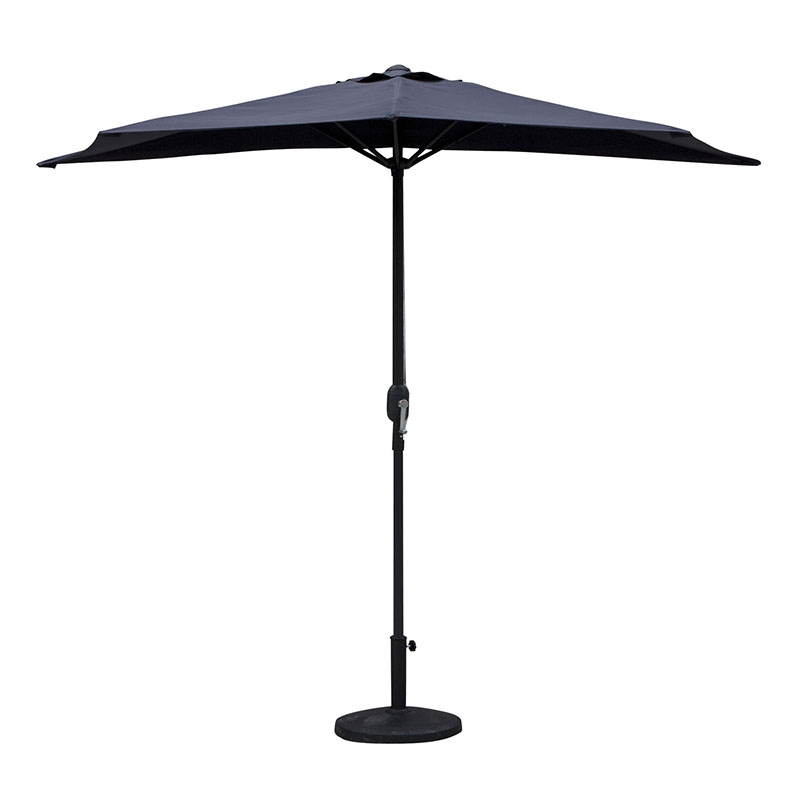
Wall-mounted umbrellas attach to an exterior wall or railing and extend outward, making them ideal for narrow balconies, small patios adjacent to a wall, or any space where a freestanding base would be impractical. Clamp-mount versions attach to railings or tabletop edges. These are typically smaller — 6.5 to 8.5 feet in diameter — and less wind-resistant than freestanding models.
Best for: Balconies, narrow side patios, café-style bistro setups, and anywhere floor space is at a premium.
Double Canopy and Extra-Large Commercial Umbrellas
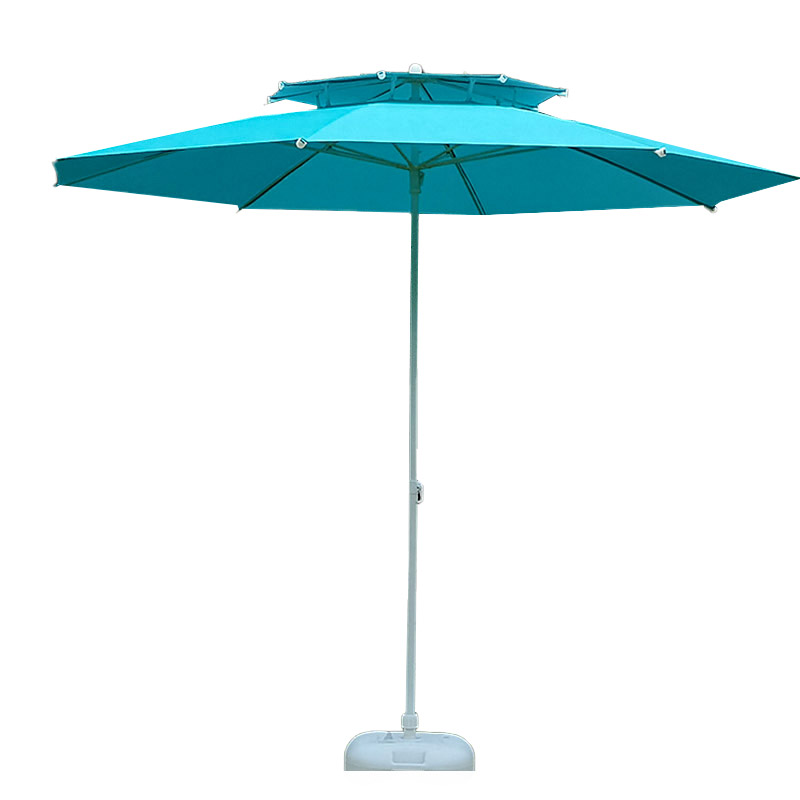
For large patio areas, restaurant terraces, or spaces requiring shade coverage above 150 square feet, double-canopy or commercial-grade market umbrellas in 11 to 13 feet diameter (or rectangular spans up to 10×13 feet) provide the necessary coverage. These require heavy commercial bases — typically 75 lbs minimum — and high-grade aluminum or fiberglass pole construction to handle wind loads safely.
Patio Umbrella Types Compared
| Type | Size Range | Best Use | Base Weight Needed | Relative Cost |
| Center-Pole Market | 6 – 11 ft | Dining tables, decks | 35–55 lbs | $ (Low) |
| Cantilever / Offset | 9 – 13 ft | Lounging, pools, sofas | 150–200 lbs | $$$ (High) |
| Wall / Clamp Mount | 6.5 – 8.5 ft | Balconies, narrow patios | Wall anchor (no base) | $$ (Medium) |
| Commercial / Double Canopy | 11 – 13+ ft | Restaurants, large patios | 75–150 lbs | $$$$ (Very High) |
Table 2: Comparison of the main patio umbrella types by size range, best use case, required base weight, and relative cost tier.
Sizing by Specific Use Case: Dining, Lounging, Pool, and Balcony
Beyond table size, where and how you use the umbrella significantly affects the ideal diameter. Here are the most common outdoor scenarios with specific size guidance.
Outdoor Dining Patio
For outdoor dining, shade coverage should extend at least to the back of each chair, not just to the table edge. Chairs typically add 18–24 inches to each side of the table when pulled out and occupied. A 4-seat 48-inch round table with chairs therefore has an occupied footprint of roughly 84–96 inches across — making a 9-foot umbrella the minimum and a 10-foot umbrella the more comfortable choice for full midday shade.
Outdoor Lounge or Sectional Sofa Area
For a lounge area with a sectional sofa or multiple chairs arranged without a center table, a cantilever umbrella of 11–13 feet is typically ideal. Measure the full footprint of your seating arrangement — including the depth of the sofa — and apply the +2-foot overhang rule to all exposed sides. A 10-foot L-shaped sectional, for example, may need a 13-foot cantilever umbrella or two 9-foot units to provide meaningful shade coverage.
Pool Deck and Sun Lounger Areas
Pool-side umbrella sizing follows a different logic: rather than shading a table, you're shading individual loungers that are typically 75–80 inches long and 28–30 inches wide. A standard sun lounger pair side-by-side spans roughly 60 inches wide. A 9-foot cantilever umbrella covers one pair comfortably; two pairs or a wider arrangement requires an 11-foot cantilever. Offset/cantilever styles are strongly preferred poolside because they eliminate the tripping hazard of a center base near water.
Small Balcony or Apartment Patio
On a compact balcony — typically under 60 square feet — a 7 to 7.5-foot market umbrella or a wall-mounted option is the most practical choice. Larger umbrellas on small balconies create safety risks in wind and may violate building rules about protruding structures. Check your lease or HOA guidelines before purchasing anything over 8 feet for balcony use.
Patio Space Requirements: How Much Room Does a Patio Umbrella Need?
A patio umbrella needs more clearance than just its canopy diameter — the base, the tilt range, and safe distance from structures all factor in. As a practical rule, plan for at least 3 feet of clearance between the canopy edge and any wall, fence, or overhang to allow safe opening, closing, and tilting.
- 9-foot umbrella: Needs a patio or clear area of approximately 15 × 15 feet minimum for comfortable clearance on all sides (9 ft canopy + 3 ft each side).
- 11-foot umbrella: Plan for a clear area of at least 17 × 17 feet.
- 13-foot cantilever: The base arm and counterweight extend 2–4 feet behind the seating area; total footprint including base can be 16–18 feet in one direction.
- Overhead clearance: Minimum 7 feet of clearance from the ground to the underside of the canopy edge when tilted — most standard umbrellas open at 7.5 to 8.5 feet at the center hub height.
Pole Diameter and Base Weight: Sizing for Stability
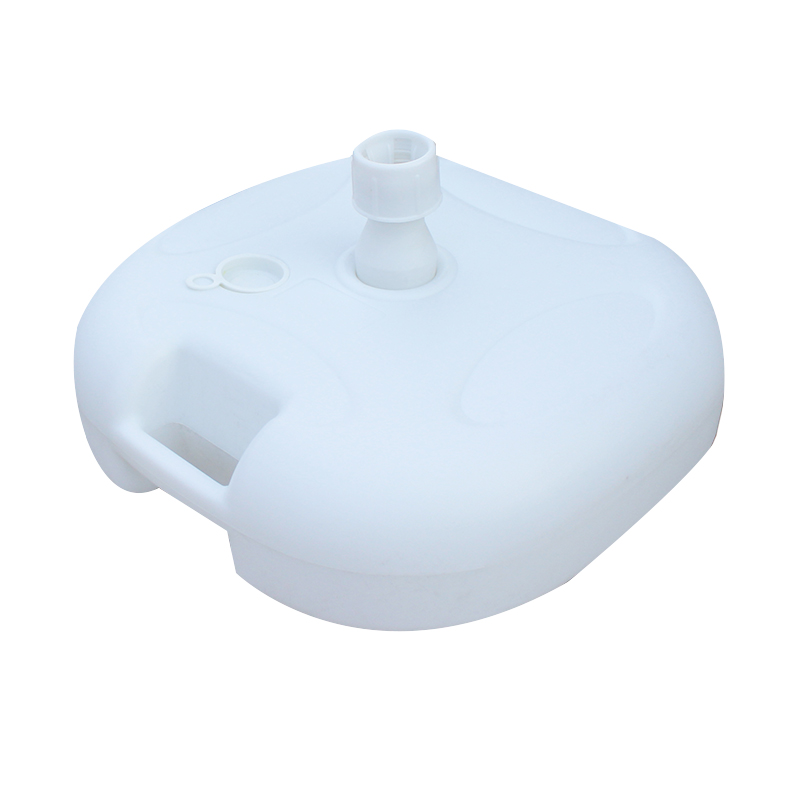
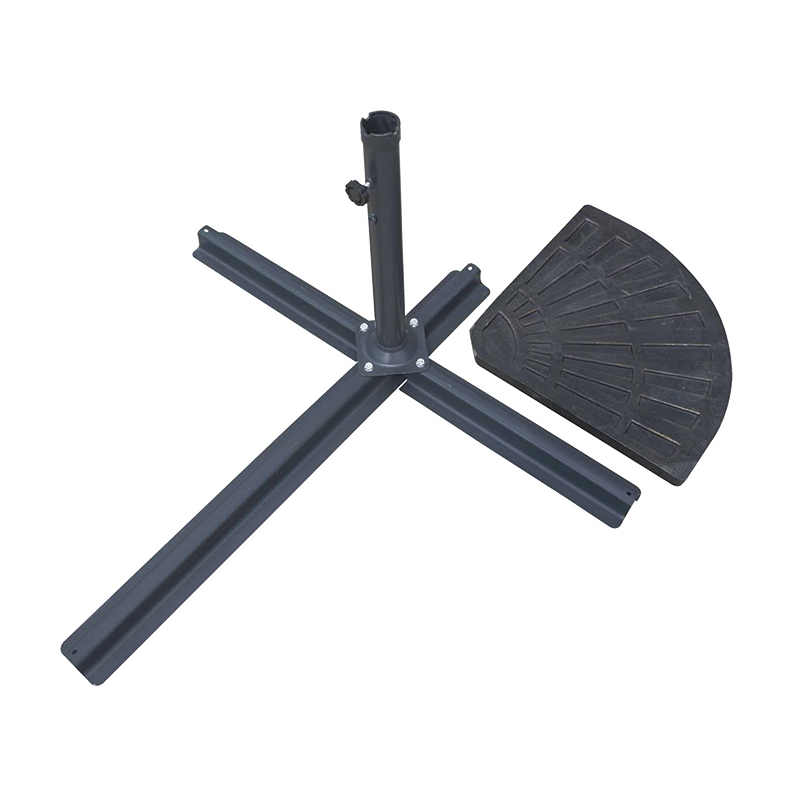
An undersized base is the most common reason patio umbrellas tip over and cause injury or damage. The base weight must be proportional to both the umbrella diameter and the local wind conditions.
| Umbrella Diameter | Minimum Pole Diameter | Min. Base Weight (calm conditions) | Recommended Base Weight (windy areas) |
| 7 ft | 1.5 in (38 mm) | 25–30 lbs | 40 lbs |
| 9 ft | 1.5 – 1.75 in (38–44 mm) | 35–50 lbs | 55–65 lbs |
| 11 ft | 2 in (51 mm) | 55–75 lbs | 80–100 lbs |
| 11–13 ft Cantilever | 2.5 – 3 in (63–76 mm) | 150 lbs | 200+ lbs |
Table 3: Recommended minimum base weights and pole diameters for patio umbrellas by canopy size. Windy area values apply to locations with regular gusts above 20 mph.
Canopy Material and UPF Rating: Does Bigger Always Mean More Protection?
A larger canopy does not automatically mean better sun protection — canopy fabric quality determines how much UV radiation actually passes through. Look for canopies with a UPF (Ultraviolet Protection Factor) rating of 50+, which blocks more than 98% of UV radiation. Common canopy materials and their properties:
- Solution-dyed acrylic fabric: The gold standard for outdoor canopies. Color is baked into the fiber rather than applied to the surface, giving excellent fade resistance over 5–10 years of outdoor use. Naturally water-resistant and typically achieves UPF 50+. Best for permanent or semi-permanent outdoor installations.
- Polyester with polyurethane coating: The most common fabric in mid-range umbrellas. Provides good UV protection when new (UPF 30–50) but coating degrades with UV exposure over time, reducing protection after 2–3 seasons. Affordable and widely available.
- Olefin (polypropylene): Lightweight, mold-resistant, and colorfast. A strong mid-range choice. Achieves UPF 30–50 and is particularly resistant to moisture and mildew — ideal for humid climates or pool areas.
- Sunbrella® fabric equivalent (commercial acrylic): Professional-grade solution-dyed acrylic with the highest weather and UV resistance available. Expected service life of 7–15 years with proper care.
Tilt Mechanisms: How They Affect Effective Shade Coverage
A tilt mechanism extends the useful shade hours of your patio umbrella by allowing the canopy to follow the sun angle rather than only providing overhead shade. Without a tilt, a 9-foot umbrella may only provide full table coverage for 3–4 hours around midday; with a 45-degree tilt, effective coverage can extend to 6–8 hours.
- Push-button tilt: Most common and affordable. A button on the pole locks the canopy at a single preset angle (usually 30–45 degrees). No rotation — the tilt direction is fixed to the canopy panel seam alignment.
- Crank tilt: The tilt angle is adjusted by the same crank handle used to open the umbrella. Allows stepless tilt adjustment but may have durability issues in budget models.
- Collar tilt (infinite tilt): A collar on the pole rotates 360 degrees AND tilts to any angle, giving the maximum flexibility for tracking sun position throughout the day. Found on higher-end umbrellas.
- Cantilever 360° rotation: Premium cantilever umbrellas rotate the canopy 360 degrees around the offset arm, effectively allowing you to shade any side of the space beneath without moving the base. This feature alone can justify the higher cost of a cantilever over a center-pole umbrella in sun-intensive locations.
Frequently Asked Questions About Patio Umbrella Size
Q: Is a 9-foot patio umbrella big enough for a 6-person table?
It depends on the table dimensions. A 9-foot umbrella is sufficient for a round 6-person table up to 54 inches in diameter. For a rectangular 6-person table (typically 60–72 inches long), you will need a 10–11 foot umbrella or a rectangular canopy to provide adequate coverage for guests seated at the ends of the table.
Q: What size patio umbrella do I need without a table?
Without a table, measure the footprint of your seating area or the space you want shaded. A typical 4-chair lounge arrangement spans roughly 100–120 inches across; a 11–13 foot cantilever umbrella provides the best coverage for this scenario. For a pair of sun loungers, a 9-foot cantilever is usually sufficient.
Q: Can a patio umbrella be too big?
Yes — an oversized umbrella creates real problems. A canopy that extends beyond your cleared patio space can obstruct pathways, strike walls or fences when tilting, and catch wind like a sail, increasing tip-over risk. It also looks visually disproportionate. As a general ceiling, don't exceed the canopy diameter by more than 4 feet beyond the outer edge of your table or seating area.
Q: What is the most popular patio umbrella size?
The 9-foot round patio umbrella is by far the most popular size for residential use, accounting for the majority of consumer umbrella sales in North America. It fits standard 48-inch dining tables, is widely available in hundreds of styles and colors, and strikes the best balance between coverage, portability, and price. The 11-foot cantilever is the most popular size for lounge and poolside applications.
Q: How do I measure my patio umbrella canopy diameter?
Open the umbrella fully and measure from the tip of one rib to the tip of the directly opposite rib, passing through the center hub. This gives the true canopy diameter. For rectangular or square canopies, measure both the length and width independently and record both dimensions. Do not measure along the curved fabric surface — always measure the straight-line span between opposing rib tips.
Q: How do I know if my patio umbrella base is heavy enough?
As a field test: with the umbrella open and tilted to 30–45 degrees, apply moderate lateral hand pressure to the canopy edge. The umbrella should not rock or shift at the base. If you feel movement, the base is too light for your umbrella size or local wind conditions. Add supplementary weight (sandbags, water-fill inserts) or replace the base. Never leave an undersized umbrella open and unattended during windy conditions — gusts above 15–20 mph can send an undersecured umbrella airborne.
Q: Should I choose a round or rectangular patio umbrella?
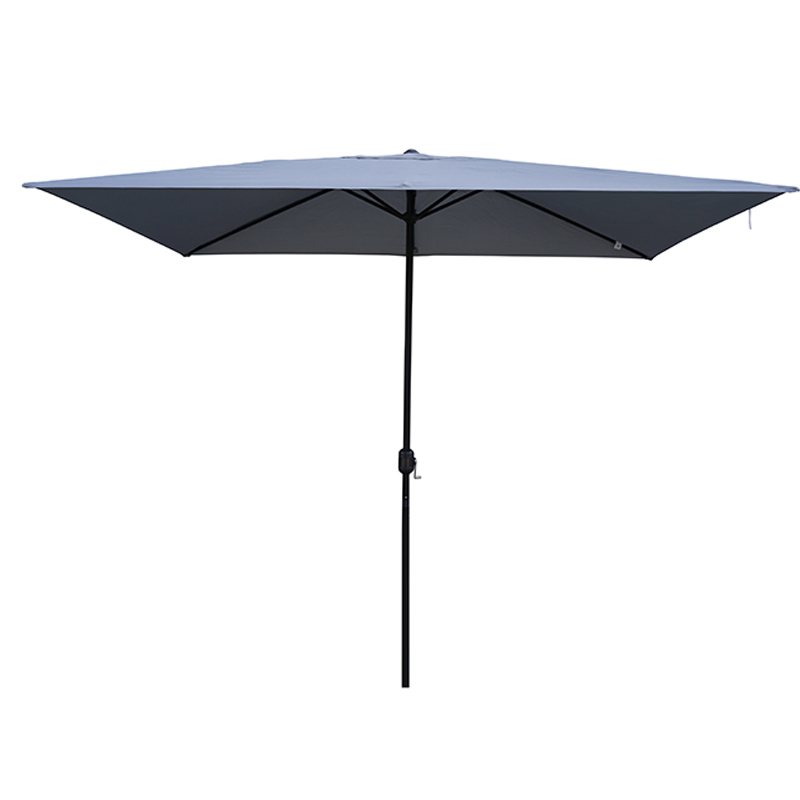
Match the canopy shape to the table shape. Round canopies are ideal for round and square tables — they provide even radial coverage with no wasted area. Rectangular canopies work best over rectangular tables, efficiently covering the full length of the table without excess overhang on the short sides. Using a round umbrella over a long rectangular table leaves the end guests unshaded regardless of canopy size.
Final Decision Guide: Choose Your Patio Umbrella Size in 3 Steps
Follow this three-step process to arrive at the right patio umbrella size for your outdoor space without second-guessing.
- Step 1 — Measure your shading target. Measure the diameter or longest dimension of your table, or the footprint of your seating area. Write it down in inches.
- Step 2 — Add 48 inches (4 feet total). Add 24 inches to each side of your measurement (or 48 inches to the total span). This is your minimum canopy diameter. Round up to the nearest standard size (7, 9, 10, 11, or 13 feet).
- Step 3 — Choose style based on your space constraints. If a center pole works: choose a market umbrella. If you need unobstructed space below the canopy or are shading a lounge area: choose a cantilever. If you're on a balcony or against a wall: choose wall-mount or clamp. Then verify your patio has the clearance to accommodate the size you've chosen, and select a base weight appropriate to your local wind conditions.
Investing 10 minutes in accurate measurement before purchase will save you the frustration — and cost — of returning an umbrella that's the wrong size or the wrong type for your space.